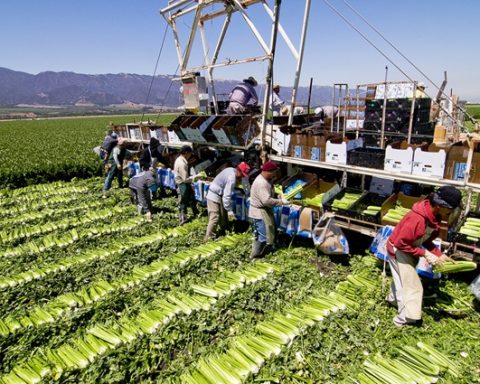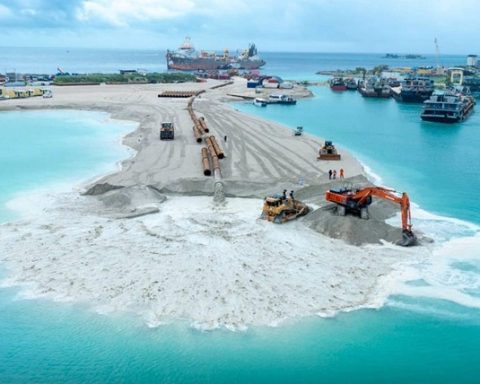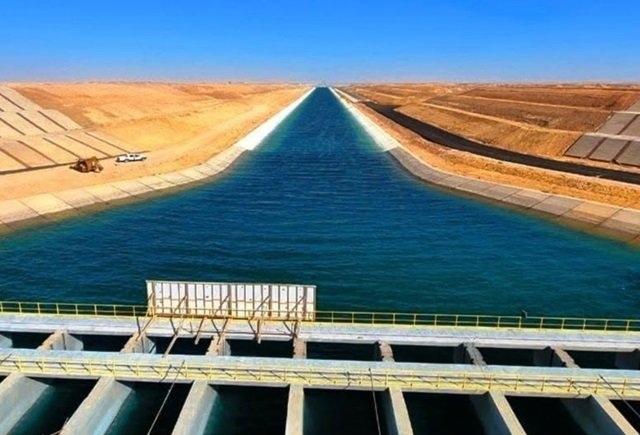
Across the western edge of Cairo, beyond the city’s dense urban landscape, a new agricultural frontier is emerging from the desert. Alongside the Dabaa Expressway, roads cut through vast stretches of once-barren terrain, where irrigation canals, cultivated fields and industrial facilities now stand against the backdrop of the Sahara. The transformation is part of Egypt’s New Delta project, a massive attempt to expand farmland and reshape the country’s food security strategy.
Covering approximately 924,000 hectares, the New Delta is the largest agricultural infrastructure project in modern Egyptian history. Its goal is to increase domestic production of strategic crops, reduce dependence on imports and create new opportunities for agricultural exports. The project represents a major effort by Egyptian authorities to overcome one of the country’s oldest challenges: limited fertile land concentrated around the Nile Valley.
For more than 110 million Egyptians, the Nile remains the country’s primary source of fresh water and the foundation of agriculture. The New Delta seeks to push beyond those traditional boundaries by bringing desert areas into cultivation through large-scale irrigation systems and modern farming techniques.
“It is one of the most important development and agricultural projects, not only in Egypt, but perhaps also in the Middle East,” Alaa Youssef, president of the State Information Service, said during a recent visit with journalists. He said the project would contribute significantly to Egypt’s food security while other land reclamation efforts continue.
The New Delta began as part of a national agricultural expansion program announced in 2015. While several other initiatives struggled, the agency responsible for the project, Future of Egypt, succeeded in developing the land assigned to it and quickly became a central part of the government’s agricultural strategy.
Future of Egypt says it has introduced a smart farming model designed to improve efficiency while reducing water and energy consumption. The agency has focused on crops including wheat, a particularly important commodity for Egypt, which remains the world’s largest importer of the grain. According to the organization, approximately €14 billion has been invested in the New Delta.
Transforming desert into farmland has required an extensive water infrastructure network. The project receives around 10 million cubic meters of water daily from aquifers, treated water and the Nile. Authorities have built nearly 700 kilometers of open canals, around 9,200 kilometers of pipelines and 28 pumping stations to support irrigation.
“Water is an extremely valuable resource for us Egyptians,” General Essam Wally, director of the engineering department of Future of Egypt, said. He explained that the project aims to reuse wastewater that would otherwise reach the Mediterranean Sea by redirecting water resources toward agricultural production.
The rise of Future of Egypt has been linked to a management style that combines military discipline, civilian expertise and close cooperation with private companies. Supporters of the model highlight its speed and efficiency compared with previous agricultural projects associated with state institutions.
After its initial success, Future of Egypt gained the attention of President Abdel Fattah al-Sisi and was elevated through a presidential decree into a sovereign state entity known as the Future of Egypt Authority for Sustainable Development. However, Egyptian media outlet Mada Masr reported that the decree was never published, leaving aspects of the organization’s legal and administrative structure unclear.
The agency’s expansion has extended beyond farming. Future of Egypt has moved into areas including livestock, aquaculture, wheat imports, logistics, urban development, tourism and mining. Analysts describe it as part of a broader economic model promoted under al-Sisi that relies heavily on state-linked entities generating revenue through large-scale projects.
“Al-Sisi has made the landlord-capitalist, rentier model represented by Future of Egypt and other military agencies in the urban real estate sector the backbone of his economic approach to generating revenue,” said Yezid Sayigh, senior analyst at the Carnegie Middle East Center. He added that the model may not be easily transferable to sectors such as manufacturing and services.
The agency’s growing influence has also increased the profile of its chief executive, Air Force Lieutenant Colonel Bahaa El Ghannam. Researchers and journalists have described him as a figure who combines military hierarchy with business-oriented management. Nada Arafat, a journalist specializing in food security and agriculture, said Ghannam’s position has expanded significantly, with regular meetings with President al-Sisi and privileges often unavailable to government ministries.
The project gained additional importance after global grain markets were disrupted by Russia’s 2022 invasion of Ukraine, which contributed to a domestic food crisis in Egypt. Future of Egypt has claimed that its agricultural expansion helped reduce imports by billions of dollars.
However, experts say the project’s success raises questions about transparency, oversight and the future role of small farmers. Arafat acknowledged that Future of Egypt has been more successful and visible than many previous agricultural initiatives linked to the military, but said the broader picture remains complicated.
The New Delta represents a shift away from earlier agricultural policies that focused on combining large-scale farming with the redistribution of reclaimed land to small farmers. According to experts, authorities now view fragmented agricultural holdings in the Nile Delta and Upper Egypt as inefficient after generations of inheritance divided farmland into smaller plots.
“Projects like the New Delta were not designed for small farmers,” Arafat said, noting that government officials have openly stated they do not want to repeat the fragmentation seen in traditional farming regions.
Concerns have also emerged over the agency’s limited public accountability. Because Future of Egypt operates as a sovereign entity, questions remain about oversight mechanisms, financial transparency, contracts and environmental assessments.
“It’s very difficult to assess whether it’s a successful management model because there’s very little transparency or oversight,” Arafat said. She added that there is no clear public framework explaining how the agency is audited or held accountable.
For small farmers, the challenge extends beyond the New Delta itself. Many continue to face difficulties accessing subsidized fertilizers, dealing with climate-related losses, coping with water pollution and navigating unstable markets. According to Arafat, the project does not directly displace most small farmers, but it reflects a wider agricultural strategy focused on large-scale, capital-intensive production while longstanding problems affecting smaller producers remain unresolved.
As Egypt pushes deeper into the desert to expand its agricultural capacity, the New Delta stands as a defining experiment in how the country plans to secure food production, manage scarce resources and organize farming for the decades ahead.