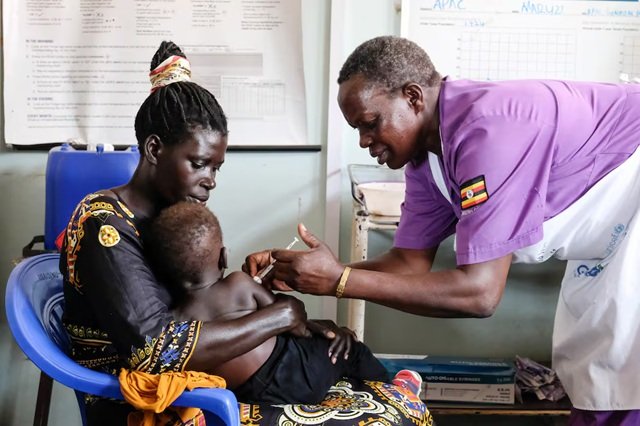
Global childhood immunization is continuing its slow recovery from the disruption caused by the COVID-19 pandemic, but millions of children remain beyond the reach of even the most basic vaccines, leaving health agencies concerned that recent gains could be reversed. A new report from the World Health Organization (WHO) and UNICEF indicates that vaccination coverage improved again in 2025, yet progress remains too slow to restore pre-pandemic levels or meet international targets set for the end of the decade.
The findings, reported by El País and drawn from the annual WHO-UNICEF Estimates of National Immunization Coverage (WUENIC), present a mixed picture of global immunization. While more infants received life-saving vaccines in 2025 than in the previous year, millions still did not complete recommended vaccination schedules, and 13.5 million babies received no routine vaccinations at all. Health officials say those children remain especially exposed to diseases that can be prevented through immunization.
During an online briefing with journalists, Ephrem T. Lemango, UNICEF’s Associate Director of Health and Global Chief of Immunization, described this year’s results as evidence of meaningful progress while emphasizing the scale of the work still ahead. He said the latest figures reflected the outcome of sustained collective efforts but also served as a reminder that continued investment is necessary to prevent setbacks and preserve recent advances.
According to the report, 90% of infants worldwide—approximately 115.7 million children—received at least one dose of the combined vaccine protecting against diphtheria, tetanus and pertussis (DTP1) in 2025, an increase of one percentage point from the previous year. Although the improvement represents continued recovery, global coverage remains below the 91% recorded before the pandemic and has remained largely unchanged within a narrow range since 2009.
The report also found that 85% of infants, or around 109.6 million children, completed the recommended three-dose DTP vaccination schedule, also marking a one-percentage-point increase over 2024. Health experts regard the difference between children receiving the first and third doses as a critical measure of healthcare system performance. The first dose demonstrates that a child has entered the healthcare system, while completion of the third dose indicates that follow-up care was maintained, families were able to return to health facilities, and routine immunization schedules continued as intended.
Regional disparities remain pronounced. West and Central Africa recorded the highest rate of children failing to complete the three-dose DTP schedule after receiving the first injection. The report also identified ten countries where vaccination coverage declined during the year: Afghanistan, Angola, Kazakhstan, Laos, Nigeria, Somalia, South Africa, Syria, Venezuela and Yemen.
Among them, Venezuela experienced one of the sharpest declines. Coverage for the first DTP dose fell from 85% in 2019 to 57% in 2025, placing it among the lowest levels recorded worldwide. Lemango attributed the decline to prolonged underinvestment in the country’s primary healthcare system amid ongoing economic difficulties. He said those conditions have contributed to the departure of healthcare workers, reduced the capacity of medical facilities to provide vaccinations and made it increasingly difficult for authorities to procure vaccines that had previously been available through the public health system.
Sudan, by contrast, recorded one of the most significant improvements. After years of conflict severely disrupted routine healthcare services, coverage for the first DTP dose increased by 35 percentage points between 2024 and 2025, while third-dose coverage rose by 32 percentage points. The country also achieved the largest reduction in so-called “zero-dose” children during the year, with approximately 565,000 fewer children remaining completely unvaccinated.
Before the outbreak of war, Sudan had maintained a strong national immunization programme. Following the collapse in coverage during the conflict, the Sudanese government, working alongside WHO, UNICEF, Gavi, the Vaccine Alliance, and humanitarian organizations, implemented an emergency vaccination campaign. The initiative relied on mobile vaccination teams, expanded field services and international cooperation to transport vaccine supplies into the country with assistance from neighbouring states.
Despite such successes, the global number of zero-dose children remains a major concern. In 2025, an estimated 13.5 million infants received no routine vaccines whatsoever. Although that represents an improvement from the 14.2 million recorded in 2024, the figure remains 40% higher than the annual level required to achieve the Immunization Agenda 2030 targets. More than half of all zero-dose children are concentrated in just nine countries, with Nigeria accounting for the largest share, followed by the Democratic Republic of the Congo and Yemen.
The report also highlights continuing challenges in measles vaccination, where global coverage remains well below the level needed to prevent outbreaks. In 2025, first-dose coverage remained unchanged at 84%, leaving approximately 20.8 million children without protection against one of the world’s most contagious diseases. Coverage has not recovered to the 86% recorded before the pandemic, while second-dose coverage remained stagnant at 77%, significantly below the 95% threshold considered necessary to interrupt transmission.
Kate O’Brien, Director of Immunization and Vaccines at WHO, pointed to the growing number of children who begin vaccination programmes but do not return for later appointments. She said that 7.3 million infants in 2025 discontinued their vaccination schedules before receiving even the first measles vaccine administered later in infancy. Health experts often describe measles as the “canary in the coal mine” for immunization systems because outbreaks quickly reveal weaknesses in population-wide protection.
The report identified Montenegro as having the world’s lowest measles vaccination coverage, with only 13% of children receiving the first dose, followed by Yemen and the Central African Republic. Venezuela recorded the largest decline since 2019, while Bosnia and Herzegovina experienced the steepest one-year drop between 2024 and 2025.
Globally, 257,456 confirmed measles cases were reported during 2025, and 57 countries experienced major outbreaks. O’Brien said increases were also being observed in outbreaks of diphtheria and cholera, reflecting gaps in routine immunization as children fail to complete recommended vaccine schedules.
Progress was recorded in vaccination against human papillomavirus (HPV), with global coverage of the final dose among girls increasing from 28% to 31% during 2025. The report emphasizes the importance of introducing HPV vaccines more widely in low- and middle-income countries, where the burden of cervical cancer remains highest.
Looking ahead, WHO officials expressed concern that reductions in international development assistance by major donor countries during 2025 could undermine future progress. O’Brien said the full consequences of those funding cuts are not yet reflected in the latest report because national immunization programmes have only begun to experience their effects. She warned that countries supported by Gavi, where many of the world’s zero-dose children live, are already being forced to make difficult decisions about scaling back immunization programmes as funding pressures increase.
As vaccination campaigns continue to recover from the pandemic, the latest WHO and UNICEF estimates show measurable improvements in global coverage while underscoring the continuing challenge of reaching millions of children who remain unprotected. The report concludes that sustaining immunization gains will depend on maintaining routine vaccination programmes, strengthening health systems and ensuring that children who begin vaccination are able to complete the protection those programmes are designed to provide.