With international justice blocked for years, European courts have become the primary venue for prosecuting alleged crimes against humanity committed under Bashar al-Assad’s regime, as survivors, investigators, and prosecutors build an unprecedented cross-border accountability effort.
For more than a decade, former Syrian general Khaled al Halabi appeared to have escaped the reach of justice. Once the commander of Syria’s secret police in the city of Raqqa and a senior figure in the security apparatus of former President Bashar al-Assad, he quietly left Syria in 2013 after reportedly working as a double agent for Israel’s Mossad. After passing through France, where his asylum request was denied, he settled in Austria, living discreetly while Syria’s civil war continued.
That sense of security ended in late 2024 when Austrian authorities arrested him on charges of crimes against humanity allegedly committed during his time in Syria. In July, a court sentenced him to eight years in prison, marking the first conviction against the highest-ranking official from Assad’s government to be detained in Europe.
As reported by El País, the case represents one of the latest milestones in a years-long effort led by European prosecutors, Syrian survivors, lawyers, and human rights organizations to bring members of Syria’s former security apparatus before national courts. Unable to rely on international tribunals, they turned instead to the principle of universal jurisdiction, which allows national courts to prosecute the gravest crimes—including torture, war crimes, and crimes against humanity—regardless of where they occurred or the nationality of those involved.
The legal campaign has gradually expanded across Europe. Germany pioneered the approach before Sweden, France, the Netherlands, and more recently Austria opened similar proceedings. According to figures cited by El País, 68 of the 70 universal jurisdiction cases worldwide concerning crimes committed during the Syrian conflict are being pursued in European courts. Germany alone accounts for 41 investigations, followed by Sweden, the Netherlands, and France. While many of these proceedings target members of the Islamic State and other jihadist groups, approximately 16 involve officials connected to Assad’s state security apparatus.
Legal scholars describe the Syrian cases as a significant evolution in the use of universal jurisdiction. Julia Geneuss, a professor of law at the University of Potsdam specializing in international criminal law, told El País that the Syrian conflict has demonstrated how national courts can become essential accountability mechanisms when international legal avenues are blocked.
That blockage emerged early in the conflict. Between 2014 and 2015, Russia and China vetoed attempts in the United Nations Security Council to refer the situation in Syria to the International Criminal Court. Because Syria never ratified the Rome Statute, the ICC lacked jurisdiction unless the Security Council authorized an investigation. At the same time, unlike previous conflicts in Rwanda, the former Yugoslavia, Sierra Leone, or Liberia, no international tribunal was established specifically to prosecute crimes committed during Syria’s war.
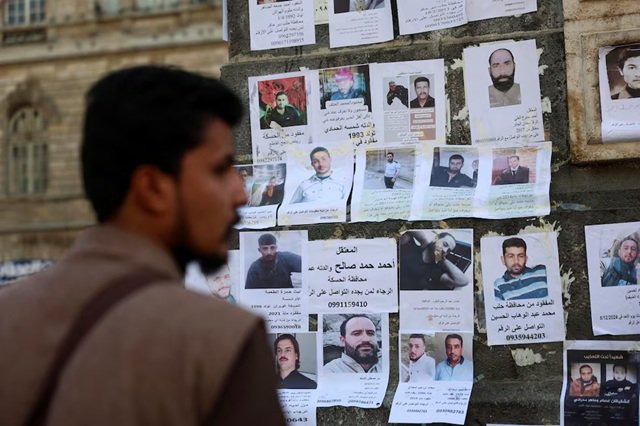
The absence of an international judicial mechanism left victims searching for alternatives. Human rights activists, Syrian refugees, lawyers, and investigators began building an extensive documentation network that stretched across Europe. Survivors collected testimonies, former officials secretly removed internal government records, and specialized organizations verified evidence while reconstructing chains of command within Syria’s security services.
Among the most influential pieces of evidence was the Caesar Report, a collection of thousands of photographs smuggled out of Syria by a military defector. The images documented bodies bearing signs of torture after prisoners died in government detention, providing visual evidence of systematic abuses inside Syrian prisons.
Organizations such as the Commission for International Justice and Accountability (CIJA), the European Center for Constitutional and Human Rights (ECCHR), and United Nations bodies including the International, Impartial and Independent Mechanism (IIIM) contributed to preserving evidence and coordinating investigations. European judicial cooperation through Eurojust further strengthened prosecutors’ ability to exchange documentation across national borders.
One of the defining moments in this legal campaign came not through a planned investigation but through an unexpected encounter in Germany. Syrian lawyer Anwar al Bunni, himself imprisoned for years by Assad’s government because of his work defending political prisoners, recognized a familiar face while living in a refugee center in Berlin in 2015.
The man was Anwar Raslan, a former colonel who had directed Branch 251, one of Syria’s most notorious intelligence detention centers known as Al Khatib Prison. Raslan had defected from the regime years earlier and entered Germany under a different identity.
German authorities eventually uncovered his background, leading to one of the most significant trials arising from the Syrian conflict. Al Bunni appeared in court not as a defendant but as a witness against the man who had once overseen his imprisonment.
In January 2022, a court in Koblenz sentenced Raslan to life imprisonment for crimes against humanity after concluding that he supervised a system of physical and psychological torture affecting at least 4,000 detainees. Dozens died under his command because of torture and inhumane detention conditions. The verdict marked the first time a court formally established that Syria’s government had operated an organized system of torture and enforced disappearances constituting crimes against humanity.
Speaking to El País, Al Bunni said his motivation was never personal revenge. Instead, he described the proceedings as a message both to survivors and to alleged perpetrators. Justice, he said, may arrive slowly, but those responsible should not expect to find permanent refuge simply by crossing borders.
For survivors such as Wassim Mukdad, who endured imprisonment at Al Khatib, the Koblenz proceedings carried symbolic importance beyond the courtroom. He described them to El País as a “Nuremberg moment” for Syria, emphasizing that accountability achieved through legal due process held greater meaning than retribution. Mukdad recalled losing significant weight in detention while enduring overcrowded cells, minimal food, and the constant sounds of torture inflicted on fellow prisoners.
Germany’s legal framework proved especially important because prosecutors had already opened what is known as a structural investigation in 2011, allowing them to collect evidence, interview witnesses, and document patterns of abuse long before identifying specific suspects. Experts interviewed by El País also pointed to Germany’s large Syrian refugee population, whose testimony has made investigations significantly more practical.
The prosecution of Khaled al Halabi illustrates both the strengths and limitations of this emerging model of justice. Although investigators reportedly identified his whereabouts as early as 2016, years passed before Austrian authorities initiated proceedings. According to lawyers involved in the case, the prosecution required extensive cooperation among Germany, France, and Austria, with evidence gathered in previous investigations helping to build Austria’s case.
The differences between national legal systems remain one of the principal challenges facing universal jurisdiction. Successful prosecutions require domestic legislation permitting such cases, specialized investigative units, and prosecutors experienced in handling crimes committed thousands of miles away. While countries such as Germany, France, Sweden, and the Netherlands have developed these capabilities, others have far more limited legal frameworks. Spain, once regarded as a pioneer of universal jurisdiction after issuing the landmark arrest warrant for former Chilean dictator Augusto Pinochet in 1998, has since significantly narrowed the scope of its legislation. A complaint filed there in 2017 against members of Assad’s government was dismissed for lack of jurisdiction.
The collapse of Assad’s state apparatus has created new possibilities for investigators. Survivors have begun returning to former prisons, detention centers, mass graves, and official archives that were previously inaccessible. These sites may now provide additional evidence against individuals who fled Syria after losing the protection once afforded by the regime.
Yet many survivors acknowledge that the highest-ranking officials remain beyond the reach of current prosecutions. Universal jurisdiction has succeeded in dismantling part of the impunity surrounding Syria’s wartime abuses, but many of those who occupied the uppermost levels of the former government’s chain of command have yet to face trial. For those who have spent years documenting evidence and pursuing justice across multiple countries, the work continues, driven by the expectation that accountability may eventually extend to the very top of Syria’s former security structure.