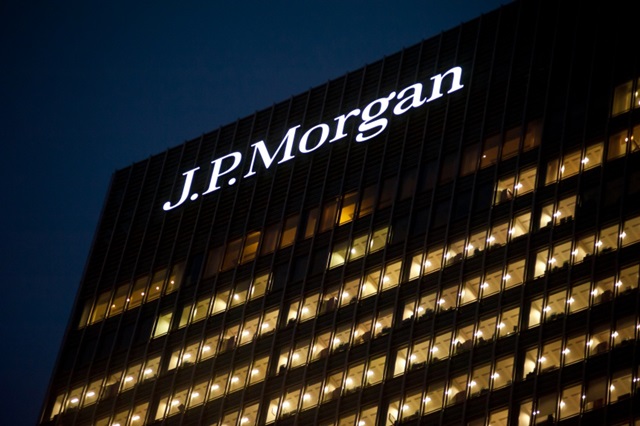
JPMorgan and several other US banks are close to agreeing to provide financing for projects under Japan’s US$550 billion investment commitment in the United States, according to two people familiar with discussions between the lenders and the Japanese government.
The financing would support Tokyo’s efforts to fulfil commitments made to US President Donald Trump under an investment framework agreed in July 2025. The agreement secured a reduction in proposed US tariffs on Japanese exports to 15 per cent after Trump had threatened tariffs of 25 per cent on most goods from Japan.
Japan has so far announced two batches of projects worth more than US$100 billion under the investment programme and is seeking to demonstrate progress in implementing the initiative, according to the sources. They said the government is keen to show that the investment commitments are advancing following Trump’s warning in January that tariffs on South Korean imports could be increased over what he described as failures to meet obligations under a separate trade agreement. That threat was later withdrawn.
According to one of the sources and two others familiar with the matter, Washington has also provided Prime Minister Sanae Takaichi’s government with a list of possible additional projects for consideration under the investment programme. The sources spoke on condition of anonymity because the discussions remain confidential.
Reuters was unable to determine the value of financing that US banks could ultimately provide or identify the specific projects that may receive funding. It was also unclear whether the US government was directly involved in discussions concerning which American banks would participate.
JPMorgan did not respond to Reuters’ request for comment. Japan’s Ministry of Economy, Trade and Industry said no decision had been made regarding the participation of US banks and that any such decision would rest with the banks themselves. The ministry also said the Japanese government had not selected a third round of projects, adding that bilateral discussions were continuing and that proposals remained subject to review. The US Department of Commerce did not immediately respond to Reuters’ request for comment outside normal business hours.
Despite the scale of the investment commitment, only US$2.2 billion in financing has so far been secured for the first batch of projects announced in February. Funding is being provided to special-purpose companies established to oversee each project. Approximately one-third of that financing has come from the state-backed Japan Bank for International Cooperation, while the remainder has been jointly provided by Mitsubishi UFJ Financial Group, Sumitomo Mitsui Financial Group and Mizuho Financial Group.
According to separate sources, Japan’s three largest banks have informed the government that securing long-term US dollar funding remains costly despite state guarantees on their loans. Because their funding base is primarily in yen, obtaining large amounts of US dollars for long-term infrastructure investments requires issuing dollar-denominated bonds, borrowing in wholesale funding markets or using currency swap markets, all of which increase financing costs. Those costs are further affected by the gap between US and Japanese interest rates and the expense of hedging currency exposure.
Sources said the Japanese government is examining measures to help domestic banks obtain US dollars more efficiently. One proposal, previously reported by Kyodo News, involves using part of Japan’s foreign exchange reserves to support funding.
The first group of projects announced in February includes an oil export facility in Texas, an industrial diamond manufacturing plant in Georgia and a natural gas-fired power station in Ohio. A second round unveiled in March includes plans to construct small modular nuclear reactors by GE Vernova Hitachi in Tennessee and Alabama, along with natural gas-fired power facilities in Pennsylvania and Texas.
Sources said participation by major US banks would strengthen the financing framework for the programme but noted that infrastructure projects often require decades before generating returns and repaying debt in full.