Editorial
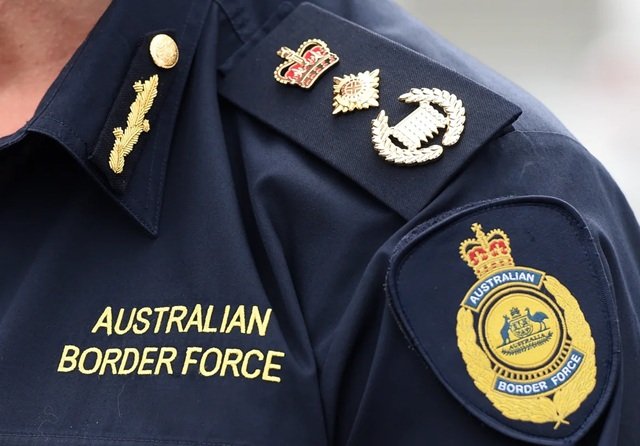
The reported decision to dispatch officers of the Commission to Investigate Allegations of Bribery or Corruption and the Criminal Investigation Department to Australia in connection with the SriLankan Airlines aircraft procurement investigation demands far greater public scrutiny than it has thus far received. If the stated objectives are to interview a witness residing in Australia and obtain banking evidence located within the Australian jurisdiction, the immediate legal question is not whether the investigation is important, but whether the expenditure of public funds on overseas travel was necessary, proportionate and legally justified.
Australia is a sovereign State governed by its own constitutional and statutory framework. Foreign law enforcement officers possess no coercive authority within Australian territory. They cannot execute search warrants, compel witnesses to provide evidence, obtain confidential banking records, seize documents, arrest suspects or enforce warrants issued by a Sri Lankan court. Those powers remain vested exclusively in Australian authorities acting under Australian law. This is neither a procedural technicality nor a diplomatic courtesy. It is a fundamental principle of public international law grounded in territorial sovereignty and jurisdiction.
If Sri Lankan investigators require banking records held in Australia, the established legal mechanism is mutual legal assistance. Such requests are transmitted through the appropriate governmental channels and executed by Australian authorities under Australian legislation. Likewise, if evidence is sought from a witness residing in Australia, Australian authorities may facilitate the taking of that evidence in accordance with their domestic legal procedures. Physical attendance by Sri Lankan investigators may occasionally be operationally desirable, but it is rarely a legal necessity. The burden therefore rests squarely upon the investigating agencies to explain why this matter required an overseas mission funded by the Sri Lankan taxpayer rather than the utilisation of established international legal cooperation mechanisms.
References to action being taken “through Interpol” should also be viewed with legal precision rather than political theatre. Interpol is not an international police force. It possesses no investigative jurisdiction, no arrest powers and no authority to execute judicial orders. Its function is limited to facilitating communication and cooperation between national law enforcement agencies. Describing overseas investigative travel as action undertaken “through Interpol” risks creating a misleading public impression that international police powers are somehow being exercised. They are not. Every investigative act undertaken in Australia remains subject entirely to Australian law and Australian institutions.
The absence of transparency surrounding the necessity of this visit inevitably raises legitimate questions regarding fiscal accountability. Public expenditure by investigative agencies cannot be insulated from scrutiny merely because an investigation concerns allegations of corruption. The rule of law requires not only lawful investigations but also lawful administration. Every public authority is expected to demonstrate that its decisions are rational, proportionate and directed towards a legitimate investigative purpose. Where equivalent legal outcomes could reasonably have been achieved through mutual legal assistance requests, electronic evidence sharing or remotely facilitated witness interviews, the justification for overseas travel becomes a matter requiring careful public explanation rather than unquestioning acceptance.
This is especially significant in the present economic climate, where every allocation of public funds carries an opportunity cost. Investigative agencies derive their legitimacy not only from pursuing alleged offenders but also from conducting investigations in a manner that reflects efficiency, legal discipline and institutional restraint. Public confidence is not strengthened by expensive investigative symbolism. It is strengthened by demonstrable results achieved through the prudent application of existing legal processes.
Equally troubling is the broader institutional culture that appears to equate visible activity with effective investigation. International travel, media announcements and references to overseas cooperation should never be mistaken for measurable investigative progress. The true measure of an investigation lies in admissible evidence, successful prosecutions and judicial outcomes capable of withstanding scrutiny before an independent court. Public confidence is diminished whenever procedural spectacle risks overshadowing forensic substance.
None of this diminishes the seriousness of the allegations under investigation. Nor does it question the duty of investigators to pursue evidence wherever it may lawfully exist. The issue is whether public authorities have chosen the most legally appropriate, operationally necessary and financially responsible means of doing so. Unless those agencies can clearly demonstrate why established mechanisms of international legal cooperation were inadequate in this instance, the decision to undertake an overseas mission will remain open to legitimate criticism as an exercise whose necessity has not been established. In a constitutional democracy governed by the rule of law, investigative discretion is never immune from public examination, and accountability applies as much to those conducting investigations as it does to those who become their subjects.