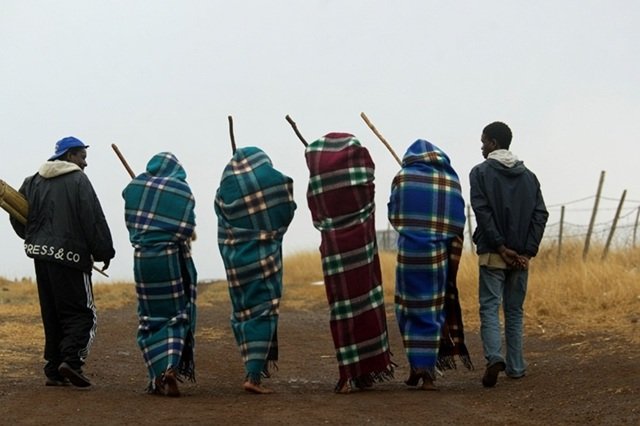
South Africa’s Commission for the Promotion and Protection of the Rights of Cultural, Religious and Linguistic Communities (CRL Rights Commission) has launched an investigation following the deaths of 43 young men during this year’s winter customary initiation season, with officials saying the fatalities cannot be accepted as a normal part of the traditional practice.
The commission announced that it will establish a Section Seven Committee in August to investigate deaths and alleged abuses at initiation schools. Speaking at a media briefing alongside Deputy Chairperson Prince George Mahlangu, Commission Chairperson Thoko Mkhwanazi-Xaluva said the inquiry would examine longstanding concerns surrounding the ceremonies, which include traditional circumcision and mark the transition of boys into adulthood.
Authorities have recorded 75 hospitalisations, 180 rescues, 12 abductions and 40 arrests during the current initiation season. According to the commission, the investigation comes amid mounting concern over the safety of initiates and reports of serious abuses at some initiation schools.
Mahlangu said the committee would review incidents spanning the past decade, during which more than 600 boys and young men have reportedly died in customary initiation ceremonies across several provinces. He said background work had already begun and commissioners had been assigned to participate in the process, adding that the investigation would seek to determine why safety standards had deteriorated in some areas.
“We intend to start the Section Seven Committee in August. We have already started the background work, and we have commissioners who have been asked to be part of the process. We want to be fully informed about what is happening, as some provinces have regressed,” Mahlangu said.
Mkhwanazi-Xaluva said the Customary Initiation Act 2 of 2021, signed into law by President Cyril Ramaphosa, provides a legal framework aimed at improving the safety of initiation schools by imposing severe penalties, including imprisonment, on those who fail to protect initiates. She said the legislation must be fully enforced and stressed that the commission would hold those responsible accountable.
“There will be no holy cows in this process because one death is one too many. We cannot continue to witness these fatalities as if they are an accepted norm,” Mkhwanazi-Xaluva said.
The investigation also follows calls by the Congress of Traditional Leaders of South Africa (CONTRALESA) for a police inquiry into allegations that some initiation school principals instructed staff to prevent doctors from accessing initiates. According to the latest figures cited by the commission, Mpumalanga recorded the highest number of deaths this season with 18, followed by the Eastern Cape with 14. North West reported four deaths, while Gauteng and the Free State each recorded two.
Mahlangu said the inquiry would proceed in phases to ensure reported incidents, including claims that medical practitioners had been driven away from initiation schools, were thoroughly verified before the December initiation season. He said the commission would work with all stakeholders to identify measures to reduce future fatalities.
Edward Mafadza, Chief Executive Officer of the CRL Rights Commission, said recommendations from the recent Initiation Indaba had already been distributed to stakeholders. He said the committee would assess compliance with those resolutions and evaluate whether existing regulations governing initiation schools are being effectively implemented.