The view from Ahmed Alafi’s home stretches across Lebanon’s Bekaa Valley to the snow-capped mountains beyond, but the former Hezbollah operative can no longer see it. The explosion that changed his life left him without his eyes, part of his nose and severely damaged hands. To recognise the face of his infant daughter, he now relies on touch. The injuries were not the result of a battlefield encounter but of a pager that exploded in his hands after displaying a series of instructions. Within moments, thousands of similar devices detonated across Lebanon, marking one of the most remarkable intelligence operations ever attributed to Israel’s foreign intelligence service, Mossad.
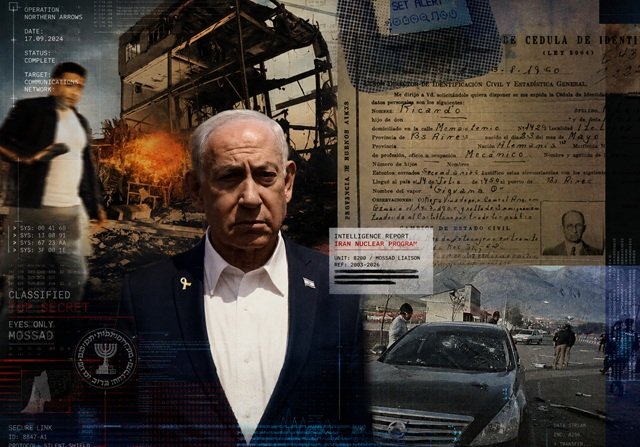
The events of 17 September 2024 unfolded after years of covert preparation. According to a Der Spiegel investigation, Mossad allegedly established front companies in Hungary and Bulgaria to manufacture pagers that had been secretly fitted with explosives before being sold to Hezbollah. When the devices were activated remotely, at least 12 people were killed and nearly 3,000 injured. Hundreds of walkie-talkies exploded the following day, deepening confusion throughout Hezbollah as fighters abandoned communication equipment and suspicion spread through the organisation. Less than two weeks later, Israeli air strikes targeted Hezbollah’s underground headquarters in southern Beirut, killing its long-time leader Hassan Nasrallah. The pager operation had become the opening act of a broader military campaign.
For many observers, the attacks reinforced Mossad’s reputation for combining patience, deception and technological innovation. Yet the Der Spiegel investigation presents a broader picture of an intelligence agency whose history extends far beyond individual operations. Drawing on interviews with former Mossad officers, Israeli politicians, intelligence specialists and foreign security officials, the investigation explores how the organisation developed into one of Israel’s most influential institutions while operating largely beyond public view.
Since its establishment, Mossad has built its identity through operations that often remained hidden for years. In its early decades, it pursued Nazi fugitives, gathered intelligence across the Middle East and carried out targeted assassinations. Former Mossad operative Mishka Ben-David recalled being inspired by the agency’s capture of Adolf Eichmann in Argentina and its pursuit of those responsible for the 1972 Munich Olympic attack before eventually joining its elite Caesarea unit. During his career, he participated in missions that remain undisclosed and was directly involved in the failed 1997 attempt to poison Hamas leader Khaled Meshaal in Jordan, an operation that ended with Israel providing an antidote after the agents involved were arrested.
As Iran’s nuclear programme became Israel’s foremost security concern, Mossad increasingly redirected its resources towards preventing Tehran from acquiring nuclear weapons. Former research chief Sima Shine described intelligence gathering as the foundation of every operation, while former technology division head Eyal Hulata explained that technological superiority became central to the agency’s strategy. Investments in cyber capabilities, robotics, data analysis and surveillance transformed covert operations from traditional espionage into increasingly sophisticated campaigns involving sabotage, digital infiltration and precision targeting.
Another former operative, Jonathan Mor, offered a detailed account of that transformation. Operating under multiple identities during nearly two decades with Mossad, he said he posed as businessmen of different nationalities while cultivating scientists, diplomats and military officers across several countries. Recruitment often took months or years, with many sources believing they were assisting other Western intelligence agencies rather than Israel. Mor described introducing malware into Iranian computer systems through unsuspecting intermediaries, facilitating cyber intrusions that allegedly provided long-term access to sensitive communications and infrastructure. He also recounted operations involving concealed GPS transmitters and covert logistical sites established inside Iran years before they were reportedly used during later military operations.
The investigation traces the origins of Israel’s confrontation with Iran to disagreements over how to prevent Tehran’s nuclear ambitions. Former Mossad chief Meir Dagan opposed military action, arguing that air strikes would not permanently eliminate Iran’s nuclear programme and could instead accelerate it. His concerns were shared by his successor and by then United States President Barack Obama, delaying plans for a direct attack. The strategy shifted after Benjamin Netanyahu appointed Yossi Cohen to lead Mossad in 2016 and tasked the agency with demonstrating that Iran had concealed elements of its nuclear programme.
That effort culminated in one of the agency’s most ambitious intelligence operations. Mossad agents, working with Iranian collaborators, removed approximately half a tonne of documents and digital files from Iran’s nuclear archive and transported them out of the country. Netanyahu later unveiled the material during a televised presentation, arguing that it demonstrated Iranian deception. Although the documents largely related to activities before 2003 and many were reportedly already familiar to Israeli intelligence, the disclosure preceded the United States’ withdrawal from the international nuclear agreement with Iran. Tehran subsequently resumed uranium enrichment, further escalating tensions between the two countries.
Former officials told Der Spiegel that Mossad later expanded recruitment efforts inside Iran, relying on a growing network of informants, helpers and covert operatives. Advances in artificial intelligence reportedly accelerated the identification and screening of potential recruits. Some of those networks were allegedly activated during Israel’s military campaign against Iran, assisting operations that targeted missile defences before large-scale air strikes commenced. The conflict intensified further when the United States joined military operations, but despite extensive bombardment, the expected political collapse in Tehran failed to materialise.
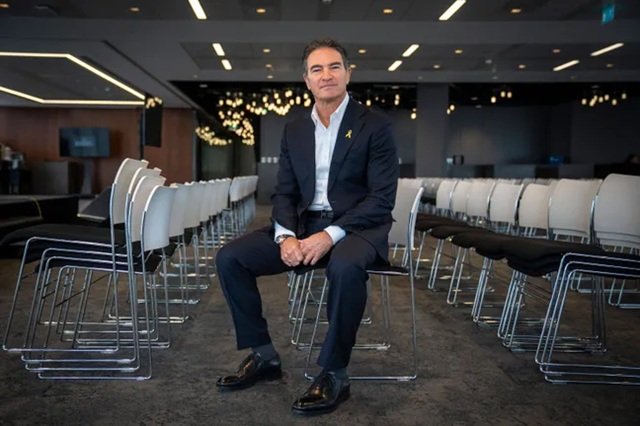
That outcome has prompted reflection among several former Mossad leaders interviewed by Der Spiegel. Ram Ben-Barak, who previously served as the agency’s deputy director, argued that withdrawing from the nuclear agreement had been a strategic mistake, saying Iran had complied with its obligations until the accord collapsed. He also criticised the public disclosure of sensitive intelligence operations, contending that revealing the theft of Iran’s nuclear archive compromised future intelligence work by making Iranian authorities significantly more cautious.
Former Prime Minister Ehud Olmert voiced similar concerns about the relationship between Mossad and political leadership. He argued that the agency’s growing public profile and the increasing disclosure of its activities represented a departure from earlier practice, when major operations often remained secret for years. Olmert warned that because Mossad answers directly to the prime minister and operates with limited external oversight, its effectiveness ultimately depends on the judgement and independence of those leading both the agency and the government.
The Der Spiegel investigation concludes by portraying Mossad as an organisation shaped by extraordinary operational successes, technological innovation and decades of clandestine warfare, while also facing difficult questions over strategy, political influence and the long-term consequences of its expanding role in one of the Middle East’s most enduring conflicts.