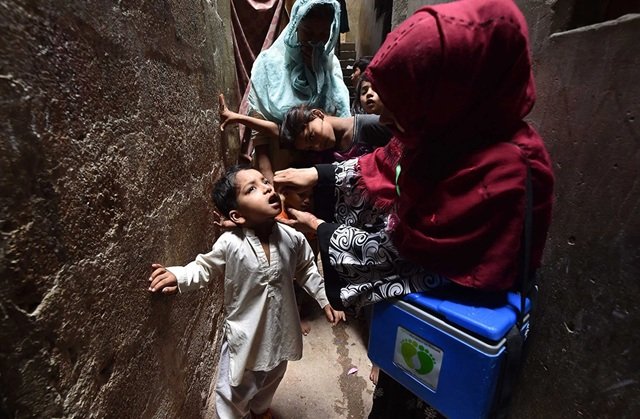
Nearly four decades after the world embarked on one of the largest public health campaigns in history, the effort to eradicate polio has reached a decisive moment. Once seen as being on the verge of success, the campaign is now confronting repeated missed deadlines, shrinking financial support, political instability and growing vaccine hesitancy, prompting researchers to question whether the current strategy can still achieve its original goal.
According to an in-depth report published by Nature, scientists and public health experts remain divided over whether complete eradication is still attainable or whether the global health community should begin preparing for an alternative approach. While no researcher interviewed by the journal argued that eradication is impossible in theory, many expressed growing concern that existing strategies may no longer be sufficient under current conditions.
A decade ago, optimism was widespread. In 2016, Nigeria recorded its last cases of wild poliovirus, leaving Afghanistan and Pakistan as the only remaining countries where the virus continued to circulate. At the time, World Health Organization official Hamid Jafari predicted that Pakistan could eliminate the virus within months rather than years.
Those expectations have not materialised. Global eradication targets set for 2019, 2023 and 2025 have all passed without success. More than US$3 billion has been spent over the past decade on eradication efforts in Afghanistan and Pakistan alone, with billions of doses of oral polio vaccine administered. Campaign leaders had hoped transmission would finally cease during the most recent low-transmission season, but Nature reported that 14 new cases of wild poliovirus have already been confirmed this year.
The campaign has nevertheless produced historic progress. Since the Global Polio Eradication Initiative (GPEI) was launched almost 40 years ago, annual cases of wild polio have fallen from approximately 350,000 across 125 countries to just 52 cases recorded in 2025, representing a reduction of more than 99.98 per cent. Disease modelling cited by Nature estimates that vaccination programmes have prevented between 2.5 million and 6 million cases of paralysis worldwide.
Despite those gains, researchers told Nature that progress towards eradication has become increasingly uneven. Wild poliovirus cases have repeatedly fallen before rebounding, while environmental surveillance has detected similar fluctuations in virus circulation. Kimberly Thompson, a health economist at Kid Risk who models polio transmission, told the journal that although eradication remains theoretically possible, practical conditions have made success increasingly unlikely.
Most experts interviewed by Nature agreed that the principal barriers are no longer scientific. The oral polio vaccine continues to interrupt transmission effectively by building immunity in the gut, while injectable inactivated vaccines protect individuals against disease. Instead, operational and political obstacles have become the dominant challenge.
Health officials estimate that around 100,000 children remain unvaccinated in inaccessible districts of Afghanistan and Pakistan, while routine immunisation rates in some areas remain below 50 per cent. Ongoing conflict, restrictions on vaccination campaigns, population movement across the Afghanistan-Pakistan border and growing mistrust of vaccinators continue to hamper efforts to eliminate the virus completely.
Nature reports that security conditions have further complicated operations this year. Violence has intensified in parts of Pakistan, making some districts inaccessible, while authorities in southern Afghanistan continue to prohibit female vaccinators and door-to-door immunisation campaigns, both of which previously played central roles in global eradication efforts. Several police officers assigned to protect vaccination teams have also been killed during operations in Pakistan.
Financial pressures have added another layer of uncertainty. The GPEI has implemented a 30 per cent budget reduction this year, partly reflecting changes in United States global health policy, including its withdrawal from the World Health Organization and the dismantling of the U.S. Agency for International Development under President Donald Trump. Although the Gates Foundation and other donors pledged US$1.2 billion last December to reduce funding gaps, Nature reports that the programme has already scaled back preventive vaccination campaigns in areas not currently experiencing outbreaks.
Researchers interviewed by the journal warned that reducing preventive immunisation could increase the risk of both wild and vaccine-derived poliovirus outbreaks. Mathematical models cited by Nature indicate that maintaining vaccination in vulnerable but currently polio-free regions remains critical to preventing future transmission.
The prolonged campaign has also reopened discussion about possible alternatives if eradication continues to prove elusive. One option examined by researchers would abandon complete eradication in favour of controlling the disease through universal use of injectable vaccines. While such an approach could prevent paralysis, modelling cited by Nature suggests it would allow the virus to continue circulating and could result in tens of thousands of cases annually over the coming decades if oral vaccination campaigns were discontinued.
Other researchers believe advances in vaccine technology could still strengthen eradication efforts. Nature reports that a newer oral vaccine designed to reduce vaccine-derived outbreaks has shown a substantially lower risk of mutating back into a dangerous form, while faster environmental surveillance and experimental injectable vaccines capable of generating some intestinal immunity are also under development.
Despite mounting challenges, senior officials involved in the eradication programme insist the objective remains unchanged. Arshad Quddus, acting director of the GPEI, told Nature that transmission has become increasingly confined to smaller geographic areas and stressed that abandoning momentum at this stage could carry significant consequences. David Heymann, who chairs the GPEI’s Containment Advisory Group, said most public health experts remain unwilling to abandon eradication, while David Salisbury, chair of the Global Commission for Certification of Poliomyelitis Eradication, argued that the goal itself continues to help secure political commitment and financial support.
As Nature concludes, the world’s largest immunisation campaign continues despite repeated setbacks, with global health authorities, researchers and governments still focused on eliminating the last remaining reservoirs of wild poliovirus. Whether that objective is achieved under the current strategy or requires a fundamentally different approach remains one of the central questions confronting international public health.