


Armenia is undertaking a sweeping transformation of its armed forces, replacing decades of near-total dependence on Russian military equipment with weapons and defence partnerships spanning India, France, China, Iran and the United States, according to a report published by the Spanish newspaper El País.
The shift was on full display during Armenia’s First Republic Day military parade on May 28 in Yerevan, where Indian air defence systems, French radar technology, Chinese drones, Iranian military equipment, European armoured vehicles and domestically produced platforms were showcased before Prime Minister Nikol Pashinyan. El País reported that the display reflected a broader effort to redefine Armenia’s military strategy following a series of security setbacks.
Pashinyan described the parade as representing “the new Armenian army, with new weapons, new uniforms, and a new ideology.” He also stated that the military’s sole mission is to defend Armenia’s internationally recognised sovereign territory, signalling what El País described as an implicit abandonment of efforts to reclaim Nagorno-Karabakh.
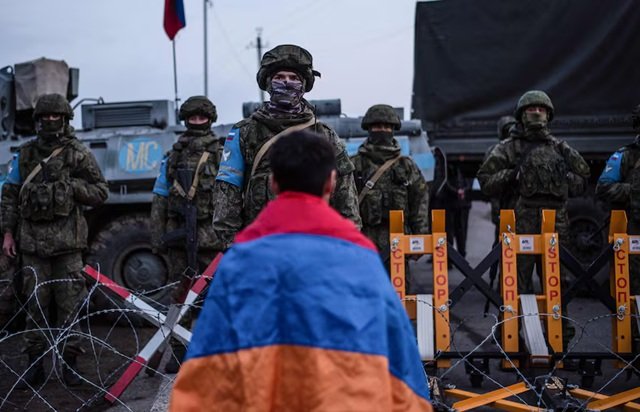
The report links the transformation directly to Armenia’s military defeats and deteriorating confidence in Russia as its principal security partner. Armenia lost much of Nagorno-Karabakh during the 2020 war with Azerbaijan, while a renewed Azerbaijani offensive in September 2023 brought the self-proclaimed Republic of Nagorno-Karabakh to an end and forced more than 100,000 Armenians to flee to Armenia. Azerbaijani incursions into Armenian territory in 2021 and 2022 further reinforced concerns in Yerevan over its security arrangements.
According to data cited by El País from the Stockholm International Peace Research Institute (SIPRI), Russia supplied 94 per cent of Armenia’s imported weapons between 2011 and 2020. However, Armenia’s trust in Moscow declined after the Russia-led Collective Security Treaty Organization did not intervene during the 2020 conflict or respond decisively to later cross-border incursions. The report also states that Russian peacekeepers failed to prevent Azerbaijan’s 2023 offensive, prompting Armenia to freeze its participation in the alliance.
El País reported that Armenia also faced problems with delayed Russian arms deliveries after contracts worth several hundred million euros were signed in 2021. Armenian defence researcher Leonid Nersisyan said some equipment arrived while other deliveries missed contractual deadlines, making it difficult to separate Russia’s limited capacity from political considerations.
India has since emerged as Armenia’s largest new defence supplier. According to El País, Yerevan has acquired Indian-made Akash air defence systems, Pinaka multiple rocket launchers, ATAGS artillery, MArG 155 self-propelled howitzers, Swathi radar systems, Zen anti-drone technology, Konkurs-M anti-tank missiles and ammunition. France has supplied GM-200 radars, Bastion armoured vehicles and CAESAR howitzers, while the United States has opened the way for V-BAT reconnaissance drones. China has been identified as a supplier of CH-4B unmanned aerial vehicles, and Iran has supplied short-range air defence systems.
Despite the diversification, experts interviewed by El País warned that integrating equipment from multiple suppliers presents significant logistical and operational challenges. Different weapons systems require separate maintenance, spare parts, ammunition, training programmes and technical standards, increasing the complexity of creating a unified military command structure.
The report also identifies institutional reform as a central challenge. Armenia is seeking to decentralise command structures, strengthen professional military education and expand its corps of professional soldiers while reducing mandatory military service. According to El País, experts argue that modernising the military will depend not only on acquiring new weapons but also on changing military culture, leadership and organisational practices.
Military spending has also risen sharply. El País reports that Armenia now allocates about 6.1 per cent of its gross domestic product to defence, among the highest proportions globally, although Azerbaijan continues to outspend its neighbour because of its significantly larger economy. The report concludes that Armenia’s objective is not to match Azerbaijan militarily but to increase the political and military cost of any future aggression through a comprehensive restructuring of its armed forces.









