


The United States has imposed a 10% tariff on goods imported from Sri Lanka under a sweeping new trade regime targeting 60 economies over what Washington says is the failure of trading partners to adequately prohibit or enforce restrictions on imports made with forced labour. The new duties took effect at 12:01 a.m. EDT on Friday, replacing a temporary global tariff that expired at the same moment and establishing a new baseline tariff covering 99.4% of U.S. imports.
Sri Lanka is among a group of countries assigned the lower 10% tariff, alongside India, Bangladesh and Pakistan. The measures were introduced under Section 301 of the U.S. Trade Act of 1974 after the Trump administration shifted to a different legal authority following a U.S. Supreme Court ruling earlier this year that struck down President Donald Trump’s previous “reciprocal” tariffs imposed under national emergency powers.
The White House said the new tariffs are intended to address what it considers unfair trade practices arising from countries that have failed to impose or effectively enforce bans on imports made with forced labour. According to the administration, the United States has maintained and rigorously enforced such prohibitions for decades and expects its trading partners to adopt comparable standards. U.S. Trade Representative Jamieson Greer said the new policy is intended to address both human rights abuses and distortions in international trade while improving conditions for workers globally.
For Sri Lanka, the measures are expected to intensify scrutiny of export supply chains, particularly where imported raw materials, intermediate goods or manufacturing inputs are sourced from countries considered high risk by U.S. authorities. While Washington has not specifically accused Sri Lanka of using forced labour, the new policy places greater emphasis on ensuring that products exported to the United States are free from components or materials linked to forced labour elsewhere in global supply chains.
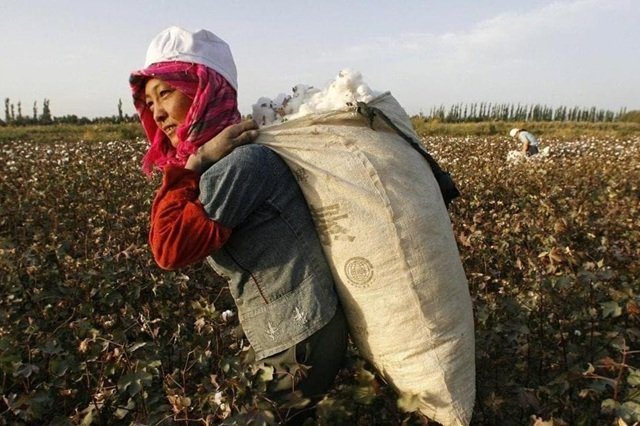
A central focus of the U.S. policy remains China’s Xinjiang Uyghur Autonomous Region, where successive American administrations have alleged that Uyghurs and other predominantly Muslim minorities have been subjected to mass detention, coercive labour transfer programmes and forced labour in industries including cotton, textiles, solar panels and critical minerals. U.S. officials argue that products manufactured wholly or partly through these programmes have entered international supply chains and reached overseas markets through third countries. Beijing has consistently rejected the allegations, describing its policies in Xinjiang as measures aimed at combating terrorism, countering extremism, reducing poverty and providing vocational education and training.
Against that backdrop, the new tariff regime is likely to increase pressure on countries such as Sri Lanka to strengthen due diligence over imported goods and industrial inputs, particularly those sourced from China, to ensure exported products comply with U.S. forced labour standards. Such scrutiny is expected to become increasingly important for manufacturers whose finished goods are destined for the American market.
The White House said the tariffs cover almost all imports entering the United States but include numerous exemptions. Products excluded from the new duties include oil and gas, fertiliser, certain foodstuffs, aircraft and aircraft parts, critical minerals, and goods already subject to national security tariffs on products such as steel, aluminium, copper and automobiles. Goods traded under the U.S.-Mexico-Canada Agreement are also exempt because of the highly integrated North American supply chain.
The measures have drawn criticism from several U.S. trading partners. The European Union described the tariffs as unjustified, while Australia, Brazil and Norway also challenged Washington’s rationale. Canada characterised the measures as unilateral and said it would continue discussions with the United States.
Trade lawyers say the new tariffs are likely to prove more resilient to legal challenges than the reciprocal duties struck down earlier this year because Section 301 of the Trade Act has previously withstood judicial scrutiny. The Trump administration has maintained that the policy reflects bipartisan support in Congress for eliminating forced labour from global supply chains while preserving a broad tariff framework for imports entering the United States.









