


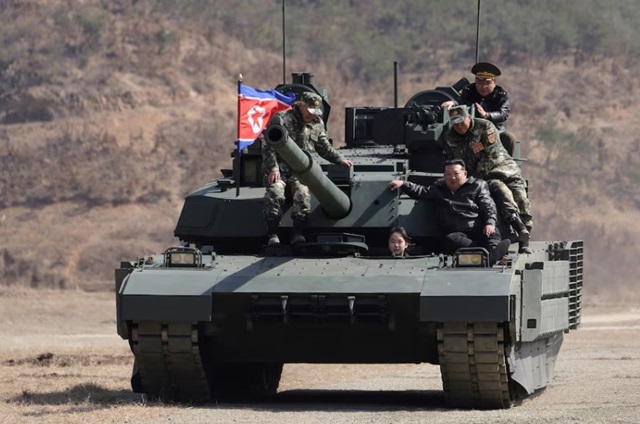
Russia is seeking to bring an additional 30,000 North Korean troops into its war against Ukraine, President Volodymyr Zelenskyy has claimed, describing the reported move as a significant expansion of Pyongyang’s involvement in the conflict and warning of broader security consequences for Asia.
In a nightly address on Saturday, Zelenskyy said Moscow was preparing to receive the additional personnel after months of planning. “Russia wants to receive another 30,000 troops from North Korea. Since June, preparations have been under way in Russia’s Voronezh region to receive them,” he said, without identifying the source of the information.
If confirmed, the deployment would substantially increase North Korea’s military contribution to Russia’s campaign. Pyongyang is already believed to have sent around 20,000 combat troops and military engineers to Russia’s Kursk region in 2024 to help repel an incursion by Ukrainian forces, with an estimated 14,000 currently deployed on the front lines.
Zelenskyy also claimed that North Korea is preparing to transfer additional ballistic missile launchers to Russia, further deepening military cooperation between the two countries.
“This is a threat not only to Ukraine,” Zelenskyy said. “Russia is helping North Korea learn how to wage war, improve its weapons and gain real combat experience in using them.”
He argued that the consequences of the growing partnership extend well beyond Europe, saying that “all of this is a threat to everyone in Asia who is within range of North Korean missiles.” According to Zelenskyy, the military cooperation provides Pyongyang with valuable operational experience while strengthening its weapons programmes.
North Korea has increasingly used the war in Ukraine as what is effectively a testing ground for its missile technology. The battlefield has provided opportunities to evaluate the performance of its weapons systems, identify shortcomings and gather operational data as it continues expanding an arsenal that includes missiles capable of delivering nuclear weapons to South Korea and Japan.
Zelenskyy’s remarks followed a four-day visit to Moscow earlier this month by North Korean Foreign Minister Choe Son-hui. During the visit, she met Russian President Vladimir Putin and Russian Foreign Minister Sergey Lavrov, prompting speculation that further military cooperation may have been discussed.
Relations between Moscow and Pyongyang have deepened since Putin and North Korean leader Kim Jong Un signed a mutual defence pact in June 2024. In the months that followed, North Korea supplied troops, weapons and munitions to Russia in exchange for what U.S. officials have described as “advanced materials, technologies and Russian technical expertise.”
According to Ukrainian officials, Russia has also sent military specialists to North Korea to train its armed forces in the use of combat drones and air-defence systems. They also believe Russian personnel are assisting Pyongyang in establishing domestic production of Russian variants of the Iranian-developed Shahed/Geran attack drones.
The growing military partnership has prompted concern among the United States and its allies over changing security dynamics on the Korean Peninsula. Earlier this year, the commander of U.S. forces in South Korea, U.S. Army General Xavier Brunson, warned in an interview with The Japan Times that North Korea’s participation in the Ukraine war was fundamentally altering the strategic threat facing the region.
Brunson said Pyongyang’s most significant gains were not limited to the battlefield use of drones. Instead, he argued that North Korea was acquiring increasingly valuable combat experience, developing a greater capacity to project military force overseas and accelerating the pace of its weapons development through lessons learned during the conflict.









