


Chinese artificial intelligence developers are likely to reconsider their open-source business strategies by introducing commercial licensing fees for companies that host their AI models, as they seek to generate greater revenue from rapidly expanding global adoption, according to Goldman Sachs.
The assessment, reported by the South China Morning Post, reflects growing expectations that China’s AI sector is entering a new phase in which developers will increasingly focus on monetising technologies that have so far been made widely available under permissive open-source licences.
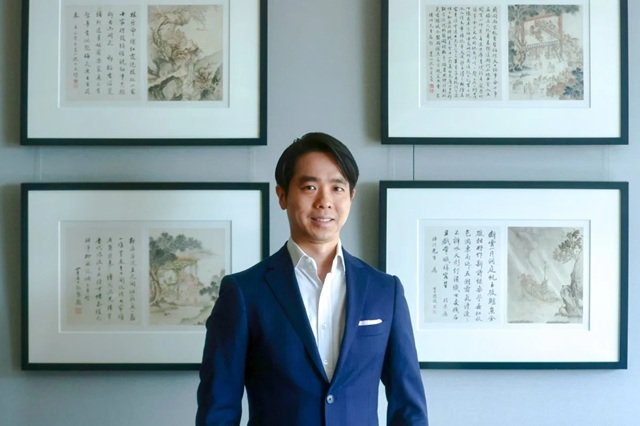
Ronald Keung, Goldman Sachs’ Hong Kong-based head of Asia internet research, said Chinese AI companies could require cloud platforms and third-party providers to purchase commercial licences to host and operate their open-weight models for inference, allowing the original developers to capture a larger share of the value created by their software.
The comments come as Chinese AI models, including Moonshot AI’s Kimi K3 and Zhipu AI’s GLM-5.2, have narrowed the performance gap with leading U.S. competitors, reaching levels that are only marginally behind the industry’s top models.
Despite these technological gains, most Chinese developers continue to release their models under permissive open-source licences, such as the MIT License. This enables developers and cloud providers around the world to download, modify and commercially host the models’ underlying “weights”—the parameters that encode the models’ intelligence—without paying licensing fees to their creators.
According to Keung, the rapid growth in both domestic and international adoption presents a significant commercial opportunity.
“Domestic growth in adoption is very fast, and we think there’s considerable adoption among small and medium enterprises in the global market, and even larger [companies] are starting to consider using [Chinese models],” he said.
The South China Morning Post reported that Chinese AI models recently accounted for a record 60 per cent of usage on OpenRouter, an online marketplace serving U.S. enterprise AI users. Zhipu’s GLM-5.2 alone is offered through 34 inference providers, the majority of them based in the United States, while Zhipu itself operates only one official hosting channel.
Keung said limited computing capacity within China has encouraged AI start-ups to rely on overseas providers to host their models, allowing them to expand internationally without shouldering the substantial infrastructure costs themselves.
Although Chinese AI firms have recorded rapid revenue growth, they remain considerably smaller than leading U.S. companies. According to the report, Zhipu’s annual recurring revenue has quadrupled since March to reach US$1 billion in July, while technology publication The Information reported that DeepSeek’s annual recurring revenue has reached US$500 million. By comparison, Anthropic and OpenAI have annual recurring revenues of US$74.1 billion and US$41.3 billion respectively.
Some companies have already begun adjusting their licensing policies. Shanghai-based MiniMax introduced restrictions in April requiring prior written permission for commercial use of its M2.7 model before later easing those conditions. Enterprises generating more than US$20 million in annual revenue, however, must still obtain a commercial licence.
Moonshot AI adopted a similar approach on Monday when releasing the weights for its K3 model, also requiring commercial licences for companies exceeding the same revenue threshold. Neither company has disclosed licence pricing or customer numbers, and both declined requests for comment.
The report noted that tighter licensing conditions may carry commercial risks. Since changing its licensing model, MiniMax’s Hong Kong-listed shares have fallen more than 80 per cent from their March peak. During the same period, Zhipu AI, which has maintained free access to its flagship models, has seen its stock more than double. Technology giants Alibaba Group Holding, which owns the South China Morning Post, and Tencent Holdings have also continued to permit broader use of their latest flagship open-weight models.
Keung acknowledged that developers introducing commercial licences could face competition from rival Chinese models that remain freely available. Nevertheless, he argued that licensing fees represent a potentially lucrative long-term source of income because they generate software revenue without requiring companies to fund the expensive computing infrastructure needed to operate AI models.
Goldman Sachs forecasts that the combined annual recurring revenue of Chinese AI model companies will increase twelve-fold over the next four years, rising from US$10 billion at the end of 2026 to US$125 billion by 2030. The bank also expects gross margins for model inference to climb to as much as 40 per cent.
Even so, Keung suggested that recently secured funding may reduce the immediate need for companies to tighten licensing policies. DeepSeek completed a 50 billion yuan (US$7.4 billion) funding round last month, while Zhipu and MiniMax raised US$4 billion and US$2 billion respectively through stock and bond sales earlier this month.
“I would say that commercial licences may be a way to generate more revenue, but if you have lots of money on your balance sheet for the time being, then maybe it’s not the first thing these model companies may be focused on,” Keung said. “But I think the MiniMax example shows that it is feasible.”
Beyond commercial considerations, Keung also pointed to geopolitical and regulatory challenges. He noted that the Trump administration has indicated it intends to crack down on the practice of AI “distillation”, whereby outputs from advanced models are used to train other systems. However, Goldman Sachs believes Chinese developers are becoming less dependent on distilling American AI models as their own capabilities continue to improve.
“Chinese models have reached the level now, particularly in coding, where they can self-improve more sustainably,” Keung said.









