


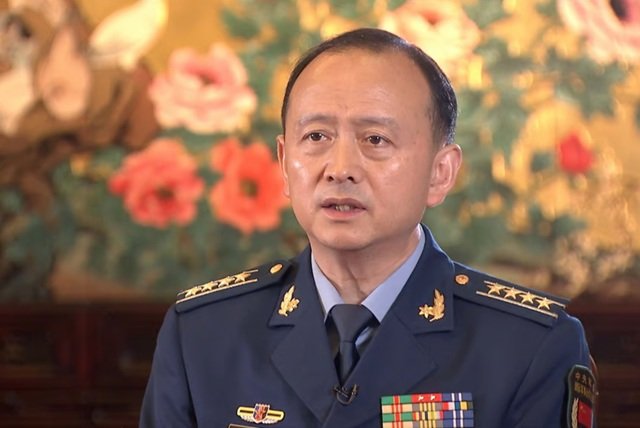
As the People’s Liberation Army approaches its centenary in 2027, retired senior colonel Zhou Bo says China’s long-term objective is to build a military capable of standing “neck and neck” with the United States while maintaining peaceful development. In an interview with the South China Morning Post, he outlines Beijing’s military ambitions, the challenges of peacetime modernisation, the Taiwan question, strategic competition with Washington, and the growing impact of artificial intelligence on future warfare.
As China moves towards the 100th anniversary of the People’s Liberation Army (PLA) in 2027, one of Beijing’s most closely watched strategic milestones is coming into sharper focus. Yet, according to retired senior colonel Zhou Bo, the benchmark should not be interpreted as the completion of China’s military transformation. Instead, it represents only one stage in a decades-long effort that ultimately aims to place China’s armed forces on an equal footing with those of the United States.
In an extensive interview published by the South China Morning Post, Zhou, now a senior fellow at Tsinghua University’s Centre for International Security and Strategy and author of Should the World Fear China?, outlined Beijing’s military objectives, the rationale behind its defence spending, the significance of Taiwan, and the strategic rivalry shaping China’s relationship with Washington.
According to Zhou, China has established two defining military milestones: the PLA’s centenary in 2027 and the centenary of the People’s Republic of China in 2049. Between these dates, Beijing intends to achieve the basic modernisation of its national defence and armed forces by 2035, while the longer-term goal remains the creation of what China describes as a “world-class military” by 2049.
What exactly constitutes a world-class military, however, remains open to interpretation. Zhou argued that if the term applies to more than one nation, China could already be considered among that group. If it refers exclusively to the strongest military in the world, then China’s ambition is to stand “neck and neck” with the United States by 2049.
The comparison with Russia, he suggested, illustrates how military capability extends beyond hardware alone. Referring to Russia’s performance during the early stages of the war in Ukraine, Zhou pointed to weaknesses in command structures, encrypted communications and logistics, arguing that China’s military has developed differently. He highlighted the PLA’s status as the world’s largest armed force, its sizeable naval fleet, and growing technological capabilities, while also noting that China’s defence budget remains roughly one quarter that of the United States.
Despite these indicators, Zhou acknowledged that measuring military strength in peacetime remains inherently difficult. The commissioning of new aircraft carriers or the introduction of technologies such as electromagnetic launch systems can be observed publicly, but factors including combat effectiveness, morale and battlefield performance cannot be fully evaluated until forces are tested under wartime conditions.
This creates what Zhou described as one of China’s central military dilemmas. While the United States has accumulated extensive operational experience through recent conflicts, China’s decades of relative peace have denied it similar opportunities to validate weapons systems and operational doctrines in combat. Yet he argued that this very absence of war has been one of China’s greatest strategic advantages, allowing sustained national development within a stable security environment.
Using the analogy of a sword whose sharpness cannot be tested without being drawn, Zhou argued that China cannot simply seek conflict to evaluate its military capability. Nevertheless, he rejected suggestions that the PLA’s lack of combat experience implies an inability to fight. He cited successful Chinese missile launches and the performance of Chinese fighter aircraft operated by Pakistan during aerial combat with India as examples that, in his view, demonstrate the effectiveness of Chinese defence technology.
Central to this confidence, Zhou argued, is China’s long-term approach to defence investment. Rather than pursuing dramatic increases in military expenditure, he emphasised sustained and predictable funding linked closely to the country’s economic development, reflecting a principle established under Deng Xiaoping during the late 1970s. In his assessment, consistent planning, expanding technological sophistication and a robust defence industrial base provide the foundations for achieving Beijing’s military objectives.
Zhou also defended the Chinese government’s anti-corruption campaign within the armed forces, arguing that exposing misconduct and prosecuting those responsible ultimately strengthens rather than weakens military effectiveness. While acknowledging that corruption can affect any institution, he characterised the campaign as evidence of efforts to cleanse the organisation rather than signs of systemic decline.
Taiwan remained one of the interview’s central themes. Zhou rejected assertions that the PLA’s 2027 milestone represents a timetable for military action against the island, arguing instead that Beijing continues to prioritise peaceful reunification. He pointed to exchanges between mainland officials and representatives of Taiwan’s Kuomintang, including preferential measures announced during recent visits, as evidence that incentives as well as pressure form part of China’s cross-strait policy.
He criticised what he described as repeated predictions by American military officials regarding an alleged 2027 deadline for conflict, arguing that such forecasts have proved inconsistent. According to Zhou, the absence of a publicly declared timetable reflects Beijing’s continued hope for peaceful reunification rather than preparations for imminent military action. At the same time, he reiterated that Chinese law preserves the possibility of using force if deemed necessary.
On US arms sales to Taiwan, Zhou predicted that such transactions would become increasingly difficult. He suggested Beijing could respond through commercial measures affecting products including Boeing aircraft, beef and soybeans, broader countermeasures, or expanded military exercises around Taiwan designed to increase pressure while avoiding direct confrontation.
More broadly, Zhou characterised China-US relations as fundamentally competitive despite areas of continuing cooperation. Referring to the concept of “constructive strategic stability” reportedly agreed during the May meeting between Chinese leader Xi Jinping and US President Donald Trump, he described it as an important acknowledgement of a new equilibrium between the two powers. Yet he also cautioned that maintaining such stability would remain challenging, particularly given unresolved differences over Taiwan and the broader strategic competition between Beijing and Washington.
Beyond immediate geopolitical disputes, Zhou argued that industrial capacity increasingly underpins military competition. He contended that the United States no longer possesses the same ability to project military power globally, pointing to what he described as China’s far greater shipbuilding capacity while acknowledging continuing American leadership in areas such as artificial intelligence. Whether Washington can successfully rebuild its industrial base, he suggested, remains an open question.
Nuclear deterrence formed another significant aspect of the discussion. Zhou argued that China does not seek numerical parity with the United States’ nuclear arsenal but instead aims to maintain sufficient capabilities to deter any consideration of a first nuclear strike. He reiterated China’s longstanding no-first-use policy while stressing that strategic stability depends on maintaining a credible deterrent rather than matching American warhead numbers.
Artificial intelligence, meanwhile, represents one of the most unpredictable dimensions of future military competition. Zhou argued that although the United States currently enjoys important advantages, China may prove stronger in the large-scale application of AI technologies. He observed that warfare has already been transformed by rapid advances in AI, citing developments in Ukraine and the American war against Iran as evidence of how quickly military technology is reshaping battlefields. While advocating international rules governing AI’s role in military decision-making, he acknowledged that such regulations often emerge only after crises expose the associated risks.
Looking across the wider Indo-Pacific, Zhou downplayed the enduring strategic significance of the first island chain, arguing that the PLA’s growing capabilities have altered the military balance. He questioned whether many American allies would be willing to become directly involved in a conflict, suggesting that although countries such as Japan and the Philippines continue to strengthen security cooperation with the United States, their own national interests would heavily influence any future decisions.
At sea, he argued that technical mechanisms designed to prevent accidental encounters between military forces remain valuable but cannot eliminate the underlying political tensions that continue to shape relations among China, the United States and regional powers. Ultimately, he concluded, avoiding dangerous incidents depends not only on agreed procedures but also on judgement exercised within an increasingly competitive strategic environment.









