
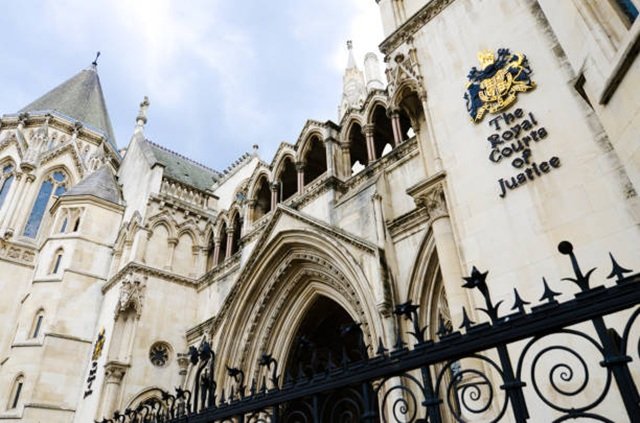
Lady Brenda Hale’s With the Law on Our Side arrives at a moment when public confidence in democratic institutions is increasingly fragile and governments across liberal democracies are testing the limits of constitutional restraint. It would be easy to mistake the book for a reassuring defence of Britain’s legal system, written by one of its most distinguished judges. That would be a profound misreading. Beneath its measured prose and accessible style lies a sustained indictment of political complacency, institutional neglect and the growing temptation to treat the rule of law as an inconvenience rather than a constitutional necessity. Hale never adopts the language of outrage, yet the cumulative force of her argument is unmistakably unsettling. The most provocative aspect of the book is not that it attacks politicians, but that it demonstrates, through judicial experience rather than political rhetoric, how democracies may erode their own legal foundations while continuing to proclaim their commitment to justice.
The book’s central claim is elegantly distilled into a deceptively simple observation: “The rule of law is a two-way street” (pp. 2–3). Citizens are obliged to obey the law, but governments are equally bound by it. That proposition ought to be self-evident. Hale’s argument is that it is no longer treated as such. Her warning that “Government ministers have threatened to disobey court orders which they do not like” and have sought to curtail judicial remedies and human rights protections (p. 3) transforms what might otherwise have been a conventional constitutional primer into a searching critique of executive power. Without descending into partisan commentary, she exposes a recurring paradox of modern democracies: governments frequently invoke the rule of law when disciplining citizens while displaying increasing impatience when the same principle constrains governmental action. Her observation that some political actors “seem to have forgotten that the rule of law is a two-way street” (p. 3) resonates far beyond Britain.
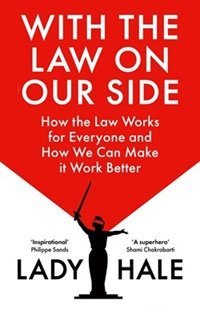
Equally striking is Hale’s insistence that constitutional decline often begins not with dramatic assaults on liberty but with apparently mundane decisions about public spending. Her opening chapters read almost like an audit of political priorities. “The justice system has been starved of the resources it needs to do the job which we all need it to do” (p. 1), she writes, before lamenting that justice is not protected in the same manner as health or education when governments allocate public expenditure (p. 4). This is not merely an administrative complaint. Hale argues that underfunding courts, reducing legal aid and allowing delays to proliferate ultimately weaken the legal order itself. Her repeated description of legal aid reductions as “a false economy” (pp. 21, 28) is among the book’s most persuasive themes. By showing how the withdrawal of early legal advice generates longer proceedings, greater expense and increased pressure on courts, she dismantles the seductive politics of austerity with quiet empirical force.
The same analytical discipline characterises her treatment of criminal justice. Hale rejects the increasingly familiar assumption that harsher punishment necessarily produces greater public safety. Instead, she reminds readers that “the greatest deterrent to crime is the fear of being caught and prosecuted, not the precise length of the sentence” (p. 16). In a political climate where sentencing inflation often substitutes for evidence-based policy, this is a deliberately unfashionable argument. Her discussion of prison overcrowding, where “there are not even enough prison places to accommodate all the people sent to prison” (p. 2), illustrates a recurring feature of the book: rather than condemning individual governments, she exposes structural failures that accumulate across decades until they become accepted as normal.
One of the book’s most compelling sections concerns equality before the law, illustrated through the case of the Sri Lankan consultant orthodontist Mrs Sumithra Hewage. Hale uses the litigation not simply to explain discrimination law but to reveal how prejudice frequently manifests through institutional behaviour rather than overt hostility. Mrs Hewage, despite suffering acknowledged unfair treatment, was required to demonstrate that her treatment differed materially from that of comparable white male colleagues. The contrast with Professor Forrester and her successor, Mr Lamour, becomes legally significant because the employer failed to provide a convincing explanation for the disparity. Hale’s treatment of the case is particularly powerful because it refuses simplistic narratives of racism or sexism while equally rejecting the comforting fiction that discrimination must always announce itself explicitly. The episode becomes a sophisticated meditation on how power operates within professional institutions. It is one of the strongest examples in the book of Hale translating intricate legal doctrine into an accessible account of lived injustice.
Yet Hale is careful not to romanticise judicial decision-making. One of the book’s most intellectually honest admissions is that “judges, however learned in the law, are human beings with their own values and experiences. They do not always agree where justice lies” (p. 210). That acknowledgement distinguishes this work from many popular defences of judicial authority. Hale neither presents judges as infallible guardians nor embraces crude judicial scepticism. Instead, she argues that legal institutions derive legitimacy precisely because their decisions are open to scrutiny, appeal and reasoned disagreement. The tension between judicial fallibility and judicial independence runs throughout the book, and Hale resists resolving it through simplistic constitutional idealism.
Her discussion of bodily autonomy similarly demonstrates the breadth of her legal vision. The insistence that “it is the patient’s right to decide what was done with his or her own body” (p. 190) and that “where there are choices, it is the patient’s rather than the doctor’s values which count” (p. 190) reflects a conception of law centred upon individual dignity rather than institutional authority. The memorable observation that “a gilded cage is still a cage” (p. 194) captures this philosophy with unusual literary economy. Even benevolent restrictions upon liberty remain restrictions, and law must remain alert to paternalism disguised as protection. Hale’s treatment of assisted dying, capacity and bodily integrity similarly avoids ideological certainty, instead demonstrating how legal principles often collide in morally tragic circumstances.

Perhaps the book reaches its greatest constitutional intensity in its analysis of the Rwanda legislation. Hale’s warning that legislation allowing government effectively to determine factual reality “usurps the judicial function” (p. 253) goes to the heart of constitutional government. Her concern is not merely about immigration policy but about the gradual erosion of institutional boundaries. Likewise, her observation that legislation enabling ministers selectively to disregard international obligations threatens the rule of law itself (p. 254) places Britain within a wider global debate concerning democratic backsliding. These chapters are among the book’s most politically contentious, yet Hale presents them with characteristic judicial restraint, allowing constitutional principle rather than political preference to carry the argument.
If the book has a limitation, it lies in that very restraint. Hale’s moderation is both its greatest virtue and its greatest weakness. Readers hoping for a more direct confrontation with the political choices that have produced many of the problems she identifies may find her unwillingness to attribute responsibility frustrating. Her arguments often imply conclusions more radical than the language she employs. The cumulative evidence she assembles points towards a constitutional culture in which access to justice, judicial independence and legal accountability are increasingly vulnerable to short-term political calculation. Yet Hale remains the judge even in retirement, preferring constitutional reasoning to rhetorical confrontation.
Nevertheless, With the Law on Our Side succeeds because it transforms constitutional law from an abstract academic subject into an urgent public concern. Hale reminds us that “the courts do not provide a service like any other public service” because their value extends to the entire community (p. 237). Without meaningful access to justice, she argues, legislation risks becoming “a dead letter” and democratic representation “a meaningless charade” (p. 237). The book concludes not with institutional triumphalism but with civic responsibility. The answer, Hale suggests, lies “not in the pipe dream of a written Constitution, but in the power of each and every one of us – to understand how much the law means to each and every one of us” (p. 263). That is both an invitation and a warning. With the Law on Our Side is not merely a defence of courts. It is a reminder that constitutional democracy ultimately depends less upon judges than upon citizens who recognise, before it is too late, what is lost when the rule of law becomes politically negotiable.