When the Taliban returned to power in Afghanistan in 2021, Saeedullah Wafa knew that remaining in his homeland was no longer an option. Music was swiftly outlawed under the movement’s austere interpretation of Islamic law, with performers targeted, instruments burned and studios destroyed. For Wafa, a singer and harmonium player, the choice was stark. He sold his musical equipment, gathered his wife and seven children, and crossed into neighbouring Pakistan in search of safety.
For generations, Pakistan had served as a haven for Afghans escaping conflict. In the north-western city of Peshawar, artists displaced by decades of war found not only sanctuary but also a cultural environment deeply connected to Afghanistan’s own musical traditions. Yet, as originally reported by El País, that refuge is now increasingly fragile as Pakistan’s sweeping deportation campaign threatens communities that had believed they had found temporary security.
The uncertainty surrounding Wafa’s future reflects the predicament facing thousands of Afghans whose lives have been upended not once but repeatedly. “We left one war only to arrive in a country where we are at risk of being deported back at any moment,” says the 39-year-old musician. Although a ruling by the Peshawar High Court currently protects him from deportation, he fears that legal safeguards could yet be overturned, exposing his family once again to the dangers they fled.
Pakistan launched its Illegal Foreigners Repatriation Plan at the end of 2023, targeting undocumented migrants, the largest group of whom are Afghan nationals. Since then, 2.6 million Afghan citizens have left the country. According to figures from the United Nations High Commissioner for Refugees (UNHCR), 703,500 departures were recorded between January and July this year alone. The scale of the movement has overwhelmed the Torkham border crossing, where families have reportedly spent days stranded without adequate food or shelter, creating a humanitarian crisis.
Islamabad has defended the campaign by stating that it is aimed at “illegal foreigners” allegedly linked to armed groups. Over time, however, the crackdown has extended beyond undocumented migrants. UNHCR reports that since 2023 more than 27,000 refugees and asylum seekers have also been detained, illustrating how even recognised vulnerable groups have become caught within the expanding enforcement effort.
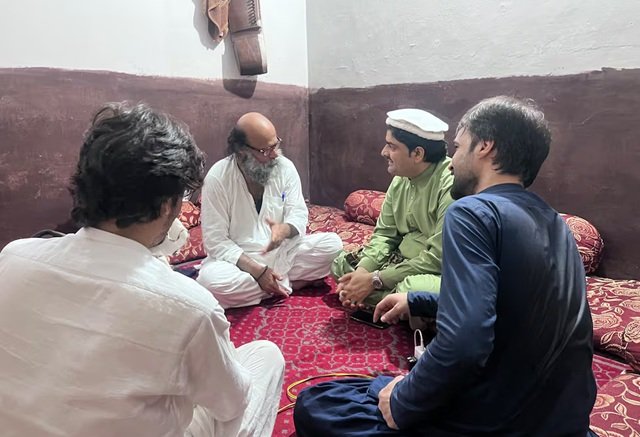
For Afghan musicians, the atmosphere of fear predates the formal deportation policy. In Pakistan’s Khyber Pakhtunkhwa province, police operations targeting undocumented Afghans were already taking place before the national campaign began. In May 2022, officers raided the Tehkal neighbourhood of Peshawar, where Wafa had settled among a community of Afghan artists. He and three other musicians were arrested during the operation.
The experience left a lasting mark. Wafa recalls believing deportation was inevitable and fearing that a return to Afghanistan would expose him to torture or death at the hands of the Taliban. He also worried about the future awaiting his children if the family were forced back.
Relief came through an unexpected alliance between Pakistan’s cultural community and the legal system. Two local organisations, Hunari Tolana and Mafkora, challenged the application of Pakistan’s Foreigners Act before the Peshawar High Court, arguing that individuals facing a high risk of persecution should not be returned to Afghanistan.
On 13 February 2025, the court ruled in their favour. The judgment protected more than 100 Afghan nationals, including musicians, singers, transgender people, civil society activists and Afghan women studying at Pakistani universities. Official documentation issued following the ruling shielded them from deportation, at least for the time being.
Hayat Roghani, founder of Mafkora, described the judgment as a “significant legal precedent”, believing it would help safeguard Afghan musicians who have become increasingly vulnerable. For Wafa, the ruling brought temporary relief rather than lasting certainty. “Now at least we will not be deported to a country where they can torture us and kill us, and where our children would suffer,” he says.
Yet the legal protection remains precarious. Faheem Marwat, a lawyer in Peshawar specialising in migrant cases, cautions that Pakistan still lacks refugee legislation capable of providing durable safeguards. He notes that the court ruling can be challenged and potentially reversed, making broader legal reform essential if refugee rights are to receive lasting protection. Roghani also says that many Afghan musicians continue to face harassment from police despite possessing official documents.
The uncertainty extends beyond performers themselves. Mohammad Hassan Azmari, the last remaining collector of Afghan music cassettes in Peshawar, has devoted his life to preserving nearly 2,000 recordings documenting Afghanistan’s musical heritage. Although he holds a Proof of Registration card issued by Pakistan in cooperation with UNHCR, allowing him to reside legally after arriving before 2015, the document offers no permanent residence.
“Every time the police come to the markets, we are afraid,” he says. Although officers have never come specifically for him, fear has become a constant companion. At one point, he stopped going to work for a month, surviving on savings while continuing to pay rent on his shop and support his family.
He has begun contemplating a return to Afghanistan, not because he wishes to go, but because living indefinitely with uncertainty has become increasingly difficult. Yet even that option presents another dilemma. The archive he has spent decades preserving would be effectively outlawed under Afghanistan’s prohibition on music. “Afghanistan has banned music. If I return, I do not know how I will earn a living,” he says.
For younger musicians such as 29-year-old Nadeem Shah, the support received from local cultural organisations has reinforced his attachment to Peshawar, a city whose longstanding cultural links with Afghanistan allowed him to feel at home after migration. He describes feeling fortunate when local groups stood beside him during the legal battle.
Both Shah and Wafa, however, express disappointment at what they perceive as insufficient assistance from international organisations. Shah says repeated visits to UNHCR offices produced interviews but no meaningful follow-up, while Wafa says no international organisation has provided practical support since his family arrived in Pakistan. The court ruling secured only the right to remain; it did not provide employment or financial stability.
UNHCR spokesperson Qaiser Khan Afridi says the agency has continued seeking third-country resettlement opportunities despite limited international willingness to receive Afghan refugees. Since 2022, UNHCR has submitted more than 12,000 refugees for resettlement consideration across 12 countries, with more than 5,000 departing for various destinations. The agency also says it continues negotiating with the Pakistani Government to prevent deportations of vulnerable communities while searching for solutions despite increasingly restrictive policies.
Those efforts have become more difficult following the near collapse of the UN’s global refugee resettlement programme after the withdrawal of the United States, previously the largest destination for resettled refugees, following one of Donald Trump’s first executive orders after returning to the presidency in 2025.
Meanwhile, daily survival remains the overriding concern. Wafa and Shah are paid only when they perform. Some days there are no engagements at all. Even weddings and local events provide little more than enough income to buy food. Shah supports only himself, but Wafa must provide for a household of nine.
More than five years after arriving in Pakistan, Wafa says his children still have no access to schooling, while the family survives through occasional performances and day labour. As Peshawar’s future as the last refuge for Afghanistan’s musical community becomes increasingly uncertain, the musicians who escaped one campaign against their art now confront another struggle simply to remain where they can continue practising it.