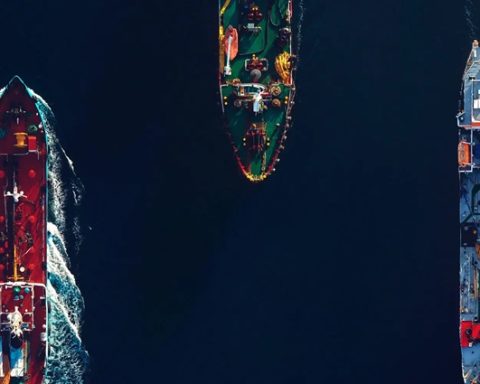
No tankers have loaded at Kharg Island, Iran’s main oil export terminal, for at least a week, according to shipping and satellite data providers, indicating that the renewed US naval blockade has brought Tehran’s crude exports to a halt.
Washington reimposed the naval blockade on Iranian ports in mid-July after an interim deal to reopen the Strait of Hormuz collapsed. Kharg Island, a critical hub for Iran’s oil industry, fell idle on July 31, according to ship tracking company Kpler and consultancy Energy Aspects.
Satellite images showed all three loading bays at Kharg had been “empty for a sustained period”, maritime intelligence company Windward said. Only 16 vessels were anchored in the waiting area around Kharg on Tuesday, Windward added, the lowest number since early last month.
The disruption is significant because roughly nine out of every 10 barrels of crude exported by Iran are loaded on the tiny coral island in the northern Gulf. Much of Iran’s coastline is too shallow to accommodate large tankers, making Kharg the principal gateway for the country’s crude exports.
“The blockade is effective, in the sense that there is not a lot of tanker movement in or out,” said Richard Bronze, head of geopolitics at Energy Aspects. However, he said the loss of exports was unlikely to put immediate pressure on Tehran to compromise in negotiations with the US.
“It is pretty clear the Iranians feel they have the upper hand when it comes to Hormuz and they are willing to tolerate a lot of economic pain to press their advantage,” Bronze said.
Iran had continued loading vessels at Kharg throughout its six-month war with the US and Israel, making the current interruption one of the longest since the war began. United Against Nuclear Iran (Uani), a Washington-based lobbying group that tracks Iranian oil shipments, said it had not observed any tanker laden with Iranian crude successfully leaving the Gulf since July 12.
For the moment, however, Iran continues to receive revenue from cargoes that left the Gulf during the ceasefire and are only now reaching buyers in Asia. Uani said 26 Iran-flagged tankers had reached waters off Malaysia, where Iranian crude is typically transferred before being delivered to Chinese refineries.
Bronze said Tehran could even benefit if oil prices rose before those barrels were ultimately sold, but the income from those shipments will eventually end. “The sands are running through the egg timer in terms of how long this will continue to generate revenues,” he said.
The blockade is also preventing Iran from replenishing the fleet of empty tankers available to load at Kharg. Ships that have already discharged their cargoes in Asia have not returned to Iranian waters. Uani said several were waiting off Sri Lanka, while others had been spotted near Oman and Pakistan.
Benchmark Brent crude oil was priced at just under $82 a barrel in London on Friday as traders continued to await an agreement that would reopen shipping through the Strait of Hormuz.
Iranian foreign ministry officials said this week that they had agreed with Oman on geographical coordinates for a new shipping route through the strait. However, there had been no signs of progress since Wednesday, when officials said a joint statement was in the “final stages”.
The prolonged halt at Kharg has not resulted in a significant increase in the island’s oil storage tanks, Energy Aspects noted. This suggests Tehran has begun cutting crude production at its oilfields to prevent storage capacity from being exhausted.
While the Iranian-Omani talks have remained bilateral, a person briefed on the situation said that if an acceptable deal is reached, the US would lift its blockade and reinstate a waiver on oil sanctions, allowing buyers to freely purchase Iranian crude.