Editorial
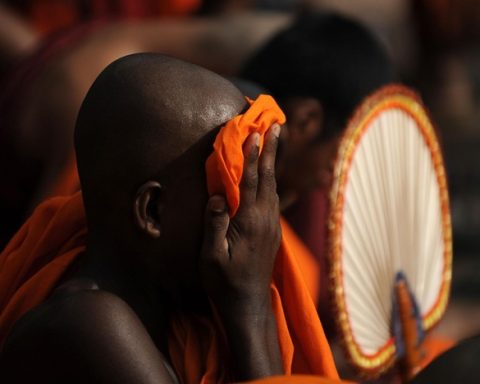
The intervention by Sri Lanka’s four leading Buddhist prelates to bring an end to the ten-day protest at Viharamahadevi Park deserves recognition. Whatever the political calculations behind the episode, the decision to step in was necessary. It offered a way out of an increasingly damaging confrontation without overturning a court decision or securing the release of Galagoda Aththe Gnanasara Thera. More importantly, it restored the possibility of resolving the dispute through lawful channels rather than street pressure.
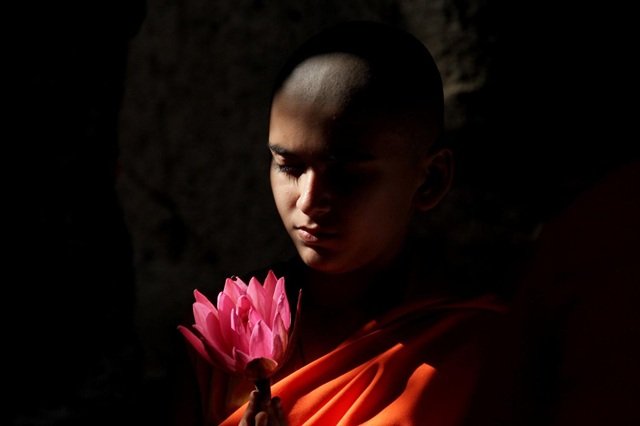
The letter signed by the Maha Nayakas of the Malwathu, Asgiri, Amarapura and Ramanna chapters was carefully worded. Its most important message was that the respect accorded to Buddhist monks survives only as long as they preserve disciplined monastic conduct and uphold the Buddha’s Vinaya. The robes are not a licence to stand above the law, intimidate critics or turn religious authority into a political weapon. The prelates did not need to denounce anyone by name. Their statement contained a more fundamental rebuke.
We should be grateful that they intervened. Yet the questions surrounding the protest cannot simply disappear with its conclusion.
We do not know why Balangoda Kassapa Thera visited the Kingsbury Hotel, nor do we know whether the circumstances of that visit had any connection with the political manoeuvring surrounding the protest. The hotel was among the sites attacked during the Easter Sunday bombings of 2019 by Zahran Hashim and his followers. The attacks subsequently became the subject of competing conspiracy narratives that too often displaced serious examination of the roots of radicalisation, the growth of extremist networks and the failures to act on intelligence. We must not repeat that mistake by turning unanswered questions into allegations of fact. But neither should uneasy questions be dismissed simply because they involve religious figures or political personalities.
We also do not know whether the Maha Nayakas’ letter followed back-channel discussions with senior monks or those involved in the protest. Nor can we establish why it took ten days for the confrontation to reach this point. The Justice Minister’s reported assurance that Gnanasara Thera would be allowed to wear his robes when brought before the court might have provided a basis for ending the protest earlier. If so, why was that route not taken? These are legitimate questions, not grounds for speculation.
The President, too, had an opportunity to approach the matter more rationally and less politically. If a previous presidential pardon had been invalidated because of procedural or institutional failures, the government could have explained those failures publicly and considered what lawful steps, if any, were available. Accountability for administrative errors is not the same as granting political favours. Nor is it an invitation to disregard judicial authority. Vengeance cannot be justice, and justice cannot be administered according to the political convenience of the moment.
There is an especially troubling dimension to this case. The wife of the disappeared journalist whose contempt-of-court case was central to Gnanasara Thera’s conviction reportedly appealed publicly for him to serve at least half of his sentence. That intervention deserves attention precisely because it came from someone directly affected by the case. Her position does not determine the legal outcome, but it should caution everyone against reducing justice to a contest between political camps.
Whether the protest formed part of a larger political strategy aimed at future confrontations is a separate question. What matters now is that it ended without the court’s decision being overturned. That is a good outcome. It is not evidence of political wisdom, and it should not be mistaken for a resolution of the deeper crisis within the Buddhist establishment.
The political context is equally important. Anura Kumara Dissanayake’s rise to power reflected a structural shift in Sri Lankan politics, not merely the triumph of one leader or party. Even sections of the opposition, and some within the ruling National People’s Power (NPP), appear reluctant to grasp the full implications. For decades, governments operated through powerful families, personal loyalties and inner circles around dominant leaders. The present arrangement has a different internal dynamic: a government with a substantial parliamentary majority and popular mandate, alongside a JVP organisational structure in which Tilvin Silva exercises inseparable influence. The relationship between electoral authority and party authority is central to understanding the new political order.
The monks involved in the protest may have mistaken this transformation for the familiar political environment in which religious pressure could be converted into immediate concessions. That is a dangerous miscalculation. The NPP and JVP are not immune to political failure, but neither are they simply reproductions of the governments they replaced. Opposition parties should study these changes seriously and respond in the national interest, rather than exploit every confrontation for personal or partisan advantage.
The Maha Nayakas have helped prevent a damaging episode from deteriorating further. The harder task remains: restoring the distinction between religious authority, political influence and the rule of law. No institution can preserve public respect by demanding immunity from scrutiny. The Buddhist order will not be protected by turning every controversy involving a monk into a political battle. It will be protected when its leaders insist, without fear or favour, that the discipline expected of others must begin with those who wear the robes.
This principle must be recognised by religious leaders across all faiths, including the Catholic Church, mosques, Hindu temples and newer religious movements such as Born Again churches. No religious institution should exploit people’s suffering for political gain, nor should any political party attempt to manipulate the country’s fundamental institutions to serve its own ambitions. Those who seek to turn public grievances into instruments of political manoeuvring must understand that such tactics carry consequences. Sooner or later, they will have to confront the realities they have chosen to ignore.
In this context, the contrast with Cardinal Ranjith’s interventions is worth considering. Unlike the Maha Nayakas’ intervention, which helped bring the protest to an end without overturning the court’s decision, Cardinal Ranjith’s politically charged interventions have contributed to divisions within Sri Lankan society. His repeated engagement with conspiracy theories and apparent pursuit of retribution have also raised questions about the evidential basis of his claims. The Maha Nayakas’ intervention, by contrast, reflects the kind of responsible, measured and constructive leadership that any society has the right to expect from its spiritual leaders.