India has sharply criticised the United States Senate’s passage of legislation that could allow President Donald Trump to impose tariffs of up to 100% on countries buying large quantities of Russian oil and gas, describing the measure as hostile and disproportionate. Indian officials have also pointed to what they regard as a double standard in the treatment of Russian energy purchases by major economies.
The Lindsey O. Graham Sanctioning Russia and Iran Act of 2026 passed the Senate 86-11 on Friday. The legislation would give the US president authority to impose tariffs of up to 100% on countries that rank among the five largest importers of Russian crude oil or gas, or among the top five facilitators of Russian oil sanctions evasion. It would also extend sanctions against Iran.
The bill has not yet become law. The US House of Representatives is in summer recess and is expected to consider the measure after returning around 31 August. Democratic representatives have raised objections to the breadth of the proposed tariff powers, warning that they could increase costs for American importers. Although the Senate vote gives the legislation momentum, it does not guarantee passage by the House.
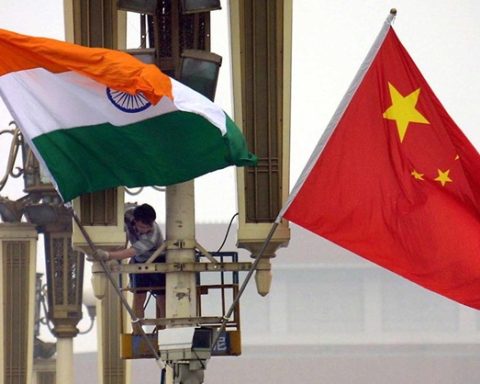
India and China were identified during Senate debate as the countries most likely to fall within the proposed tariff mechanism. Japan and some European states could also be affected, depending on their imports and whether they qualify for an exemption. The bill exempts countries whose Russian natural-gas imports account for less than 15% of Russia’s total gas exports and that are taking meaningful steps to reduce those imports.
India’s exposure reflects the scale of its Russian energy purchases. Kpler data showed Russia supplied about 2.61 million barrels per day (bpd) to India in June, representing 52.4% of the country’s total crude imports of roughly 4.98 million bpd, up from 37.7% in May. The Centre for Research on Energy and Clean Air (CREA) estimated India’s June purchases of Russian hydrocarbons at EUR 5.5 billion, making it the world’s second-largest buyer that month. Crude accounted for EUR 4.5 billion, or about 83%, with June purchases increasing 34% month-on-month.
Indian officials argue that these purchases are driven by energy security and commercial considerations rather than an intention to finance Russia’s war effort. India’s dependence on imported crude is structural. The International Energy Agency estimated that India was already the world’s second-largest crude-oil net importer in 2023, with net imports of 4.6 million bpd, and projects that figure to rise to 5.8 million bpd by 2030.
The government’s central question is whether Western producers could supply India with comparable volumes and crude grades at similar landed prices. Officials said India would move away from Russian crude if Western countries could provide equivalent supplies on comparable terms, while expressing doubt that they could do so.
Russian crude is not always the cheapest option, as freight, insurance, refinery configuration and sanctions costs influence the final landed price. However, discounted Russian barrels became attractive following Western sanctions. Russia’s share of India’s crude imports increased from about 2.5% in 2021 to about 39% in 2023, according to US Energy Information Administration data.
India also continues to diversify its supplies. Kpler data showed the United Arab Emirates as its second-largest supplier in June at about 502,000 bpd, followed by Venezuela at 354,000 bpd and Saudi Arabia at 297,000 bpd. Officials stress that Russia is India’s largest single source within a diversified supply basket, rather than its only supplier.
New Delhi’s strongest objection concerns Europe’s continuing purchases of Russian energy. CREA’s June data showed the European Union remained the largest buyer of Russian LNG, accounting for 49%, while it accounted for 32% of Russian pipeline-gas purchases. Between January and May 2026, Russian pipeline-gas imports into the EU rose 7% year-on-year, while LNG imports increased 11%.
Indian officials acknowledge that Europe and India are not in identical circumstances and that the EU has reduced its dependence on Russian energy. Their argument is narrower: if Russian energy revenue is the concern, the same standard should apply across major economies.
For New Delhi, the issue therefore extends beyond the immediate tariff threat. Officials see the legislation as an attempt to use India’s energy dependence as leverage over its foreign-policy choices. The question they continue to pose is whether India can reasonably be expected to abandon Russian crude if alternative suppliers cannot provide the same volumes at comparable prices.