


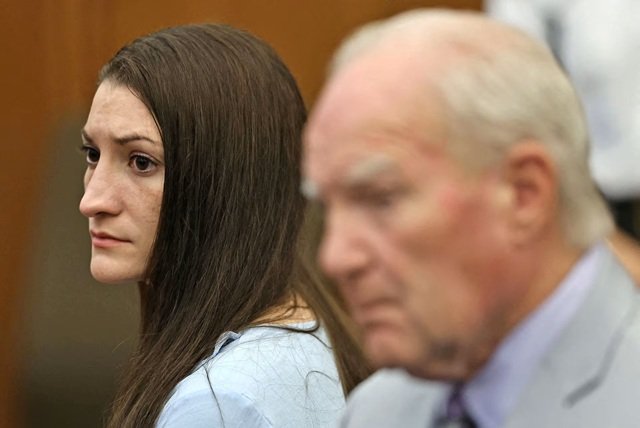
The US trial of Lindsay Clancy, who admitted killing her three children, has ended without a verdict after jurors failed to agree on whether the 36-year-old was criminally responsible for the deaths. The case was declared a mistrial on Friday by Judge William Sullivan in Plymouth, Massachusetts, after the jury reported three times that it could not reach a decision.
Clancy, a former nurse, admitted to killing her three children but her lawyer argued that she was not legally responsible because she had been suffering from so-called postpartum psychosis. During the nearly six-week trial, Clancy said that a voice had ordered her to kill her children. Prosecutors rejected that argument, maintaining that she understood what she was doing and should therefore be held criminally responsible.
The central dispute in the case was therefore not whether Clancy had killed her children, which she had admitted, but whether her mental state at the time meant she could be held legally accountable for the killings. The jury was unable to reach agreement on that question despite deliberations during the trial.
The proceedings became particularly contentious in their final stages. At the last minute, an appeals court rejected a defence request to replace one of the jurors. The juror had disagreed with the other 11 members of the panel, who apparently wanted to declare Clancy legally incapable of responsibility.
The judge said it was not his role to take the side of either the individual juror or the other 11 members of the panel. With the jury unable to reach a unanimous decision, Sullivan ultimately declared the proceedings invalid, bringing the trial to an end without a determination of Clancy’s legal responsibility.
The decision now leaves prosecutors with several options. They must decide whether to bring Clancy before the court again, drop the charges or seek an agreement with the defence. The collapse of the trial therefore does not itself settle the question of whether Clancy will ultimately face criminal responsibility for the deaths of her children.
The case has attracted substantial media attention across the United States and was broadcast live on television. Its conclusion without a verdict is likely to prolong public interest in the competing arguments presented during the trial.
Beyond the courtroom, the case has also prompted a broad debate in the United States over Clancy’s criminal responsibility and the mental health of mothers following childbirth. The disagreement between the prosecution and defence centred on whether Clancy’s reported mental condition prevented her from understanding and controlling her actions, while the prosecution maintained that she knew what she was doing.
With the jury unable to resolve that fundamental question, the future of the case now rests with prosecutors and the decisions they make following the mistrial.









