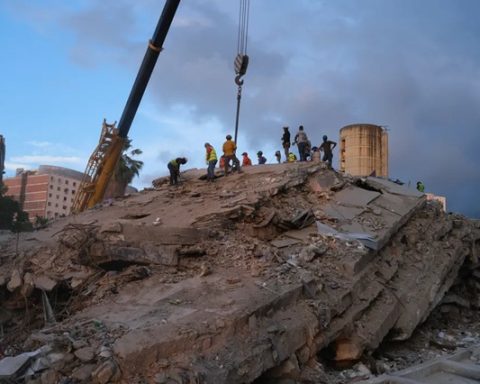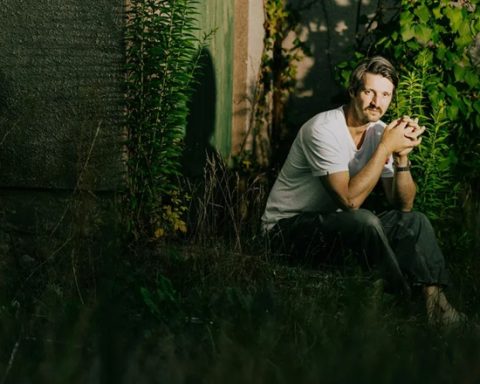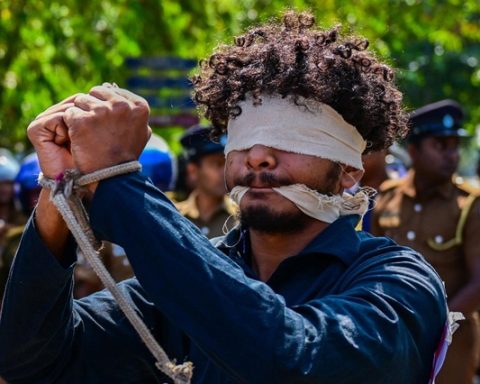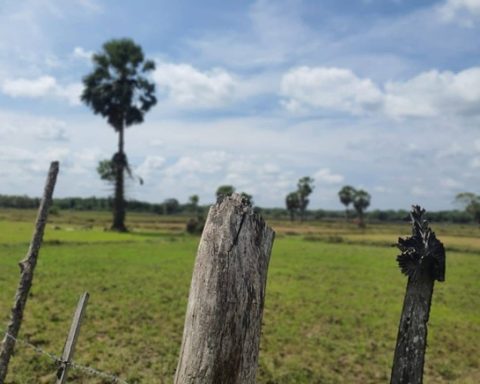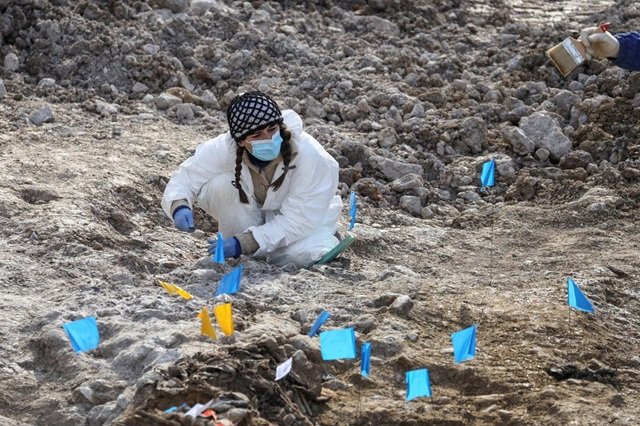
Erblin Ademi watched from a distance as workers began excavating recently discovered mass graves in Kosovo. Nearly 30 years after his father disappeared during the 1998-99 war, Ademi is caught between fear and hope that the remains may finally be found.
Ademi was nine years old when he last saw his father, Adem Ademi, a prominent surgeon who disappeared in April 1999 along with 22 other intellectuals, just months before the end of the war. Their disappearance became one of thousands of unresolved cases left by the conflict, with some 1,600 people still missing and believed to be scattered in unmarked mass graves.
For the Ademi family, decades have brought repeated disappointments as efforts to locate the surgeon’s remains failed. The latest excavation, however, has created cautious optimism because the graves were discovered close to the place where Ademi was last seen.
Excavations near the village of Kalluder e Vogel in the northern municipality of Zubin Potok began in late July after human remains were discovered at the site. Kosovo Prime Minister Albin Kurti has said authorities believe the victims could be the missing intellectuals, who were allegedly captured while attempting to flee Kosovo to avoid being rounded up by Serb troops.
For families who have spent decades without answers, the excavations carry an emotional weight that goes beyond the search for physical remains.
“Always, when we hear about the beginning of the excavations, there is a mixed feeling, a feeling of hope and a feeling of pain,” Ademi said. “No matter how many years pass, the feeling of pain will always exist … but at the same time there has always been hope, a feeling that finally the truth will be revealed.”
The missing include roughly 1,200 ethnic Albanians, around 400 ethnic Serbs and dozens of Roma, according to the Humanitarian Law Center rights group. The figures reflect the unresolved human cost of a conflict in which some 13,000 people died.
The war saw ethnic Albanians launch a rebellion to gain independence from Serbia. Kosovo declared independence from Serbia in 2008, but Belgrade still does not recognise it. The political dispute has continued to shape relations between the two sides, while the fate of those who disappeared during the war remains one of the most sensitive unresolved issues.
In May 2023, Serbia and Kosovo reached an agreement that included commitments by both sides to clarify the fate of missing people. However, each side has accused the other of delaying cooperation.
“It is obvious that authorities are not willing to cooperate,” said Bekim Blakaj of the Humanitarian Law Center.
The issue also carries wider political significance. The European Union wants Kosovo and Serbia to normalise relations as part of their efforts to move towards joining the bloc. Progress on addressing the legacy of the war therefore remains connected to a broader effort to improve relations between the two sides.
The latest excavations have also taken place amid renewed legal action. Kosovo police said last month that they had arrested two ethnic Serbs on suspicion of war crimes connected to the mass graves. The two men remain in custody.
Several senior Serbian political and military officials have previously been tried and convicted of war crimes in Kosovo at a United Nations tribunal in The Hague, Netherlands.
For Ademi, however, the search is ultimately personal. Holding a photograph of his father carrying him as a young boy, he spoke of what the discovery could mean after nearly three decades of uncertainty.
“Every human being has the right to have a grave where they can be visited, where they can be honored, where they can be remembered,” he said.
His family remains hopeful that the excavation will finally provide an answer. Even if the process takes time, Ademi said they will wait until they can honour the missing as they deserve.
For thousands of families across Kosovo, that wait has lasted generations. The newly discovered graves offer no guarantee of immediate answers, but they have reopened the possibility that some of the conflict’s most enduring mysteries may finally be brought to an end.