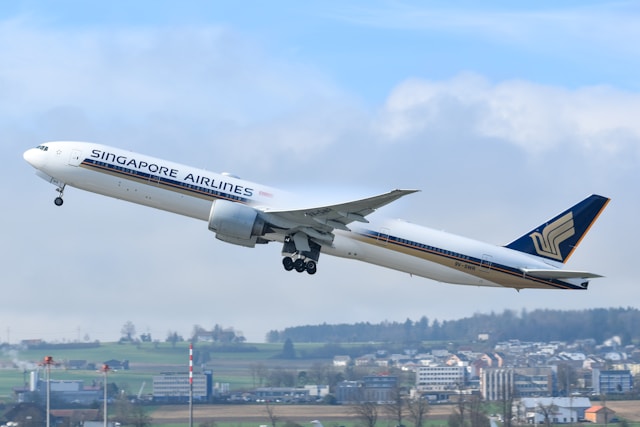
Singapore Airlines has booked operating losses of about S$1bn ($780mn) on its investment in Air India less than two years after taking a 25 per cent stake in the Indian carrier, raising concerns that further losses could follow as the airline undergoes a lengthy transformation.
Singapore Airlines invested in Air India in November 2024, just months before a catastrophic plane crash and ahead of a jet fuel crisis that has placed additional pressure on airlines worldwide. Air India has also been hit by the closure of Pakistani airspace to Indian carriers, a weakening Indian rupee and supply-chain problems affecting aircraft and fleet upgrades.
“It has been an annus horribilis for Air India,” a Singapore Airlines executive said. “Air India is trying to undergo a major transformation — the likes of which have probably never been seen in the airline industry — while also dealing with all these other issues. The timing could not have been worse.”
The scale of the losses has prompted some industry commentators to question whether Singapore Airlines is repeating mistakes from previous overseas investments. Jason Sum, an analyst at DBS, said he did not expect Air India to become profitable over the next few years.
“Given the scale of the losses and the time needed to rebuild the airline, any meaningful earnings contribution to Singapore Airlines are likely to remain several years away,” Sum said.
Singapore Airlines’ relationship with Air India grew out of its involvement with Vistara, an Indian airline launched in 2013 as a joint venture between Singapore Airlines and Tata Sons, India’s largest conglomerate.
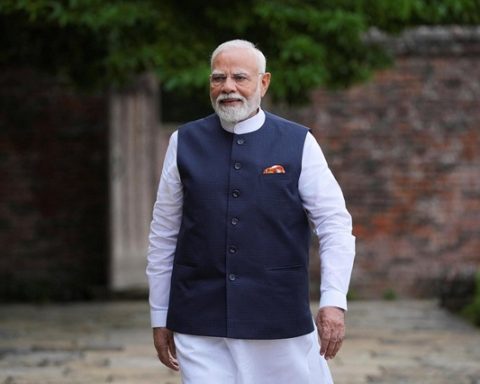
When Tata began exploring the purchase of loss-making Air India from Narendra Modi’s government in 2021, Singapore Airlines was enlisted as an unofficial adviser on the privatisation, according to people familiar with the talks.
Singapore Airlines was seeking opportunities to expand beyond its constrained domestic market and saw India’s long-term growth potential as an opportunity. Executives believed that taking a significant stake in an Indian airline would allow the company to benefit from rising demand over the coming decades, despite the substantial investment required to rebuild Air India.
Singapore Airlines ultimately agreed to fold Vistara into Air India. It contributed an additional S$822mn ($642mn) in capital and took a 25 per cent stake, with Tata owning the remainder. The transaction generated a one-off S$1.1bn accounting gain for Singapore Airlines.
Management understood that Air India would require years of investment. The carrier had become bloated under state ownership, with an ageing fleet and poor operational reliability. Yet the scale and timing of the subsequent setbacks have been far greater than anticipated.
Five months after signing the deal, Singapore Airlines was required to inject another S$167mn into Air India, bringing its total capital investment to S$989mn ($772mn).
Three months later, Air India flight 171 crashed shortly after taking off from Ahmedabad airport, killing 260 people, including all but one of the 242 passengers. It was the worst aviation disaster for more than a decade.
Indian authorities have yet to conclude their investigation into the crash. Air India subsequently reduced its schedule while inspecting its Boeing 787 fleet and increasing pre-flight checks.
The carrier has also suffered substantial financial damage from the closure of Pakistani airspace to Indian airlines following renewed conflict between India and Pakistan last year. Air India said the restrictions caused $600mn in losses through flight disruption.
Other pressures have compounded the difficulties. Global supply-chain disruptions have delayed fleet renewals and cabin upgrades, while the Middle East conflict has contributed to a worldwide jet fuel crisis. The Indian rupee has also fallen heavily against the US dollar, particularly affecting Air India because most of its costs are denominated in the US currency.
Tata Sons chair N Chandrasekaran has described the combination of problems as a “perfect storm” and said Air India’s transformation could take as long as a decade.
The carrier is now preparing for a change in leadership. Tata said last week that Tewolde Gebremariam would become Air India’s chief executive after more than a decade running Ethiopian Airlines, during which he oversaw its growth into Africa’s largest and most profitable carrier.
Air India’s difficulties resulted in a S$945mn ($738mn) loss for Singapore Airlines in the 12 months to the end of March this year. Singapore Airlines has since said losses during the following three months were S$41mn higher than in the previous quarter, without disclosing total figures.
The possibility of further capital requirements is now a central concern. Hashim Osman, an analyst at Phillip Securities, said the need for another injection was high because Air India remained cash-flow negative.
Singapore Airlines said its board would consider any future requests for capital while taking into account the group’s other capital requirements and Air India’s business strategy.
The company also said Air India was making “tangible progress” across customer experience, fleet and network growth, products and services and operational performance. Singapore Airlines chief executive Goh Choon Phong has acknowledged that investors will have to wait.
“It is going to be a long game,” he said. “There is no shortcut.”
The Air India investment has also revived memories of Singapore Airlines’ previous overseas expansion efforts. In 2004, the carrier recorded hundreds of millions of dollars in losses after selling its stake in Air New Zealand after four years. It also suffered substantial losses from investments in Virgin Atlantic and Virgin Australia, the latter collapsing in 2020 before being taken over by Bain Capital.
DBS’s Sum said Air India was probably a higher-risk and more capital-intensive investment than Singapore Airlines’ previous overseas deals, although the potential reward was considerably greater.
“If execution is successful, the returns could be much more meaningful, but so could the losses if the turnaround takes longer than expected,” he said.
For Singapore Airlines, the challenge is therefore no longer simply whether Air India can recover, but how much additional capital and how many more years will be required before the investment begins delivering the long-term returns that initially made the deal attractive.