Editorial
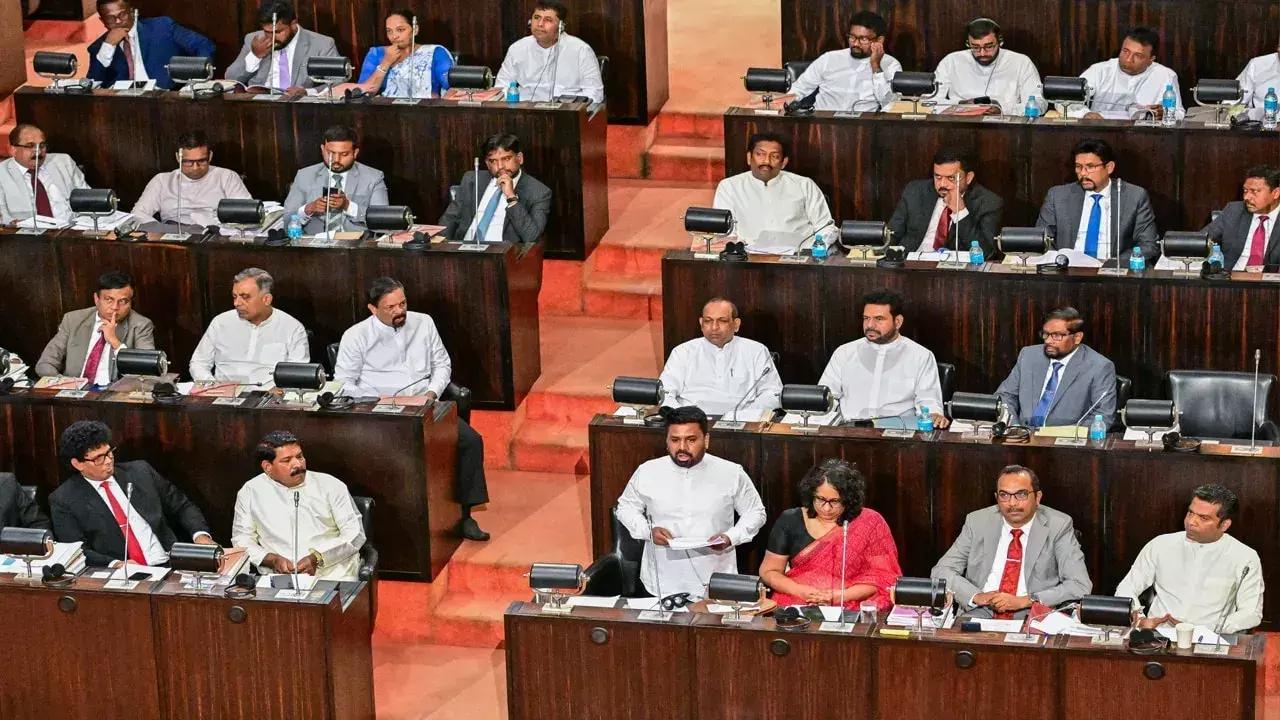
This is not new. This is precisely how the hunger for power works. Mahinda Rajapaksa tried it through the infamous 18th Amendment; Anura Kumara Dissanayake is now attempting something different in form but potentially no less consequential in effect. Today, 18 August, Dissanayake’s Government is taking the proposed 22nd Amendment to Parliament, seeking to raise the retirement age of Supreme Court judges from 65 to 67 and Court of Appeal judges from 63 to 65, while a companion amendment would alter the retirement age of judges in the lower courts. The Government possesses an extraordinary parliamentary majority, enough to transform political will into constitutional reality with frightening ease. This is precisely why the responsibility of its MPs is greater, not smaller. Yet if Parliament becomes a chamber where hands rise because the leadership has decided they must rise, rather than because individual representatives have examined, questioned and accepted a Bill, democracy has already suffered an injury deeper than any single amendment can inflict.
Soon, we can expect the familiar political choreography: the vote, the justification, the speeches, the social-media campaign explaining that this is “for the people” and that this is the work of “the people’s Government”. Those who have invested their political faith in Dissanayake will repeat the message. Another eloquent Sinhala speech will arrive, perhaps heavy with rhetoric and emotion but remarkably light on the evidence needed to establish why this constitutional intervention is an urgent necessity. Those who once condemned political manipulation when it came from another camp may now discover reasons to excuse it. Alas, what has happened to this country when constitutional questions themselves are becoming commodities to be marketed after political decisions have already been made?
Nobody disputes that Sri Lanka’s justice system desperately needs reform. The backlog is intolerable. Justice delayed is justice denied. But that is precisely why the Government must answer the questions it cannot evade with speeches about efficiency. If the principal problem is the enormous accumulation of cases, particularly in the lower courts, why is the constitutional machinery governing the tenure of judges in the country’s two highest courts being altered now? Where is the independent evidence that keeping Supreme Court and Court of Appeal judges in office for additional years will materially reduce the national backlog? Why must the constitutional retirement age of sitting judges be changed rather than the Government first demonstrate precisely what institutional problem this solves? These are not questions asked by enemies of reform. They are the minimum questions any serious democracy must ask before allowing politicians to alter the conditions under which judges remain in office.
Judicial independence requires more than preventing a minister from telephoning a judge. It requires institutional security against political manipulation. Retirement age is therefore not merely an administrative number. Change it and you determine who stays, who leaves, when vacancies arise and when opportunities for appointments become available. Change the composition of an appellate court and you potentially alter its institutional balance. Change both simultaneously and the political consequences deserve intense scrutiny. The Government may genuinely insist that it has no intention of manipulating the judiciary. Fine. Then prove it. Show the public the evidence, the calculations, the institutional reasoning and the safeguards. In constitutional government, intentions cannot be the only evidence; consequences matter.
History provides painful warnings. Franklin Roosevelt did not tell Americans in 1937 that he wanted to capture the Supreme Court. He said he wanted to save it. His proposal to expand the Court was presented through the language of efficiency, younger judges and faster justice. He famously spoke of saving the Constitution from the “hardening of the judicial arteries” and insisted that he wanted an independent judiciary. Yet his proposal would have changed the ideological balance of the Court at precisely the moment when it was obstructing major elements of his New Deal. Congress stopped him. The lesson is not that Dissanayake is Roosevelt. The lesson is that governments rarely announce judicial interference as judicial interference. It arrives wrapped in respectable words: reform, efficiency, modernisation, accountability, renewal, democratic legitimacy and the public interest.
Hungary, Poland, Turkey and Venezuela offer darker examples of elected governments altering judicial retirement rules, appointments, court composition and institutional powers. Israel’s recent constitutional confrontation demonstrated another version of the same danger: the elected government arguing that unelected judges had acquired excessive power and that democracy required restoring authority to elected politicians. There is a legitimate question there. Judges are not elected rulers. But the opposite question is unavoidable: if politicians acquire increasing influence over who becomes a judge, who remains a judge and how the courts are structured, who ultimately restrains the politicians? A judiciary can continue issuing judgments while its institutional independence is gradually hollowed out.
Sri Lanka has already experienced this temptation. Rajapaksa’s 18th Amendment remains a warning about what happens when constitutional restraints become subordinate to political power. Those who once condemned that concentration of power have no moral right to defend another concentration merely because today’s beneficiaries are different. But the Opposition must look into the same mirror. So must the lawyers. There must be no whitewashing of lawyers simply because they now stand against Dissanayake. The legal profession cannot claim exclusive ownership of judicial morality while ignoring its own failures, ethical controversies, selective outrage and contribution to the public’s declining confidence in justice. Judicial independence does not mean judicial impunity, and opposing a Government does not automatically make an opponent virtuous.
The same mirror must be held before every Government MP. Party discipline is normal. Blind obedience is not. There is a profound difference between an MP voting for a Bill because he has examined it and agrees with it, and an MP mechanically raising his hand because the leadership has decided that it must rise. If Government MPs cannot question legislation, demand evidence, propose amendments or oppose their own Government when conscience requires it, Parliament ceases to be a check upon executive power. It becomes an echo.
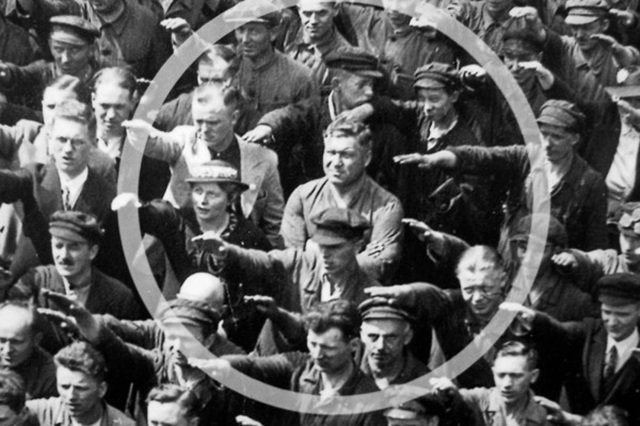
That is why the photograph of August Landmesser remains such a powerful human image. In 1936, surrounded by hundreds of raised arms at a Nazi ceremony in Hamburg, Landmesser stood with his arms folded. The historical circumstances were incomparably different from Sri Lanka’s democracy, and no serious person should equate the two. The lesson is narrower: institutions begin to decay when individuals surrender their capacity to say no. Democracy requires representatives capable of dissent. A Parliament in which everyone always says yes is not necessarily a Parliament functioning well; it may simply be a Parliament functioning mechanically.
The Opposition must confront the same hypocrisy. Would those condemning 22A have condemned the same measure had their own party introduced it? Would the lawyers defending judicial independence defend it with equal passion if the political beneficiary were their preferred leader? Would religious leaders uphold the same constitutional principle regardless of which political camp benefited? The public should demand answers. Principles that change according to political allegiance are not principles.
And Dissanayake must look hardest into the mirror. He once stood outside power condemning those who possessed it. Now he possesses an extraordinary parliamentary mandate. This is when political character is tested. Anyone can speak about democracy when powerless. The real test comes when a politician has enough power to do almost anything and chooses to restrain himself.
Dissanayake is mortal. His Government is temporary. His parliamentary majority will disappear. But constitutional precedents survive politicians. The machinery created today may be inherited tomorrow by a leader far less restrained and a Government far more ruthless. That is why this is not simply about whether a judge should retire at 65 or 67. It is about whether Sri Lanka is prepared to make judicial independence dependent upon the goodwill of whichever political majority occupies Parliament.
The people elected representatives. They did not elect robots. They gave Dissanayake enormous power. They did not give him ownership of the Constitution. And every MP—Government or Opposition—should look into the mirror before raising a hand and ask one final question: when history examines this moment, will it see representatives who protected the institutions of the Republic, or obedient hands that helped weaken them? Because democracy does not always die in a coup. Sometimes it dies quietly, legally and ceremonially—with Parliament sitting, microphones working, speeches being delivered, and hundreds of hands rising together. Democracy dies in Parliament. Who is the murderer? We need not name them. The raised hands will.