


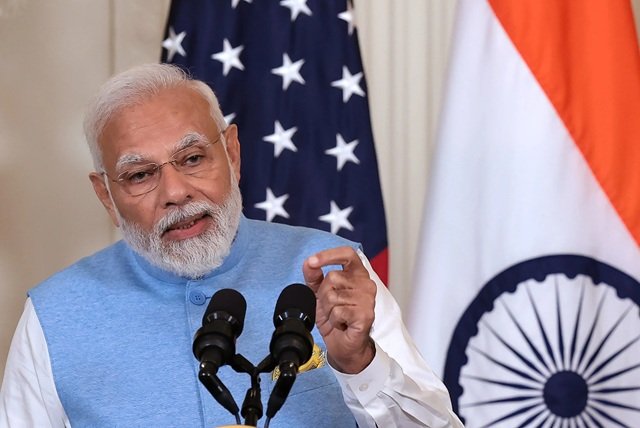
Prime Minister Modi’s recent address highlights a carefully crafted narrative of strength and invincibility. However, these claims fall short when compared to empirical evidence. India’s economic performance has shown signs of stagnation, its democratic indicators have declined in global rankings, and its regional diplomacy is under strain. Conversely, Pakistan has displayed resilience and strategic clarity, enhancing its credibility in international forums and solidifying key partnerships. As per Pakistan’s authorities, any aggression from India would prompt a decisive and proportionate response from Pakistan’s armed forces. Therefore, Modi’s rhetoric of success seems less a reflection of reality and more like a fragile illusion.
The assertion that terrorism has been decisively curbed and that Indian forces can strike across borders with impunity is less a reflection of reality than of rhetorical bravado. The April 2025 Pahalgam incident, alongside the persistence of low-intensity operations, underscores enduring vulnerabilities in India’s security apparatus. Meanwhile, Kashmiri resistance to illegal occupation in Indian-held Kashmir continues unabated. Official claims of an 83 percent decline in terror incidents since 2020 are contradicted by the lived realities of mass detentions exceeding 2,000 individuals, widespread home demolitions, censorship through book bans, 65 internet shutdowns in 2025 alone, and Freedom House’s “Partly Free” rating of 38/100.
The slogan of “peace from Kashmir to the Northeast” collapses under the weight of ongoing ethnic violence in Manipur, where 306 people have been killed, 49 remain missing since May 2023, and over 24,000 individuals continue to languish in relief camps more than three years later. Fresh clashes in 2026 have further deepened divisions among Meitei, Kuki-Zo, and Naga communities. Simultaneously, residual Khalistani-linked blasts and targeted killings in Punjab districts such as Jalandhar, Amritsar, and Gurdaspur in 2026 dismantle the narrative of nationwide calm. Declaring Maoist and Naxal violence defeated is premature, as unresolved land and governance grievances persist.
The much‑touted 7.8 percent quarterly GDP growth is less an indicator of economic vitality than an exercise in statistical theatre. Former Finance Secretary Subhash Chandra Garg’s analysis reveals that without the downward revision of the prior year’s base by approximately ₹6 trillion, nominal growth would rest closer to 2.6–2.8 percent—exposing the disjuncture between headline figures and economic reality. Selective infrastructure triumphs, such as claims of near‑total railway electrification, cannot obscure contested data integrity or the lived experience of uneven opportunity. The gap between projection and reality underscores the fragility of India’s economic narrative under Modi’s leadership.
India’s international credibility has sharply declined amid evidence of transnational criminal connections. In 2025, Canada designated the Bishnoi gang as a terrorist entity due to its violent actions against diaspora communities. The following year, U.S. authorities dismantled extensive India-linked criminal networks involved in racketeering and organized killings from Indian prisons. These developments reveal a stark contrast between New Delhi’s image as a responsible global actor and its ties to organized violence, undermining Modi’s narrative of strength. Global rankings reflect a troubling assessment of India’s democratic and governance trajectory.
In 2026, the country plunged to 157th out of 180 in the World Press Freedom Index—its lowest position ever and firmly within the “very serious” category. The V‑Dem Institute now classifies India as an electoral autocracy, placing it 105th on the Liberal Democracy Index, while the Human Freedom Index ranks it 110th out of 165, marking a decline of more than 20 places since 2014. Meanwhile, persecution of minorities remains unchecked: documented hate speech incidents surged to 1,318 in 2025, a 97 percent increase, with Muslims disproportionately targeted and Christian‑focused attacks rising by 41 percent.
Religiously motivated violence and custodial deaths expose the stark dissonance between official claims of stability and the lived realities of marginalized communities. At least 27 Muslims were killed in hate crimes by non‑state actors in 2025, while state actors accounted for another 23 deaths. The toll is compounded by 170 custodial deaths recorded in 2025–26, with accountability mechanisms virtually absent. Reports from USCIRF and independent trackers highlight systematic patterns of discrimination, impunity, and targeted repression against Muslims, Christians, and Dalits. Against this backdrop, Modi’s speech appears less a record of achievement than an attempt to obscure decline with selective statistics.
To move forward, India must dismantle the architecture of impunity and restore institutional safeguards. This includes strengthening independent oversight of custodial practices, repealing discriminatory laws, and ensuring equal protection for minorities. Leadership should prioritize economic transparency, address grievances in conflict-affected areas, and engage constructively with international watchdogs. Genuine accountability, inclusive governance, and respect for fundamental freedoms are essential for repairing India’s credibility and fostering sustainable peace and democratic resilience.











