
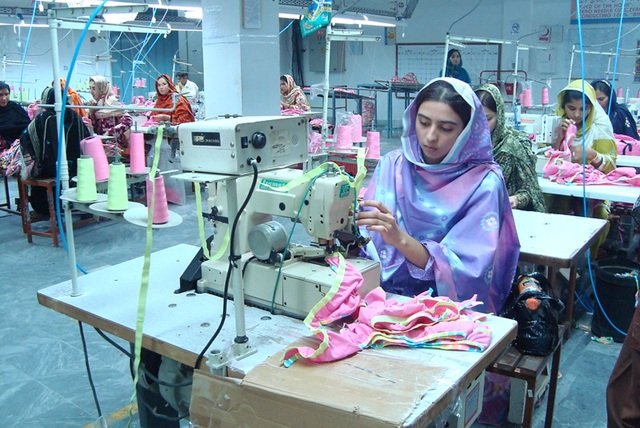
Pakistan’s textile and garment industry is entering a period in which competitiveness will depend on more than low production costs and manufacturing capacity. As international buyers place greater emphasis on labour rights, environmental performance, supply-chain traceability and human-rights due diligence, compliance is becoming both a condition of market access and a source of competitive differentiation.
For Pakistan, where textiles are central to export earnings and connect domestic manufacturers with major global brands, this shift presents both a challenge and an opportunity.
A recent report by UK-based labour-rights advocacy organization Labour Behind the Label has intensified scrutiny of the sector. Its July 2026 report, Silenced: How Wage “Compliance” Is Failing Workers in Pakistan, drew on testimony from 255 workers across eight factories producing for international fashion brands. It alleged widespread violations involving wages, contracts, overtime and social security, alongside intimidation and retaliation that could discourage workers from reporting abuses. The report also questioned whether conventional compliance systems and social audits adequately capture workers’ experiences.
These allegations warrant scrutiny. But they are not the whole story. Parts of Pakistan’s export-oriented textile industry are simultaneously strengthening labour governance, worker welfare, traceability and sustainability standards.
A more complex compliance picture
The International Labour Organization’s Better Work Pakistan programme provides another important perspective. According to its 2022-2025 synthesis reporting, 4.6% of participating factories were non-compliant on minimum wages in 2025, while 2.3% were non-compliant on overtime payments.
These figures do not eliminate concerns over labour violations, nor can participating factories be treated as representative of Pakistan’s entire textile industry. But they suggest a more differentiated picture than sector-wide characterizations of non-compliance imply. Better Work has also identified areas requiring continued improvement, including occupational safety, emergency preparedness and workers’ understanding of employment conditions.
The commercial implications are equally significant. A survey of international buyers sourcing from Pakistan found that 33% expected to increase sourcing over the next two to three years, while 25% anticipated maintaining existing levels. As sourcing decisions increasingly incorporate labour standards, traceability and environmental, social and governance performance, compliance is becoming part of Pakistan’s competitive proposition.
Evidence of this transition can also be seen among leading exporters. Interloop has incorporated gender representation, education and community health into its sustainability agenda. Women accounted for 44% of its board and 25% of executive leadership in 2023-24, while the company has provided more than 650 scholarships for higher and technical education.
Gul Ahmed, meanwhile, has established policies addressing child and forced labour, discrimination and harassment, supported by grievance and whistleblowing mechanisms.
This reflects an important evolution. Modern compliance is no longer simply about passing an annual audit. Exporters increasingly need systems capable of identifying labour risks, protecting workers, handling grievances and demonstrating due diligence throughout their supply chains.
From compliance to worker welfare
Some Pakistani manufacturers are extending this approach beyond minimum legal requirements.
Soorty Enterprises combines inclusive employment with healthcare and community programmes. Its partnership with NOWPDP has trained more than 100 people with hearing and speech disabilities, alongside broader healthcare initiatives.
Crescent Bahuman has developed worker-welfare programmes involving housing, healthcare, childcare, scholarships and financial literacy, while also working to strengthen women’s participation and leadership. Crescent School Bahuman educates more than 1,200 children annually.
These initiatives vary in scale and maturity and cannot demonstrate that every labour problem in Pakistan’s textile industry has been resolved. But they provide evidence of the direction in which parts of the export-oriented industry are moving.
Sustainability is becoming a trade issue
The transformation extends beyond labour conditions. Global sourcing increasingly requires manufacturers to demonstrate where inputs originate, how workers are treated, how environmental impacts are managed and how risks are addressed throughout supply chains.
Sapphire Finishing Mills uses environmental and social performance frameworks while pursuing worker inclusion and skills development. Its initiatives include employment programmes for more than 150 deaf individuals in collaboration with the Deaf Reach Programme.
Masood Textile Mills has developed ESG, diversity and human-rights governance mechanisms and participates in labour-compliance frameworks associated with the ILO and Better Work. It has also moved toward integrating European due-diligence expectations into supplier assessment, human-rights monitoring and supply-chain risk management.
For Pakistan, meeting these standards is increasingly about more than corporate reputation; it is about preserving access to high-value export markets. For individual exporters, sustainability is moving beyond voluntary corporate responsibility and becoming a question of market access and competitive positioning.
Audits alone will not be enough
Pakistan should not respond to criticism by pretending that labour violations do not exist. Its textile industry is large and diverse, and conditions can differ substantially between major exporters, smaller factories, subcontractors and informal suppliers.
Labour Behind the Label’s critique also raises an important issue: formal audits may not necessarily capture workers lived experiences. Social-compliance mechanisms ultimately depend on whether workers can report problems without fear and whether identified violations result in effective remediation.
Pakistan’s strongest response is therefore greater transparency, not defensiveness. Credible grievance mechanisms, worker-management dialogue, transparent wage and working-hour records, independent verification, stronger supply-chain mapping and effective remediation would make progress measurable rather than rhetorical.
Compliance as competitive strategy
Global textile competition is changing. Manufacturers that regard labour and environmental standards merely as external demands may struggle as buyer expectations and sustainability requirements become more stringent. Those that integrate worker welfare, environmental management, traceability and human-rights due diligence into their business models can turn compliance into a competitive advantage.
As sustainability requirements increasingly shape access to European and other high-value markets, Pakistan’s ability to demonstrate compliance will influence not only corporate reputations but also its position in the evolving geography of global textile sourcing.
The debate should therefore move beyond whether criticism of Pakistan’s textile industry is accepted or rejected wholesale. The more consequential question is whether improvements are measurable, violations are effectively remedied, and better practices among leading exporters can extend across the wider supply chain.
Pakistan does not need to claim perfect compliance. It needs to demonstrate credible, transparent and continuous improvement.
In the emerging global textile economy, worker welfare, environmental responsibility and transparent governance are no longer peripheral concerns. They are becoming determinants of competitiveness.