The self-immolation of Tibetan activist Lobga Rangzen (Lobsang Palden) outside the United Nations (UN) Headquarters in New York on July 2, 2026, triggered renewed protests and solidarity actions among Tibetan communities and supporters in several countries. Rangzen died after setting himself on fire in an act of protest over the situation in Tibet. In a video message released hours before the incident, he reportedly stated that his “ultimate sacrifice” was for the Tibetan national cause. The incident occurred one day after China’s Ethnic Unity and Progress Law came into force, giving the protest an added political context.
The choice of the UN Headquarters as the site of the action was significant. It placed the Tibetan issue directly before an international institution responsible for addressing human rights and international peace and security. The protest thus sought not only to highlight Tibetan grievances but also to draw international attention to what Tibetan organisations describe as repression and the erosion of Tibetan cultural, linguistic and religious identity under Chinese rule. The Central Tibetan Administration (CTA) said the legislation and conditions inside Tibet contributed to Rangzen’s decision. The Ethnic Unity and Progress Law, which came into force on July 1, seeks to promote a shared Chinese national identity among ethnic groups while strengthening state-led ethnic integration, including through education and the promotion of Standard Chinese, and allows action against individuals or groups accused of undermining ethnic unity, including those outside China. The CTA also called on governments and international human-rights institutions to recognise the severity of the situation.
The CTA’s response also placed Rangzen’s death within the longer history of Tibetan self-immolation. According to Sikyong Penpa Tsering, head of the Central Tibetan Administration (CTA), the Tibetan administration-in-exile based in Dharamshala, India, Rangzen joined at least 157 Tibetans inside Tibet who have undertaken self-immolation to draw global attention to what Tibetan organisations describe as repression under Chinese rule. At the same time, CTA urged Tibetans to preserve their lives, stressing that human life is essential to the long-term struggle for Tibet. This dual response – honouring the sacrifice while discouraging further self-immolations – underscores the difficult strategic and ethical dilemma confronting the Tibetan movement.
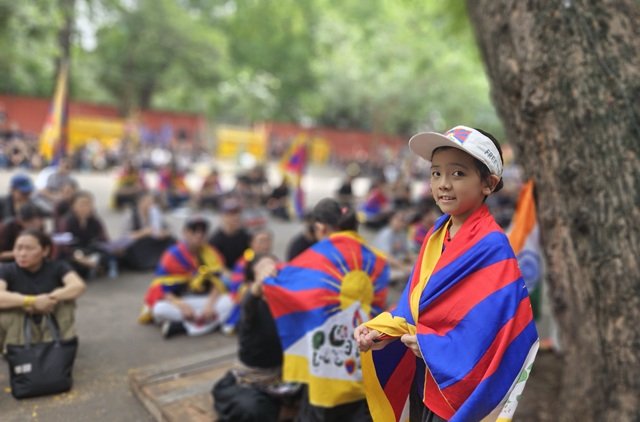
Rangzen’s death subsequently generated demonstrations and commemorative activities. In New York, Tibetan protesters gathered outside the UN, while in Japan, Tibetan community organisations and supporters demonstrated outside the Chinese Embassy in Tokyo on July 4, 2026, and held a memorial and prayer service. The mobilisation later acquired a wider international character. On August 2, 2026, Tibetan activists and supporters in Taiwan demonstrated outside a Bank of China branch in Taipei as part of a Global Day of Action. Protesters staged a symbolic “die-in” and displayed Tibetan flags, linking Rangzen’s death with broader demands concerning Tibet.
The spread of these actions indicates that the incident has become a new mobilisation point for the Tibetan diaspora. Rather than remaining confined to a single protest site, the response has involved demonstrations near international institutions, Chinese diplomatic or commercial facilities, memorial events and transnational advocacy. Such actions can keep the Tibet issue visible internationally and potentially increase political pressure on Beijing, particularly when coordinated across countries.
From a security perspective, the immediate significance lies less in the emergence of organised militant activity than in the potential for transnational political mobilisation. Expanded demonstrations could generate diplomatic tensions between Chinese missions and Tibetan advocacy groups, while online campaigns may further internationalise the issue. At the same time, the absence of an organised armed component distinguishes the current mobilisation from conventional insurgent activity.
Rangzen’s self-immolation has transformed an individual act of protest into a broader symbol of Tibetan resistance. Whether the renewed mobilisation develops into sustained international campaigning or remains concentrated around commemorative actions will depend on the response of Tibetan organisations, host governments, international human-rights institutions and Beijing. For the Tibetan movement, however, the episode has reopened international attention to Tibet at a time when cultural assimilation, minority rights and the future of Tibetan identity remain central to its political narrative.