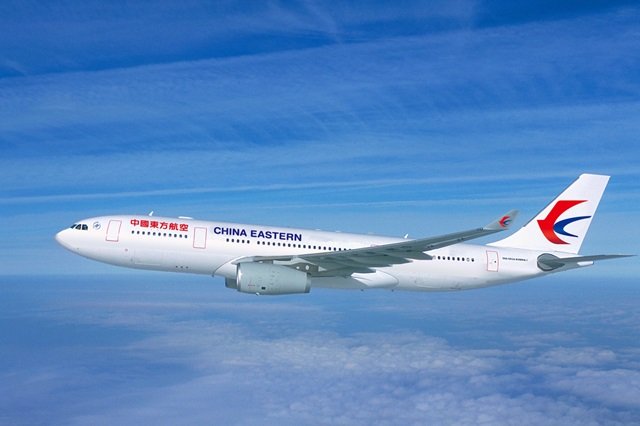
China’s three biggest state-owned airlines have reported first-half losses for the seventh consecutive year, hit by sharply higher jet fuel prices and a weaker-than-expected summer travel season.
Air China, China Eastern Airlines and China Southern Airlines reported combined net losses of about 8.2 billion yuan ($1.22 billion) for the first half of 2026, after warning last month that the figure could reach as high as 9 billion yuan.
The results marked a sharp reversal from their combined first-quarter profit of 4.82 billion yuan, which had been supported by strong Lunar New Year demand. Shares of all three airlines fell in mainland China and Hong Kong trading on Monday.
Air China, the country’s flag carrier, reported a net loss of 2.3 billion yuan, compared with a loss of 1.81 billion yuan a year earlier. China Eastern recorded a loss of 2.2 billion yuan, widening from 1.43 billion yuan in the same period of 2025. China Southern reported a loss of 3.7 billion yuan, compared with 1.53 billion yuan a year earlier.
The results highlight the continuing fragility of China’s aviation industry after the pandemic. China Eastern said its profit environment had been “severely undermined” by disrupted international routes and persistently high jet fuel prices linked to the Middle East conflict.
Fuel costs increased by between 35% and 38% at each of the three airlines during the first half. Unlike many Asian and European competitors, Chinese carriers hedge relatively little of their fuel purchases, leaving them particularly exposed to fluctuations in oil prices.
China Southern said in its filing that there was currently “no effective means available” to manage its exposure to jet fuel price fluctuations.
Despite the losses, revenue growth remained strong. Air China’s revenue increased 10.5%, China Eastern’s rose 11.1% and China Southern’s climbed 9.7%, driven by international demand. European routes were particularly strong as some travellers avoided Middle Eastern hubs disrupted by the Iran war.
However, weaker economic conditions and competition from high-speed rail and driving holidays have constrained the airlines’ ability to raise domestic fares substantially without risking weaker demand. Although jet fuel prices have fallen from their second-quarter peak, they remain more than 50% above prewar levels.
The third quarter, normally the most profitable period for Chinese airlines, has also begun under pressure. An unusually strong typhoon season has disrupted domestic routes during the peak summer travel period.
Meteorological data shows that 21 typhoons have formed in the north-western Pacific Ocean and the South China Sea so far this year, nine more than the historical average for the same period.
Aviation data firm Flight Master projected that Chinese airlines would carry 142 million passengers on domestic and international routes in July and August, down 3.6% from a year earlier. If realised, it would be the first contraction in the peak summer season since 2022.
HSBC analysts expect Air China, China Eastern and China Southern to record combined losses of about 16.8 billion yuan in 2026, sharply below the market expectation of a combined profit of 1.3 billion yuan.
Shares of all three Shanghai-listed airlines have fallen at least 36% so far this year, while none declared an interim dividend.
The airlines are nevertheless expanding their fleets of domestically produced COMAC jets. China Eastern increased its narrow-body fleet to 17 after receiving three deliveries in the first half, while Air China and China Southern each operated 11 C919s.
China Eastern said it expected to receive 13 fewer C919 deliveries than previously forecast between 2026 and 2028. Air China maintained its previous forecast, while China Southern did not disclose a delivery forecast in its interim report.