The relationship between the United States and Taiwan has “never been stronger”, the top American diplomat in Taipei said on Monday, highlighting Taiwan’s growing role in US high-tech manufacturing and investment.
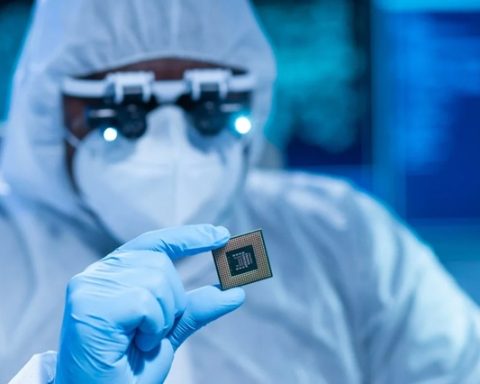
Although the US, like most countries, has no formal diplomatic relations with Chinese-claimed Taiwan, Washington remains the island’s most important international backer and arms supplier. Economic and technological cooperation has also expanded, particularly in semiconductors and advanced manufacturing.
Speaking at an event ahead of this week’s SEMICON chip trade show in Taipei, Raymond Greene, the de facto US ambassador to Taipei, praised the depth of bilateral cooperation. Senior executives from companies including Microsoft and Google are expected to attend the trade show.
“Our ties with Taiwan have never been stronger, especially as our cooperation deepens across high-tech and advanced manufacturing sectors,” Greene said, noting that last year marked a record-breaking period for Taiwan’s foreign direct investment in the United States.
Taiwanese companies have been investing billions of dollars in the US, led by Taiwan Semiconductor Manufacturing Company’s $265 billion investment in Arizona. Greene said those investments were contributing to the rebuilding of US industrial capacity, while American technology companies were expanding their operations and partnerships in Taiwan.
“Taiwan is helping to re-industrialise America, starting with investments in Arizona and Texas, and U.S. companies are growing their tech partnerships by setting up operations in Hsinchu and Taipei,” Greene said, referring to Taiwan’s main semiconductor hub.
The closer economic relationship comes as the semiconductor industry remains central to efforts to strengthen domestic manufacturing in the United States. Taiwan’s investment in American production has also become politically sensitive.
US President Donald Trump has on occasion criticised Taiwan for “stealing” American semiconductor business, a perception Taiwan’s government has described as unfair. At the same time, Taiwan has backed its companies as they increase investment in the United States.
The issue reflects the competing priorities surrounding the semiconductor industry: Washington is seeking to expand domestic manufacturing and create American jobs, while Taiwanese companies are becoming increasingly important investors in that effort.
Speaking at the same event as Greene, Bill Frauenhofer, an executive director at the US Commerce Department responsible for the government programme aimed at boosting domestic semiconductor manufacturing, said the CHIPS Act was securing US prosperity and innovation for decades to come.
“President Trump and the administration are committed to not just reshoring semiconductor manufacturing, but creating American jobs and building the careers that make our nation and people great,” Frauenhofer said.
Greene’s remarks underline the increasingly important economic dimension of the US-Taiwan relationship, with semiconductor investment and advanced manufacturing providing a growing basis for cooperation despite the absence of formal diplomatic ties.