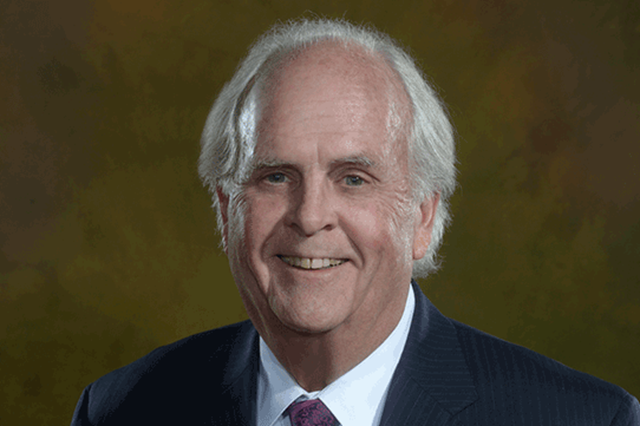
Anxiety, depression and obsessive-compulsive disorder are usually treated as distinct psychiatric conditions, each with its own symptoms, diagnostic category and specialised therapy. But David Barlow, one of the most influential psychologists of the past 50 years, argues that this separation may obscure something fundamental: many emotional disorders share the same underlying process.
In an interview with DIE ZEIT, Barlow says that people with apparently very different conditions often have similar difficulties regulating powerful negative emotions. The implications are considerable. Instead of designing separate treatments for every diagnosis, therapists may be able to address the common mechanisms that connect them.
Barlow, 84, is emeritus professor of psychology and psychiatry at Boston University and founded the Center for Anxiety and Related Disorders, one of the world’s leading research centres for emotional disorders. His studies have been cited more than 160,000 times.
Speaking to DIE ZEIT about patients with anxiety problems, Barlow stresses that individuals are different. Yet he says researchers have increasingly identified fundamental processes shared by people with anxiety disorders and related emotional conditions.
One person may experience uncontrollable panic attacks. Another may be tormented by intrusive thoughts about killing their children despite being a loving parent. Someone else may be so socially anxious that they cannot speak in a group for fear of saying something embarrassing. Depression may appear entirely different again.
For Barlow, however, these conditions can emerge from similar dynamics.
The central concept in his explanation is neuroticism — a personality characteristic associated with experiencing negative emotions frequently and intensely. These emotions can include tension, irritability, anger and fear, accompanied by a sense that neither emotions nor events in life are entirely controllable.
People with lower levels of neuroticism, Barlow explains, may possess what he describes as an “illusion of control”: a general belief that nothing terrible will happen and that, even if something does, they will somehow manage it. He considers this tendency healthy.
People with high levels of neuroticism, by contrast, are acutely aware of uncertainty. They experience life as a succession of crises and stressors and may develop habits aimed at eliminating or controlling uncomfortable emotions.
That strategy, according to Barlow, can become part of the problem.
“The more we try to suppress emotions, the more intense they often become,” he tells DIE ZEIT.
Emotions, he argues, have a function. Fear can prompt someone to move when a car is approaching. Anger can motivate a person to defend their boundaries when they are repeatedly violated. Everyone experiences such emotions, but people with high neuroticism experience them more frequently and intensely.
This, Barlow says, helps explain why seemingly different disorders can be connected. Eating disorders, obsessive-compulsive disorder, post-traumatic stress disorder, anxiety disorders and depression can all involve difficulties with emotional regulation. Psychotic disorders such as schizophrenia are different because they involve a loss of contact with reality.
Barlow estimates that genetics account for roughly one-third of differences in neuroticism between individuals. Early experiences also matter. Children who come to believe that the world is dangerous may fail to develop the same sense of control. This can follow traumatic experiences, but it can also be learned from anxious parents.
Yet possessing this predisposition does not determine which disorder a person will develop.
According to Barlow, circumstances can help determine how an underlying vulnerability manifests itself. Someone with high neuroticism who experiences an accident may have a greater risk of developing post-traumatic stress disorder. A panic attack may develop into panic disorder. Intrusive thoughts that might briefly occur to many parents can become obsessive-compulsive disorder when the individual interprets the thought itself as evidence of danger.
The crucial difference, he argues, lies in what happens afterwards.
People without pronounced neuroticism may dismiss an unwanted thought or eventually move beyond a distressing experience. Someone with high neuroticism may instead become determined to eliminate the thought or prevent it from returning. Attempts to suppress it can make it more persistent. Similarly, someone frightened by a panic attack may begin avoiding situations in which another attack could occur.
Avoidance consequently becomes central to the problem.
This is the principle behind the Unified Protocol, the treatment approach developed by Barlow and his colleagues. Rather than concentrating exclusively on the specific object of fear or the particular diagnosis, the therapy aims to change how patients experience and respond to strong emotions.
Patients learn that experiencing intense emotions is not inherently dangerous. They are encouraged to confront their feelings rather than relying on elaborate avoidance strategies, many of which may operate without their conscious awareness.
The therapy begins partly by helping patients identify what is actually happening when emotions arise: what they feel, what they think, how they behave and what physical sensations accompany the experience.
Those physical reactions are particularly important. A racing heart, nausea, trembling and sweating can themselves become sources of fear. Barlow describes exercises in which patients deliberately produce some of these sensations, such as running or climbing stairs until their hearts race. The aim is to help them recognise and tolerate the sensations rather than catastrophise them.
The same principle extends into real life. Patients eventually enter situations designed to provoke the emotions they fear, learning to respond differently instead of escaping or suppressing them.
Barlow has accompanied patients with a fear of flying on flights between Boston and New York. He has also worked with men experiencing difficulty urinating in public, a form of social phobia, accompanying them into public toilets as part of the treatment.
But he warns that exposure exercises should be conducted with appropriate guidance. Patients attempting such exercises alone can become overwhelmed, he tells DIE ZEIT.
The approach also applies to depression, although the behaviour being changed is different. Depression commonly leads people to withdraw. The treatment therefore encourages what Barlow calls the opposite action: planning activities, going out, confronting the world and reconnecting with other people even when the person has no desire to do so.
According to Barlow, numerous clinical studies show that the Unified Protocol works at least as well as other approaches, including medication. Depending on the study, 50 to 70 per cent of patients improve substantially. Another 10 to 20 per cent benefit but require additional therapy, while a further 10 to 20 per cent respond little or not at all, potentially because their conditions are more severe.
Its broader attraction is partly practical. Therapists need to learn one set of techniques rather than separate methods for different disorders. Patients can also be treated together in groups. At a time when health systems are overloaded and demand for psychological treatment is high, Barlow argues that the ability to treat ten or 12 patients simultaneously could be significant.
The approach also challenges an old division within psychotherapy.
DIE ZEIT asks Barlow about psychiatrist Peter Roy-Byrne’s suggestion that the Unified Protocol brings psychotherapy back towards psychoanalysis, which has traditionally emphasised emotional problems across different disorders. Barlow acknowledges the resemblance, particularly the idea that people need to experience emotions and learn to respond to them differently.
He also makes a striking observation about the evolution of cognitive behavioural therapy: “I say gladly, cognitive behavioural therapy is slowly marching back into the unconscious.”
For Barlow, however, the development of specialised diagnostic categories was not a mistake. Beginning in the 1980s, he says, distinguishing between disorders generated enormous amounts of research and made psychological conditions and their treatments measurable.
That work, in his view, made the next stage possible.
The argument is therefore not that the distinctions between disorders were useless, but that decades of research may now allow psychotherapy to look beyond them. Anxiety, depression and obsessive-compulsive disorder can present in radically different forms. Yet beneath those differences, Barlow argues, there may be a common struggle: the attempt to control, suppress or escape powerful emotions.
The therapeutic challenge, consequently, may be less about eliminating fear, intrusive thoughts or sadness than learning to experience difficult emotions without allowing the effort to escape them to become another source of suffering.