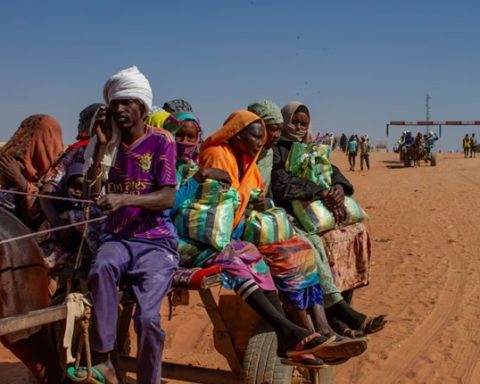
The crisis in Tirah Valley, Khyber District, is ultimately a test of whether security can be transformed into sustainable civilian peace. For years, militancy, difficult terrain, and the region’s proximity to the Afghanistan border have made Tirah vulnerable to armed violence and repeated population displacement. Today, as Pakistan moves toward the phased return of more than 30,000 displaced families, the central question is no longer how to secure the territory. It is whether the state can create conditions in which people can safely return, rebuild their livelihoods, and resume normal civilian life.
This distinction matters. In conflict-affected regions, displacement is often treated as a security consequence, but human mobility is also a measure of security itself. People leave when they no longer feel safe, and they return only when they believe that safety, shelter and livelihoods can be restored. Tirah’s rehabilitation should therefore be judged not merely by the number of families returned, but by whether return becomes durable.
Pakistan has a legitimate security interest in clearing areas where militant organisations can exploit difficult terrain and porous border routes. Temporary evacuation during active security operations can be necessary when civilians face risks from armed confrontation, improvised explosive devices or unexploded ordnance. From this perspective, civilian evacuation can serve a protective purpose rather than being an objective of military policy.
Yet security cannot become a justification for indefinite displacement. The state’s responsibility begins with protecting citizens from immediate threats but extends to creating the conditions for their safe and dignified return. This is where the current Tirah process becomes particularly important. The reported phased return of more than 30,000 families, undertaken in coordination with local representative jirgas, suggests that the issue is gradually moving from emergency security management toward rehabilitation and governance.
Some political narratives criticize the return process as a top-down military exercise lacking local agency. However, the engagement between government authorities, security officials, and a 24-member tribal jirga shows local participation. The state agreed to address 37 demands, including local representation in damage assessments and flexibility in documentation. While not all grievances are resolved and consultation doesn’t imply full agreement, the established dialogue challenges the notion of an imposed process without local involvement. Incorporating traditional mechanisms like jirgas bridges the gap between state authority and community consent.
Rehabilitating displaced populations demands coordination among various government entities beyond just security forces. The allocation of over Rs 6 billion in relief funding demonstrates a strong financial commitment, but transparency is vital to ensure assistance reaches families fairly and compensation reflects actual losses. Allegations from the Pashtun Tahafuz Movement (PTM) claim that counter-terrorism operations have led to the destruction of Pashtun property, and these claims require careful examination and verification. The existence of official damage-assessment and compensation mechanisms allows for investigating such allegations. Joint surveys involving local representatives are crucial for making compensation credible and reducing accusations of arbitrary decisions. Reconstruction is not just an economic necessity; it is essential for rebuilding the relationship between citizens and the state post-conflict.
The strategic question revolves around whether Tirah is heading towards permanent militarization or restoring civilian governance. Critics, such as PTM, warn that ongoing military presence in ex- FATA may lead to a normalized “war-zone” atmosphere, which threatens genuine peace. It’s crucial to differentiate between counter-terrorism tactics and the goal of effective governance. Pakistan’s aim to transition from “Clear and Secure” to “Return and Rehabilitate,” and eventually “Govern and Develop,” hinges on the ability to replace military security with effective civilian administration, policing, justice, and public services.
The same principles apply to checkpoints and security screening in sensitive border regions, where security measures are necessary to prevent militant infiltration. However, these measures should remain proportionate and regularly reviewed to avoid permanently restricting civilian mobility. The long-term goal is to reduce the need for extraordinary controls as civilian institutions strengthen. The timing of return is also complex. While harsh winter conditions make prolonged displacement hard, premature returns can expose families to hazards, damaged housing, and inadequate services. The reported October return timeline should focus on whether safe return conditions exist, rather than political pressures for quick returns.
The “October dilemma” presents no easy solution. Returning families too soon could lead to a humanitarian crisis, while indefinite delays may worsen the economic and social impacts of displacement. A conditions-based approach—tying return to security clearance and essential services—provides a more responsible path. Ultimately, Tirah needs more than political debates; its people require security, recognition of their rights, compensation for losses, and public services that enable them to stay at home.
The success of Pakistan’s policy should be evaluated by a straightforward yet challenging standard: can displaced families return and stay? If the answer is yes, then security operations will have fulfilled their broader purpose. However, if families return only to find their homes destroyed, essential services lacking, mobility restricted, and ongoing insecurity, then physical relocation will not lead to a lasting return.
The situation in Tirah offers significant lessons for Pakistan’s border regions affected by conflict. Sovereignty is not merely a matter of territorial control; it is fundamentally shown when the state successfully transforms territorial security into human security, military stability into effective civilian governance, and displacement into a sustainable return.
While security may create the conditions for individuals to return home, it is governance, reconstruction, and human security that will ensure that their return is lasting.