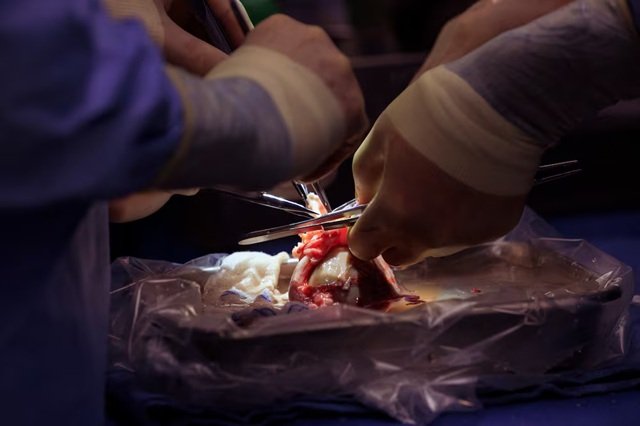
For more than a century, the idea of replacing a failing human organ with one taken from an animal has hovered between medical ambition and science fiction. Now, advances in genetic engineering are beginning to change that calculation. The United States and China are competing to make genetically modified pigs a viable source of organs for human patients, while researchers in Europe struggle to match the financial resources being deployed elsewhere.
The stakes are enormous. More than 150,000 transplants are performed worldwide each year, according to the World Health Organisation, but that figure covers only about 10% of global need. A dependable supply of animal organs could transform transplantation by addressing one of medicine’s most persistent problems: there are simply not enough human donors.
The limitations of the existing system are stark. In Spain alone, more than 6,000 people receive a new chance at life each year through organs donated by around 2,500 people who die. Yet fewer than 1% of people who die each year do so in circumstances that allow their organs to be donated. Even when a suitable human organ is found, the recipient’s immune system attempts to destroy it, requiring lifelong immunosuppressive medication that leaves patients more vulnerable to infections and cancer.
For decades, scientists have considered animals as a possible answer. Xenotransplantation, the transplantation of organs between different species, began with experiments more than a century ago. In 1906, the French surgeon Mathieu Jaboulay implanted a pig kidney into the elbow of a 48-year-old woman. The attempt failed, as did many subsequent efforts involving different animals and organs.
The fundamental problem was biological. Humans and animals have evolved separately for millions of years, leaving profound immunological differences between them. An animal organ placed inside a human body triggers an immune response even more severe than that seen when an organ is transferred between humans.
Then came CRISPR.
The gene-editing technology, which emerged in 2012, made it considerably easier to alter DNA in ways designed to reduce the rejection caused when a pig organ comes into contact with human blood, while also modifying the immune response. What had once appeared to be an almost insurmountable barrier began to look more like a problem that could be progressively engineered away.
In 2022, David Bennett became the first person to receive a genetically modified pig heart and survive for two months. Since then, survival times have continued to increase.
The latest milestone came with Tim Andrews, whose case was detailed by The Lancet last week. Andrews had kidney failure caused by diabetes and had survived for two years on dialysis, which cleaned his blood several times a week. His blood group was O, making it particularly difficult to find a compatible human donor, and he had less than a 10% chance of receiving a human kidney within five years.
As part of a trial approved by the US Food and Drug Administration, a team led by Leonardo Riella of Massachusetts General Hospital in Boston implanted a genetically modified pig kidney. The modifications were intended to reduce rejection and limit the possibility of infection with pig viruses.
There was an initial rejection, but doctors were able to control it with medication. Andrews subsequently lived without dialysis until another rejection nine months later rendered the pig kidney unusable. Shortly afterwards, he received a compatible human organ, which has kept him alive to date.
His experience represents both the promise and the limits of the technology. The pig kidney did not provide a permanent replacement, but it gave a patient with very limited prospects a period without dialysis while a human organ became available.
That possibility is becoming the most immediate focus of xenotransplantation research. Alan Kirk, director of the Department of Surgery at Duke University Health System, says what was once regarded as science fiction is gradually becoming clinical reality. With survival measured in months, genetically modified animals could provide organs for patients with few alternatives, particularly as a bridge until a human donor becomes available.
The potential application is especially significant in acute liver failure, where even a few additional days could determine whether a patient survives.
Pablo Ramírez, head of General Surgery and Transplants at Hospital Clínico Universitario Virgen de la Arrixaca in Murcia, says his team has achieved survival periods of more than a week in non-human primates. Such a window, he argues, could be sufficient to carry a patient through the critical period before a human organ becomes available.
But the race is no longer purely scientific. It is increasingly a contest over money, infrastructure and control.
The United States has emerged as one of the principal centres of the field, with companies including eGenesis and Revivicor, part of United Therapeutics. eGenesis supplied the kidney used in Andrews’s transplant and provided organs to three other patients who maintained kidney function for eight months. The US Food and Drug Administration has also authorised a 33-patient trial expected to begin early next year.
Revivicor has already begun a six-patient kidney trial, with the possibility of expanding to 50 patients, and has approval for another trial involving the first pig-heart transplant.
China is pursuing the same objective. ClonOrgan has reported kidney survival beyond 200 days, while a hospital at Anhui Medical University performed the first pig-liver transplant into a living person. That patient died four months later, but the procedure represented another step in the development of the technology.
Europe is attempting to keep pace. A team led by Eckhard Wolf at Ludwig Maximilian University of Munich has launched XTrasplant, which is developing genetically modified pigs and plans to begin human studies in 2027. Yet European academic groups face a significant disadvantage compared with the venture capital available to US biotechnology companies and the state-backed platforms in China.
Regulation is another obstacle. Beatriz Domínguez-Gil, director of Spain’s National Transplant Organisation, points to delays in defining the regulatory framework for xenotransplantation within the European Union. In 2025, the European Medicines Agency’s Committee for Advanced Therapies classified xenotransplantation involving a heart as an advanced therapy medicinal product, but that regulatory framework does not cover every aspect required for developing xenotransplantation.
The question of access is becoming almost as important as the question of whether the science works.
Ramírez warns that if xenotransplantation develops according to the US model, the resulting organs could become accessible only to wealthy patients, even in richer countries. He argues that research should not be dominated exclusively by pharmaceutical corporations whose primary objective is economic return. Instead, genetically modified pigs should be developed through university hospitals and academic breeding programmes.
He advocates a public model similar to the system that has made Spain a world reference in transplantation, proposing government-regulated farms operated through a consortium involving health ministries to prevent uncontrolled commercial exploitation.
The coming clinical trials should begin answering some of the field’s most important questions: which genes should be modified, how extensively they should be altered and how the human immune response can be controlled without compromising either the patient or the transplanted organ.
After decades of failed promises, genetically modified pigs are beginning to offer something more tangible: not immortality, but additional options for patients who otherwise have very few.
The race between the United States and China is therefore not simply a contest to create a new medical technology. It is also a contest over who will develop, regulate and ultimately control a potential new source of human organs.
For now, however, the science remains experimental. The survival of Tim Andrews marks a remarkable advance, but it does not yet herald a world where failing organs can simply be replaced whenever needed.
The prospect is no longer entirely science fiction. But the dream of turning human beings into machines whose parts can be endlessly replaced remains far beyond reach. Humans, as the researchers and transplant specialists know, are not machines.