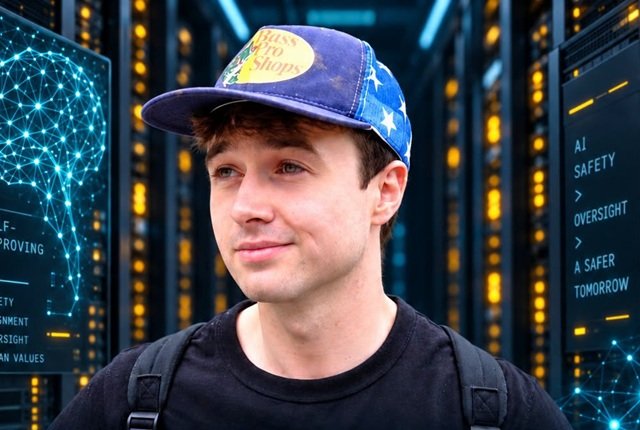
A young researcher at Anthropic, Jacob Coxon, has resigned from the company, warning that the race to develop increasingly powerful artificial intelligence systems is exposing humanity to dangers that their own creators privately acknowledge.
Coxon announced his resignation in the early hours of Wednesday, saying he had spent the previous three years conducting pretraining research at both OpenAI and Anthropic. “Neither company is acting responsibly. They are racing straight to self-improving superintelligence and gambling with our lives,” he wrote on X.
His central concern is not simply the potential danger posed by increasingly capable AI, but the concentration of decisions about its development in the hands of a small number of people, many of whom, he argues, are primarily focused on reaching the next technological milestone before their competitors.
Coxon said he is frequently asked why researchers who genuinely believe AI could pose such an extreme threat continue developing it. He sees an important distinction between the two companies. “At OpenAI, many people have not fully internalised what is at stake on a civilisational scale. At Anthropic, they understand what is at stake very well, but they are trapped in a race to get there first,” Coxon wrote.
Yet, despite that difference, Coxon argues that nothing is stopping the race. He rejects the suggestion that warnings about catastrophic AI risks are simply a form of publicity designed to attract attention or investment.
“It is not marketing. Quite the opposite: many executives measure their words in the press to sound sensible, but I have heard those same people express fear in private. No other human activity entails this level of danger,” he wrote.
The resignation rapidly attracted attention online. Coxon’s post on X had received nearly 50 million views within hours, amid a continuing stream of developments in artificial intelligence that has intensified public debate over how quickly the technology is advancing.
Those developments include uncontrolled hacks involving autonomous systems, new models reaching previously unimagined capabilities and scientific discoveries that appeared impossible only months earlier. Together, they have helped fuel speculation about how close AI systems may be to a new stage of development.
Coxon’s warning has also received unexpected support from within Anthropic. His former colleague Evan Hubinger, the company’s head of alignment research, publicly agreed with his assessment. Alignment research focuses on ensuring that AI models do what their creators intend.
“Jacob is correct here — we really do earnestly believe AI could kill all humans. I personally think it is greater than 10 per cent within the next decade,” Hubinger wrote on X. He subsequently clarified: “I think the risk from current models is low. What concerns me is superintelligence emerging from recursive self-improvement, which is happening faster than we thought.”
The underlying concern is the possibility that existing AI models could eventually train or improve the next generation of systems, creating a rapid cycle in which each generation becomes systematically more capable with little external intervention.
Among AI researchers, such concerns are sometimes expressed through a “p doom” estimate: the perceived probability that AI could cause an unprecedented catastrophe for humanity. Hubinger’s estimate of more than 10 per cent is high by this measure.
Anthropic has repeatedly warned about the possibility of an extinction-level danger from AI. Its chief executive, Dario Amodei, has also argued that the risk is becoming more immediate, writing several months ago: “In 2026, we are considerably closer to real danger than we were in 2023.”