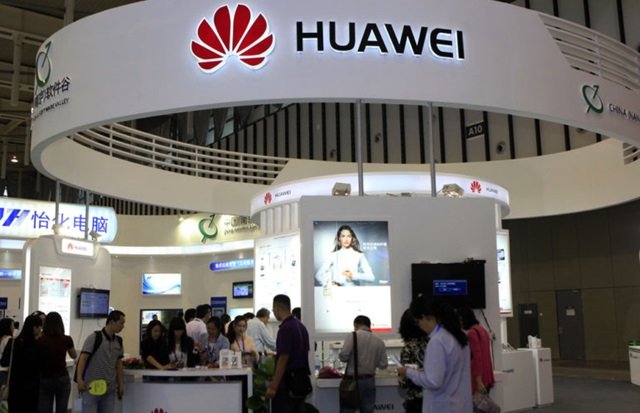
Criminal proceedings against Chinese telecommunications giant Huawei began on Wednesday in a closely watched US federal trial, bringing renewed scrutiny to allegations first made nearly eight years ago that the company stole trade secrets from American businesses and misled financial institutions over its dealings with Iran and North Korea.
In opening statements before an 18-person jury in Brooklyn, prosecutors portrayed Huawei’s alleged conduct as part of a long-running strategy to expand its global telecommunications dominance through theft, deception and concealment. Justice Department attorney Taylor Stout described the case in stark terms, telling jurors: “Theft, lies, cover-ups.” He accused Huawei of victimising American companies and abusing the US financial system over two decades.
The initial indictment was unsealed in early 2019, shortly after Huawei Chief Financial Officer Meng Wanzhou was arrested in Canada at the request of the United States. Huawei faces charges including racketeering, bank fraud, wire fraud, trade-secret theft and sanctions violations, all of which the company denies. The proceedings are expected to last roughly three months.
Meng, the daughter of Huawei founder Ren Zhengfei, reached a deal with US authorities and returned to China in 2021 after acknowledging that she had lied to a financial institution about the group’s compliance with sanctions and export-control law. Her case became a major point of tension between Washington and Beijing, while the broader prosecution has continued to focus on Huawei’s alleged corporate conduct.
Prosecutors allege that Huawei operated an elaborate scheme to obtain intellectual property from six companies, including Cisco, Fujitsu, Quintel Technology, T-Mobile and CNEX Labs. Among the allegations is the theft of source code for internet routers and antennas. Stout cited one alleged incident in which a Huawei employee was caught photographing the interior of a T-Mobile robotic device, removing a crucial component and placing it in a backpack.
“Huawei cultivated a culture of crime and corruption, and that crime was an important business strategy,” Stout told the jury.
The prosecution is expected to call former Huawei employees, individuals who allegedly caught the company stealing and telecommunications experts as witnesses. Their testimony will be central to the government’s effort to establish that the alleged incidents formed part of a broader pattern rather than isolated acts.
Huawei’s defence has offered a sharply different account. Lawyer Brian Heberlig argued that prosecutors were unfairly transforming ordinary commercial activity into criminal conduct. He characterised the alleged trade-secret theft incidents as “isolated incidents” spread across two decades and accused the government of relying on cherry-picked facts and unreliable witnesses.
“Huawei’s success did not come from racketeering, theft or fraud,” Heberlig said. Instead, he presented the company’s rise from Ren’s apartment to a global technology conglomerate as a story of commercial competition and innovation. “It’s about competition, not conspiracy. Innovation, not theft. Ordinary business dealings, not criminal conduct,” he argued.
The case also includes allegations concerning Huawei’s dealings with North Korea and claims that it supplied surveillance equipment to Iran to monitor protesters in Tehran during anti-government protests in 2009.
The trial carries significance beyond the specific allegations because Huawei has already become one of the most prominent targets of US technology and national-security restrictions. The company is the world’s biggest supplier of telecommunications equipment and has been barred since 2019 from selling to US carriers because of concerns that it poses a security risk.
Despite restrictions on its access to the American market, Huawei has continued expanding elsewhere. The company has increased profits through sales of equipment and mobile phones outside the United States and has developed local supply chains and operating systems designed to reduce its dependence on US suppliers. It has also expanded beyond telecommunications into consumer electronics, chips and electric vehicles.
A guilty verdict could lead to restitution, but the trial is not expected to materially alter Huawei’s fortunes. The proceedings nevertheless place under judicial scrutiny one of the defining corporate confrontations between the United States and China, testing Washington’s allegations against Huawei’s claim that its global rise was built on competition and innovation rather than criminal conduct.