For more than seven months, the military confrontation between the United States and Iran has transformed parts of the Middle East into a zone of heightened geopolitical tension. Yet the consequences have not remained confined to the region. Sri Lanka, despite maintaining that the Iranian vessels near its shores remain outside its territorial waters, has increasingly found itself drawn into the maritime dimensions of the conflict.
The immediate backdrop is the sinking of the Iranian naval vessel IRIS Dena on 4 March 2026 in international waters off Galle. According to the material provided, the warship was struck by a torpedo fired from a United States Navy submarine, killing 87 Iranian sailors. In the aftermath, Iranian vessels were reported in international waters close to Sri Lanka, turning the waters around the island into an unexpected point of interest in a conflict thousands of kilometres away.
On 8 September, Foreign Minister Vijitha Herath said 47 vessels had been identified in international waters beyond 24 nautical miles from Sri Lanka’s maritime boundary. The ships were not exclusively Iranian. They included merchant and cargo vessels, with several belonging to Iran. Sri Lankan authorities, he said, were monitoring them but had neither provided facilities nor received requests from the vessels for assistance.
The distinction is crucial. The vessels are reported to be outside Sri Lanka’s territorial waters, and Colombo has repeatedly stressed that it has not become a party to their operations. Yet their presence has clearly attracted the attention of Washington. Herath said the United States Embassy in Colombo had contacted Sri Lanka’s Foreign Ministry to ask whether the government was aware of the Iranian vessels and whether they were being monitored. The Defence Ministry and Ministry of Ports were also informed.
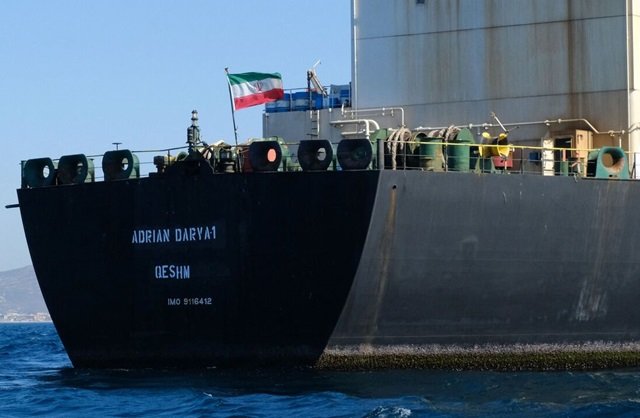
A subsequent investigation by BBC Sinhala and BBC Verify found that 21 Iranian vessels were positioned in international waters near Sri Lanka on 15 September at about 3:30pm GMT. Their reported positions stretched along the maritime area from Matara and Galle through Colombo towards Negombo. The vessels included Stream, Halti, Dream II, Sea Cliff, Snow, Helm, Diamond II, Deep Sea, Dino I, Herby, Sevin, Amber, Henna, Huge, Dore, Sonia I, Felicity, Dune, Hero II, Daisy and Shiba.
According to the material provided, these vessels had been in the area since July and were identified through MarineTraffic.com. They included tankers used to transport fuel as well as cargo vessels, and all were reported to be subject to United States sanctions.
That creates a more complicated question than simply whether the vessels are inside or outside Sri Lankan waters. If Washington is monitoring the ships because of sanctions and concerns surrounding Iran’s activities, what happens if the vessels require protection, assistance or a change of custody?
That question becomes particularly significant because of what happened to another Iranian naval vessel, IRIS Bushehr. After the sinking of IRIS Dena, Bushehr was brought under Sri Lankan control on humanitarian grounds and has remained anchored in Trincomalee since 9 March. The 208 Iranian sailors who had initially been held at the Sri Lanka Navy’s Welisara camp were subsequently flown back to Iran. Thirteen Iranian sailors, however, have remained aboard Bushehr to provide security for the vessel.
The issue has since become a parliamentary concern. MP Rauff Hakeem said on 11 September that although a request had been made to transfer the 13 sailors serving aboard Bushehr, the Defence Ministry had so far authorised the transfer of only three. Hakeem also pointed to India’s handling of Iranian sailors aboard an Iranian vessel anchored there, saying the Indian government had allowed about 30 Iranian sailors to be transferred and return to Iran.
Deputy Minister of Foreign Affairs and Foreign Employment Arun Hemachandra said the safety and welfare of the Iranian sailors had received attention from the beginning and that the government was working with the Defence Ministry and other relevant institutions to resolve the remaining issues.
The broader question, however, extends beyond Bushehr. Dr Hasitha Kandaudaha, a researcher and consultant on international relations, said Sri Lanka had to act cautiously as a sovereign state and as a signatory to international maritime conventions. If a vessel inside waters under Sri Lankan jurisdiction declared an emergency and requested assistance, he argued, Sri Lanka could be required to respond under its international obligations.
At the same time, the United States has made clear that it remains focused on Iranian military activities, sanctions, procurement networks, cyber operations and what it describes as illegal fuel trading. The US State Department told BBC Sinhala that Washington would continue efforts to expose and disrupt activities supporting what it called the Iranian government’s adverse activities, while declining to comment on the contents of private diplomatic discussions.
The Iranian Embassy in Colombo, meanwhile, did not respond to repeated requests for information between 9 and 17 September. BBC Sinhala said it contacted the embassy four times by email and five times by telephone regarding the Iranian vessels.
It is against this background that another question now emerges from defence circles: are some of the Iranian vessels near Sri Lanka receiving security from the Indian Navy, and could the United States eventually seek to take them under its custody? The supplied information does not establish either proposition as a confirmed fact. But if such arrangements are being discussed within the American and Indian defence establishments, they would raise an important question for Colombo: how far can Sri Lanka remain merely an observer when the waters around it become part of a wider contest involving Iran, the United States and India?