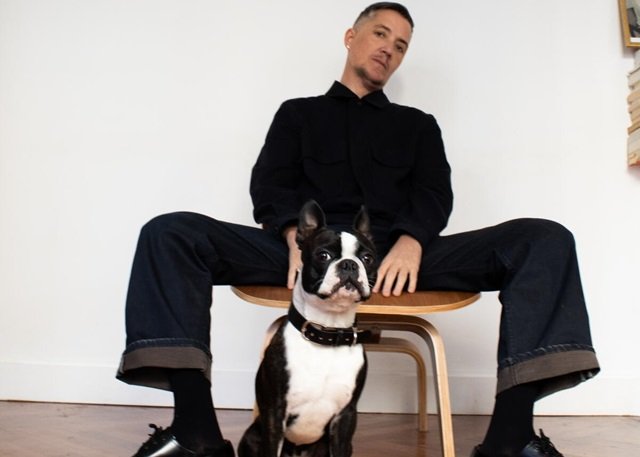
Paul B. Preciado has spent much of his intellectual life questioning the boundaries that separate male from female, normal from pathological and accepted identities from those placed outside the social norm. Now the philosopher and writer argues that the trans body has moved from the margins of political debate to its centre, becoming a powerful object of attention for the far right and, in his view, a warning of what could happen to other groups in the future.
In an interview with El País, Preciado spoke about the political uses of the body, the rise of artificial intelligence, the changing nature of cultural institutions and the increasingly contentious position of trans people in contemporary politics. His remarks came as he prepared to participate in Madrid’s Festival of Ideas after initially threatening to withdraw alongside around 30 other participants over the festival’s relationship with Allianz.
The dispute centred on Allianz’s sponsorship and what the participants described as the company’s financial links with Israel. According to the source text, the asset-management subsidiary of the insurer had acquired $960 million in Israeli government bonds, a figure cited from a United Nations report. Following the pressure from participants, Allianz withdrew as a sponsor, allowing Preciado and the other participants to remain involved in the festival.
For Preciado, the episode raised a wider question about the relationship between cultural institutions and their financial backers. He argued that culture should function as a public space and a common good, comparable in this respect with education or healthcare. The issue, he said, should not be limited to Allianz. Other companies, including Total, CaixaBank and Telefónica, should also be examined individually, according to the criteria he proposed.
“The withdrawal of Allianz sets a precedent: the economic relationships of cultural institutions must be reviewed,” he said.
The controversy also formed the immediate backdrop to a much broader discussion about the body. Preciado argues that trans people have moved from being a political and statistical micro-minority to becoming a central subject of political discourse, particularly for the far right. For much of the past, he says, trans identities were confined to the categories of sex work and medical monstrosity. The transfeminine body, in his account, has simultaneously been subjected to intense surveillance, denigration and desire.
That contradiction is central to his interpretation. He argues that the trans body becomes a political target precisely because it challenges assumptions about what a supposedly “normal” body should be. The violence directed against it, he maintains, can reveal anxieties about homosexuality and non-binary identities within bodies that otherwise appear to conform to conventional expectations of masculinity, whiteness, heterosexuality and cisgender identity.
The experience is not identical for trans men and trans women. Preciado describes the transfeminine body as hyper-visible, simultaneously an object of desire and a target of moral panic. Trans men, he argues, are more often rendered invisible. They may be treated simply as men and therefore assumed to possess the privileges associated with cisgender men, or their transition may be erased altogether.
“I am not a man, but a trans man,” he said. “And that is very different.” He describes the trans male body as challenging what he calls the traditional assumption of male sovereignty: a masculine body without a penis.
His argument extends beyond trans politics. Preciado proposes a political alliance not merely between established identity groups but among people whose bodies have been subjected to different forms of normalisation, pathologisation and exploitation. Feminist, queer, trans, anti-racist, anti-colonial and ecological struggles, among others, could form what he describes as a kind of swarm.
He sees the mobilisation around Palestine as one possible example of such a political composition. In his interpretation, the issue has brought different movements into a shared vocabulary involving the ideas of decolonising territory and decolonising the body. He points to the flotilla that included Greta Thunberg, LGBT and anti-colonial activists, institutional politicians and Ada Colau, the former mayor of Barcelona, as an example of a heterogeneous political grouping. Whether such efforts succeed, he argues, is less important than what their composition reveals about new forms of political mobilisation.
The same framework informs his interpretation of the technological changes that accelerated during the Covid-19 pandemic. Preciado argues that the pandemic created two contradictory processes. On one side, societies temporarily experienced a slowing of ecological destruction, mobility and economic activity. On the other, he sees the period as one of forced digitalisation, accelerating a technological transformation that has continued long after lockdowns ended.
“We are the only civilisation in history whose tiny subjective, political and vital horizon is the size of a mobile phone,” he said. “We went from utopia to the cheapest digital dystopia.”
Artificial intelligence is therefore central to his concerns about the future, but not simply because of its technological capabilities. He connects it to what he describes as a broader transformation in the methods through which contemporary capitalism extracts and accumulates value. Within that environment, he argues, political rhetoric can offer simplified explanations of complex social change.
His interpretation of the contemporary right is particularly controversial. Preciado argues that political movements on the far right present trans people, migrants and other minorities as immediate threats while directing attention away from climate change, the dismantling of social and civil rights, and economic concentration. In his account, reinforcing traditional family structures, male authority and national borders creates an image of social control at a time when technology and capital increasingly operate across borders.
“It has never been easier to mobilise society against a trans or migrant body as a social threat than around the destruction of the biosphere or against the accumulation of capital,” he said.
From this perspective, Preciado does not regard the trans body as merely a minority concern. He sees it as a test case for broader questions about citizenship, rights and social control. “Everything that is happening now to the trans body — the loss of medical, social and political rights, the questioning of its status as a citizen, surveillance and violence — will happen to all of you who believe yourselves to be normal,” he said.
His historical argument reaches further back than contemporary political battles. Preciado points to the history of colonialism and the difficulty European political and theological categories had in accommodating indigenous bodies. He argues that classifications such as male and female, heterosexual and homosexual, normal and pathological, and white and non-white are historical categories that shape how bodies are perceived.
This leads to perhaps his most provocative claim. Discussing the Spanish right-wing party Vox, he argues that identities regarded as marginal are not actually external to the people who oppose them.
“Every Vox voter carries within themselves an indigenous body, a trans body, a homosexual body,” he said. “They carry their non-binary side, their queer side, their indigenous side, their Roma side.” His argument is that a “normalised” body is created by suppressing other possibilities through social and historical violence. He therefore views the hostility directed towards marginalised bodies as evidence of the identities and possibilities that have been excluded.
Preciado connects that argument to his own history. Born in 1970, he describes his childhood as shaped by the aftermath of the Spanish Civil War and by the desire to construct a collective utopia of liberation after Francoism. He describes his family in deliberately striking terms: a Catholic mother, a father forced into militarisation by fascism, and a trans child.
That history contributed, he says, to his sexual and academic exile, first in the United States and later in France. At the end of the 1980s, he argues, it was difficult to practise philosophy in Spain in the first person from a lesbian, non-binary or trans position. He also maintains that Franco’s political legacy was never completely confronted.
“I have never had the impression that Franco was dead,” he said. “His return was predictable in a society that never carried out a collective mourning and a critical reappropriation of its own history.”
For Preciado, however, existing outside the norm is not solely a condition of vulnerability. It can also provide a different perspective on the rules governing social life. “When you are on the margins, you are the object of violence, but you are also freed from the disgusting weight of normality,” he said.
His final argument is less about abandoning rights than expanding the definition of who can possess them. Divorce, unwanted pregnancy, illness, ageing, migration, unemployment and gender transition can all move people into circumstances outside what they previously considered normal. The pursuit of normality, in his view, is therefore less stable than it appears.
“The real freedom begins when the norm ceases to be the place you aspire to,” he said. “That does not mean you should not have rights or political recognition; on the contrary, it means not exercising your rights against others. It means understanding that your rights expand the more bodies can share them.”
That idea brings his various arguments together: the politics of the trans body, the ethics of cultural sponsorship, the effects of technological change and the historical construction of identity. Preciado’s central proposition is that the body is never merely biological or private. It is also shaped by institutions, laws, economic relationships and political struggles.
For him, the question is therefore not simply who belongs inside the boundaries of normality. It is who has the power to define those boundaries — and what happens to the bodies that fall outside them.