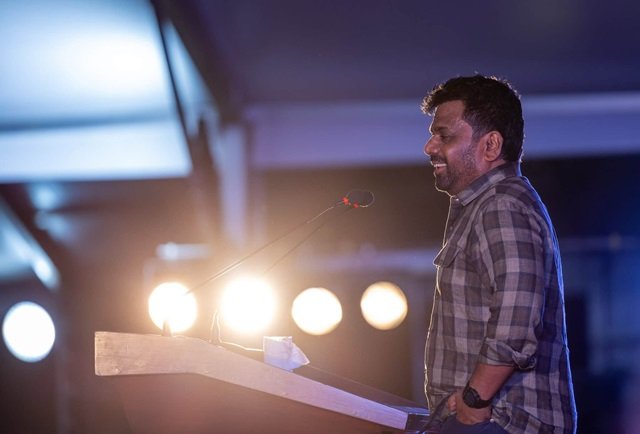
Sri Lanka has never had a constitution genuinely drafted by its people, according to constitutional scholar Professor Rohan Edrisinha, who has argued that the country’s constitutional history reflects a deeper contradiction: institutions intended to restrain political power have repeatedly been shaped by those already holding it.
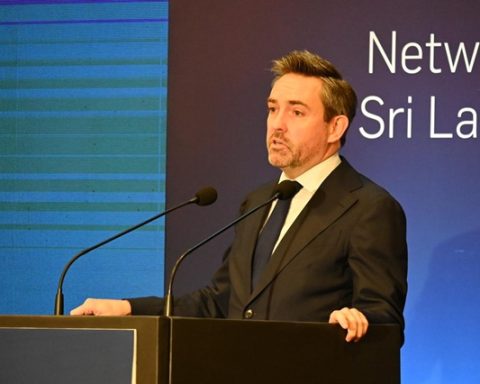
Speaking at a public seminar organised by the Young Lawyers’ Association under the theme “Why Should We Mobilise for a New People’s Constitution?” at the National Library and Documentation Services Board auditorium in Colombo 7 on 11 September, Edrisinha said the case for a new constitution was straightforward. Sri Lanka, he argued, had never had a “people’s constitution”.
His argument begins with the Soulbury Constitution, which he said was prepared by the Cabinet with some contribution from Sir Ivor Jennings and without a genuine process of public consultation. The 1972 First Republican Constitution, by contrast, emerged from what Edrisinha described as perhaps the most legitimate constitutional process Sri Lanka had experienced. A Constituent Assembly debated the proposals openly, and the positions taken by its members remain available for examination.
Yet Edrisinha argued that the final document ultimately reflected the interests of the United Front government, which held a two-thirds majority at the time. For years, he said, it was therefore referred to as the “United Front Constitution”. In his assessment, it was ultimately a constitution drafted and adopted by those in power rather than by the people.
The 1978 Constitution, he argued, represented an even less open and transparent process. It was drafted by a parliamentary select committee whose proceedings were legally required to be conducted in secret. The resulting constitutional structure reflected the political thinking of its principal architect, J. R. Jayewardene, including his belief in a strong executive presidency for development, influenced by models such as Singapore, South Korea and Malaysia.
For Edrisinha, this history raises a fundamental question about the purpose of constitutionalism itself. A constitution, he argued, is supposed to protect and empower citizens against those who exercise political power. If the government in power is itself responsible for drafting and adopting the constitution, he said, the process becomes contrary to the central principle of constitutionalism.
He illustrated the point to his law students with a deliberately provocative analogy: asking politicians to draft a constitution, he tells them, is like asking foxes to build a chicken coop. His broader argument is that constitutional power should ultimately derive from the people, rather than being treated as something governments possess by default.
Drawing on Friedrich Von Hayek’s The Constitution of Liberty, Edrisinha argued that the principle that “all powers derive from the people” means more than elections. It means that people organised as a constituent body should have the exclusive authority to determine the powers given to representative legislatures, executives and those powers that remain with citizens themselves.
Those limits, he said, should be protected through a bill of rights, independent commissions and what constitutional scholars increasingly describe as “fourth-branch institutions”. The ultimate purpose of a constitution, in this view, is to protect citizens from arbitrary action by legislatures and other branches of government.
That argument also changes the way constitutional reform is understood. Sri Lanka’s constitutional debate has often concentrated on institutional questions such as whether the country should have single-member constituencies or proportional representation, and whether it should retain a presidential system or adopt a parliamentary one. Edrisinha said those questions were important, but argued that two other purposes of constitutionalism had received insufficient attention: protecting individual and minority autonomy and freedom, and preventing the tyranny of the majority.
Citing former Harvard Law School dean Eugene Rostow’s description of a constitution as fundamentally a “counter-majoritarian document”, Edrisinha argued that constitutional protections are necessary precisely because minorities and individuals cannot always rely on majority political power to protect them. Parliamentary majorities, and even majorities expressed through referendums, should therefore remain subject to constitutional limits where necessary to protect fundamental rights, minorities and independent institutions.
He then turned to what he described as a fundamental weakness in Sri Lanka’s constitutional system since 1972: once legislation has been enacted, it cannot subsequently be challenged on the grounds that it is inconsistent with the Constitution. Edrisinha contrasted this with India, Nepal, Bangladesh and Pakistan, and pointed to Articles 80(3) and 16 as provisions that give existing laws continuing validity even where questions of consistency with constitutional provisions arise.
This, he argued, raises a basic question: is Sri Lanka’s Constitution genuinely the supreme law? Drawing on the Kenyan constitutional scholar Hastings Okoth-Ogendo’s concept of “constitutions without constitutionalism”, Edrisinha argued that Sri Lanka had experienced precisely such a condition.
His criticism extends particularly to the executive presidency. Edrisinha described the presidential system as the most objectionable feature of the Second Republican Constitution and argued that it should be abolished under any new constitutional settlement. A. J. Wilson described Sri Lanka’s system in The Gaullist System in Asia as a “Gaullist” system, while other descriptions have included mixed, hybrid and semi-presidential models.
Whatever the terminology, Edrisinha argued that the Sri Lankan president possesses extensive powers. Before the 17th Amendment, presidential appointment powers were, in his view, considerably greater than those of the US president. He also pointed to the president’s ability to allocate Cabinet ministries to himself, including the Finance Ministry, and argued that this creates tensions with Article 151(2), which requires the Minister of Finance to be responsible to Parliament.
He further cited presidential immunity, the power to dissolve Parliament after the constitutionally prescribed period, extensive powers relating to emergency regulations and referendums, and the movement of political influence from Parliament towards the President’s Secretariat. During the presidency of Ranasinghe Premadasa, he recalled, an unelected international relations adviser wielded considerable influence, at times appearing to possess greater political influence than the Foreign Minister.
For Edrisinha, these features illustrate what the late Neelan Tiruchelvam called the “instrumental use of constitutions”: the use of constitutional arrangements as political instruments rather than as enduring restraints on political power.
The problem, he argued, is not confined to Sri Lanka. Concentrating political power around a charismatic individual can produce what constitutional scholars describe as personalism, while creating conditions associated with populism and authoritarianism. Citing Nadia Urbinati and Juan Linz’s The Perils of Presidentialism, he argued that personal-centred presidential politics can weaken political parties, legislatures and courts while encouraging cronyism and corruption.
When presidents approach the end of their terms, Edrisinha argued, concerns about future investigations into abuses of power can create incentives to manipulate constitutional institutions, influence courts, capture electoral institutions or alter constitutional provisions governing term limits. Under such circumstances, he said, a constitution can shift from being an instrument that protects citizens to one that protects political leaders.
His alternative is a constitution whose legitimacy and authority derive directly from the people. A parliamentary executive, he argued, provides mechanisms through which a prime minister remains “first among equals” within a collective system and is subject to continuing parliamentary scrutiny.
Sri Lanka’s present system, by contrast, was described by Edrisinha as an “achcharu” — a mixture of different arrangements — in which the country has lost the institutional checks and balances associated with both pure presidential and parliamentary systems. Foreign scholars studying Sri Lanka’s executive presidency at a conference at Melbourne Law School, he said, had described it as a “hyper-presidential system”, with certain similarities to the powers exercised by Vladimir Putin under Russia’s constitutional system.
Edrisinha’s proposed answer is therefore twofold: establish, for the first time in Sri Lanka’s history, a supreme constitution whose authority and legitimacy come directly from the people, and abolish the executive presidency. A new constitutional process, he argued, should return political power to institutions accountable to citizens.
The central question, in his formulation, is not simply what institutional arrangement Sri Lanka should adopt. It is who should possess the authority to define the limits of political power in the first place. For Edrisinha, the answer is the people — and that is why, rather than another constitution produced through the existing structures of power, the demand should be for a “people’s constitution”.