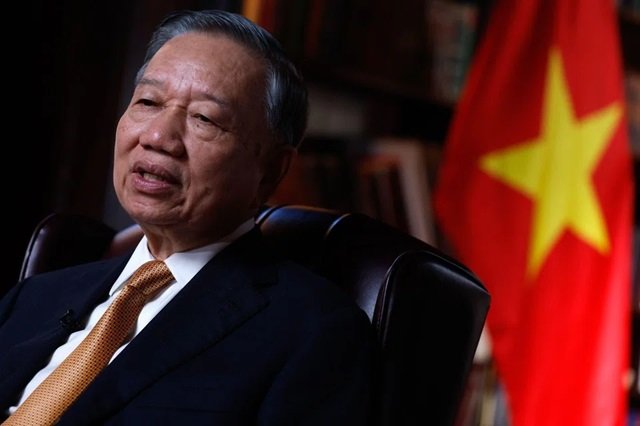
Vietnamese President To Lam said his country is “very close” to reaching a trade agreement with the United States, as Hanoi seeks to ease trade tensions by increasing purchases of high-tech American goods, including aircraft, and addressing Washington’s concerns over the bilateral trade imbalance.
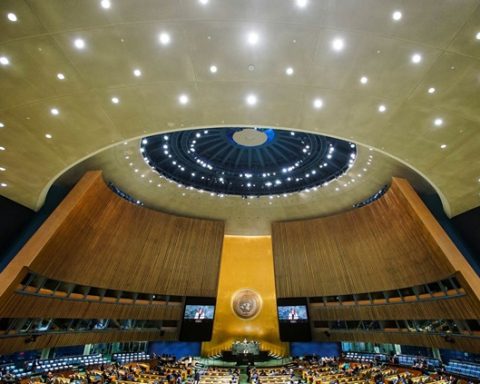
Speaking in an exclusive interview with Bloomberg TV’s Haslinda Amin on the sidelines of the UN General Assembly on Monday, Lam said Vietnam’s priority was to accelerate negotiations on an agreement covering “reciprocal, balanced and equitable tariffs between the two countries”. The talks have continued for months under the threat of new US tariffs, with transshipment and non-tariff barriers emerging as major areas of disagreement.
“One of the issues we need to discuss with US leaders, particularly the US president, is how to expedite negotiations toward an agreement on reciprocal, balanced and equitable tariffs between the two countries,” Lam said.
Vietnam has one of the largest bilateral trade surpluses with the US, an imbalance Washington has used to pressure Hanoi to increase American access to its market. Lam said Vietnam wanted to import more US products to support industrial production, although certain policy constraints remained on the US side.
Among the goods Vietnam wants to purchase are US aircraft, nuclear power technology and infrastructure for roads and railways. Lam said Vietnam’s exports were aligned with US demand and did not directly compete with American products, while arguing that greater imports from the US could help address concerns over the trade imbalance.
The most sensitive issue remains Washington’s concern that Chinese goods could be repackaged and rerouted through Vietnam before being exported to the US. US trade officials have pressed Hanoi to strengthen rules of origin, customs enforcement and controls over Chinese inputs. US customs inspectors have also carried out spot checks on China-linked factories in Vietnam in recent months.
Lam rejected the suggestion that Vietnam accepts such practices. “We do not accept transshipment of goods,” he said. “Trade must be genuine, with products actually manufactured in Vietnam and meeting international standards and our requirements, not only for the US market, but also for other international markets where Vietnam has participated.”
Vietnam was singled out for three simultaneous so-called Section 301 investigations and currently faces a 12.5 per cent levy as one of around 60 nations targeted in a US probe into goods produced with forced labour. It is also under scrutiny over alleged excess manufacturing capacity and intellectual property violations.
Lam said preliminary results from the US investigations were progressing well and expressed confidence that Vietnam could avoid higher tariffs. Hanoi has defended its trade practices, introduced a new law prohibiting goods produced with forced labour, tightened customs procedures and launched crackdowns on online piracy and other intellectual property offences.
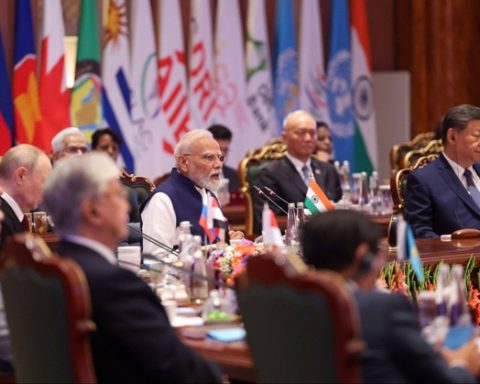
The trade negotiations form part of a broader diplomatic effort under Lam, who has pursued overseas engagements aimed at diversifying Vietnam’s trade and energy partnerships while strengthening its position as a middle power. He has travelled this year to China, Russia, India and France, as well as across the region, and delivered a keynote speech at the Shangri-La Dialogue in May.
His visit to the US also comes as Vietnam seeks to balance relations with major strategic partners amid wider global tensions and trade uncertainty. After New York, Lam is due to travel directly to Canada to meet Prime Minister Mark Carney, while the trip coincides with preparations for a US-China summit between Donald Trump and Xi Jinping. Lam remained noncommittal about whether he would meet Trump during his US visit.
Vietnam is simultaneously pursuing an ambitious economic target of 10 per cent growth. Lam acknowledged that higher energy prices following the war in Iran and rising inflation concerns have made the objective more difficult, but said the government remained confident.
“We have carefully calculated and considered our growth targets,” Lam said. “We are undertaking institutional reforms and building a new growth model” and are “fully confident we can achieve these goals.”