The death of Geli Raubal, Adolf Hitler’s 23-year-old niece, has long been surrounded by conflicting accounts. She was found dead in September 1931 in Hitler’s Munich flat at Prinzregentenplatz. The established chronology has held that Hitler left Munich for Nuremberg on the afternoon of 17 September and that Raubal’s body was discovered the following morning. Newly identified documents now challenge that chronology, potentially removing Hitler’s alibi for the morning of 18 September.
The documents were found by historian Harald Sandner in the Munich State Archive and Munich City Archive. Two death notices and an entry in the death register of Standesamt München II record the discovery of Raubal’s body as taking place on Friday, 18 September 1931, at 10.15am. That is approximately 24 hours earlier than the discovery date contained in the established account. If the archival records are accurate, Hitler was still in Munich during the period when Raubal was apparently found dead.
Sandner’s reconstruction places Hitler at a party event between 10.30am and 12.30pm on 18 September, after which he remained in Munich before travelling to Nuremberg later that afternoon. The discrepancy therefore concerns a period when Hitler, rather than being away from the city, was apparently present there. The documents do not establish what happened inside the flat, nor do they provide evidence that Hitler was involved in Raubal’s death.
The established version rests principally on the final report of the Munich police directorate dated 28 September 1931. According to that account, Hitler’s house manager and servant, Georg Winter, gained access to Raubal’s room on the morning of 19 September after finding it locked from inside. He discovered the 23-year-old dead on the floor and telephoned the relevant police district at about 10am. Criminal investigators subsequently arrived at Hitler’s residence, while police doctor Dr Müller conducted an examination of the body at 11.30am.
The source of the discrepancy between that account and the newly discovered records remains unknown. Sandner believes the official handling of the case contains indications of a possible cover-up. Raubal had suffered a gunshot wound, yet no autopsy was ordered. On 21 September, the Munich public prosecutor’s office released her body for burial, after which it was transferred to Vienna. There is no documented proof that the police report was deliberately altered, and no evidence establishes who might have changed it.
The question mattered politically because Hitler was then seeking to present himself as a disciplined and morally exemplary political leader. The Nazi Party had become the second-strongest force in the Reichstag election the previous year and was rapidly expanding its political influence. Historian Thomas Weber says Hitler was attempting “to present himself to the German population and abroad as the embodiment of all virtues and values”. Any suspicion that he might have been connected to his niece’s death therefore threatened the public image he was cultivating.
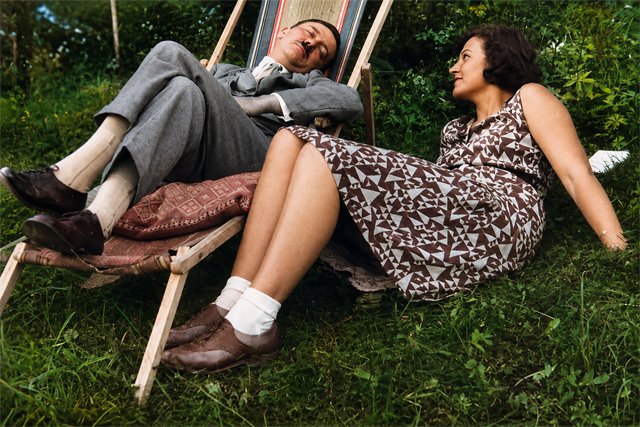
Raubal was the daughter of Hitler’s half-sister Angela and had lived in Munich while studying medicine from 1927. She later began vocal training, which Hitler financed. Accounts indicate that he exercised considerable control over her daily life. Conflict reportedly developed over her wish to continue her singing studies in Vienna. According to the police report, Hitler told investigators that he would agree to the proposed move only if Raubal’s mother accompanied her.
The established narrative says that Hitler and Raubal argued over the proposed journey on 18 September. Hitler was said to have seen his niece before leaving Munich for Nuremberg that afternoon, after which Raubal allegedly shot herself with one of her uncle’s pistols. The circumstances of their relationship had already attracted speculation among contemporaries, including claims that they had been romantically involved, although the source provides no evidence establishing such a relationship.
Doubts about the suicide account were not confined to later historians. The Social Democratic newspaper Münchner Post reported on 21 September 1931 that Hitler and Raubal had been involved in a serious argument, that injuries had been found on her body and that Nazi Party officials had held discussions about how the case should be presented publicly. Other newspapers speculated that Hitler had killed Raubal or arranged her killing, with jealousy suggested as a possible motive. Those reports provided no evidence for the allegations, and Hitler rejected the accusations in a formal rebuttal.
Sandner continues to consider homicide possible, but the newly discovered documents do not prove that Raubal was murdered and do not identify a perpetrator. They instead establish a discrepancy between archival records and the chronology on which Hitler’s traditional alibi has rested. Sandner also cites a 1933 conversation recalled by former Bavarian minister-president Heinrich Held with Social Democrat Wilhelm Hoegner, in which Held described the Raubal case as a “very dirty story” and accused Justice Minister Franz Gürtner of suppressing the investigation. No written evidence of such an instruction has been found.