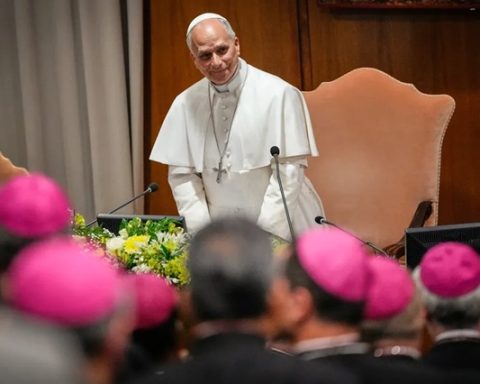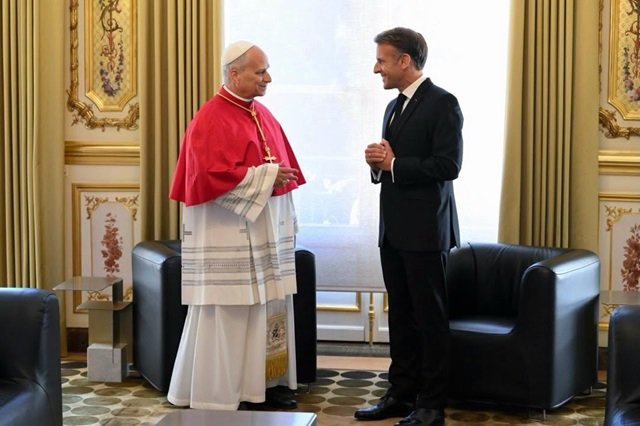
Pope Leo has reaffirmed his commitment to preventing the sexual abuse of children by Catholic priests during a private meeting with seven survivors in France, the Vatican said on Sunday, hours after he urged the Church to acknowledge its failings and address its “deep wounds”.
The two-hour meeting took place during the pope’s four-day visit to France. Leo met each survivor privately and heard proposals for improving the Church’s safeguarding measures, according to a Vatican statement. He thanked them for their testimony and reaffirmed his commitment to ensuring that the harm they experienced would not be repeated.
The survivors described the meeting as emotional and said they felt listened to by the pope. They also said they were struck by his compassion and his knowledge of their individual cases, while stressing that they wanted his words to be followed by concrete action.
“He certainly believes that the Church has done a great deal in France, but he also believes that the Church in France still has a tremendous amount left to do,” said Jerome Guillement, one of the survivors.
The meeting came as the pope sought to address the continuing impact of abuse scandals in the French Catholic Church. Local Church leaders hope his visit will help restore confidence after a 2021 report found that about 330,000 children in France had been abused by Catholic clergy and lay leaders over a period of seven decades.
Earlier on Sunday, Leo told an estimated 150,000 people attending Mass in a field near the Catholic shrine at Lourdes that the Church needed the courage to confront its past. “In order to heal the deep wounds, infidelities and painful errors that have occurred within (the Church), we must humbly place ourselves under the Lord’s purifying gaze,” he said.
Veronique Garnier, another survivor who met Leo, said she was troubled by the Mass because the pope referred to abuse without directly apologising for it. She questioned why she had attended the service but said her private meeting with Leo had encouraged her.
“I do indeed believe there is hope — hope that there can be change and truly listening to us at a deep level, rather than just superficially with beautiful words that are never followed by any real action,” Garnier said.
Leo also addressed the abuse scandals during a closed-door meeting with French bishops, according to a Vatican-provided text. He thanked them for what he described as the “courageous measures” they had taken and urged them to strengthen safeguarding efforts and “continue on the path undertaken, maintaining the greatest vigilance”.
The pope has previously apologised directly for abuse scandals that have damaged the Church’s credibility internationally. During a visit to Spain in June, he told bishops that they must listen to survivors and provide reparations.
His visit to Lourdes also brought attention to another abuse controversy involving the Vatican. The shrine’s facade features large mosaics by Rev. Marko Rupnik, a prominent religious artist with Vatican ties who has been accused of sexual abuse by more than 20 women. Rupnik has not publicly commented on the accusations. Five alleged victims wrote an open letter to Leo on Thursday criticising an ongoing Vatican trial involving the cleric.
The mosaics were covered with large, muted yellow tarpaulins during the pope’s visit. Leo passed the covered facade in his open-top popemobile before Sunday’s Mass.
During his visit, Leo also reiterated the Church’s opposition to assisted dying, two months after France established a legal right to die for people with incurable illnesses. Speaking to volunteers assisting sick pilgrims at Lourdes, he urged them to remember the purpose of healthcare. “That is to care for a suffering person, not to eliminate that person,” he said. “Medicine must never become the servant of programmed death!”