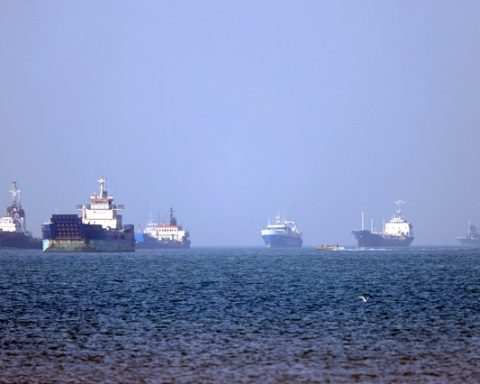
Iran has maintained its seven-day proposal to reopen the Strait of Hormuz, refusing to soften its conditions as President Donald Trump sends mixed signals over whether Washington is prepared to reach a new agreement with Tehran.
Trump told Axios in an interview on Sunday that Iran’s demands were conditions Washington might have accepted about a year ago, but said Tehran had overplayed its hand. He nevertheless said he expected negotiations to resume this week, despite rejecting Iran’s latest proposal, according to Axios.
Iranian officials said earlier that they were awaiting a definitive US response and had not received a response through mediators Qatar and Pakistan. Foreign Minister Abbas Araghchi, quoted by state broadcaster IRIB, said Trump had made “some good remarks as well as many contradictory ones”, adding that such contradictions were frequently heard from the US president.
Araghchi said only a “negotiated solution” could resolve the dispute over the Strait of Hormuz, a crucial global energy route. US and Iranian negotiators have been exploring an arrangement under which Tehran would reopen the strait while Washington lifted a blockade of Iranian ports, according to a person familiar with the matter. The proposed agreement would resemble a memorandum of understanding reached by the two countries in mid-June, which produced a fragile ceasefire that later collapsed.
Trump said on Saturday that Iran had made a proposal that he rejected. “They want to make a deal where they open the strait immediately because they’re losing so badly,” he said as he left the White House.
Araghchi adopted a defiant position in a television interview broadcast on Sunday, saying Iran remained prepared to reopen the waterway if Washington met its conditions. “We are ready to open the strait if certain things are done by the U.S.,” he told NBC’s Meet the Press. “And these things are not new.”
The Iranian foreign minister said there was always room for negotiations but questioned whether Tehran should return to diplomacy with the Trump administration after what he described as repeated US attacks on Iran during Trump’s second term. “We stand firm in the face of any aggression against us, even if it comes to a doomsday war,” Araghchi said.
US Treasury Secretary Scott Bessent argued that Washington’s economic pressure campaign was increasing the pressure on Tehran. He said China, the largest buyer of Iranian oil, had “substantially reduced any assistance to Iran”. Bessent predicted that Iran would make its final oil delivery to China within about two weeks, after which it would have no further supplies to send, and said he believed the pressure was encouraging Tehran to seek an agreement over the strait.
The dispute is unfolding alongside renewed attacks by Iranian-backed groups against US allies in the Middle East. Saudi Arabia’s capital Riyadh came under attack from Houthi militants in Yemen on Saturday. Saudi-backed coalition forces said air defences intercepted two drones launched towards Riyadh and a ballistic missile aimed at the southern border area of Khamis Mushait.
About a week earlier, air-raid alerts had been issued for Riyadh residents for the first time since the height of fighting in March and April, with air defences intercepting missiles headed towards the capital.
The Wall Street Journal has reported that Trump expects to resume bombing Iran after the US midterm elections in early November and is sceptical that Tehran will meet his demands. Trump declined to answer when asked whether the bombing campaign would resume after the elections.
Iranian President Masoud Pezeshkian told the United Nations General Assembly in New York last week that Tehran would not allow freedom of navigation through the Strait of Hormuz while US sanctions and a blockade remained in place. He also said Iran would not surrender its right to develop nuclear technology for economic purposes.