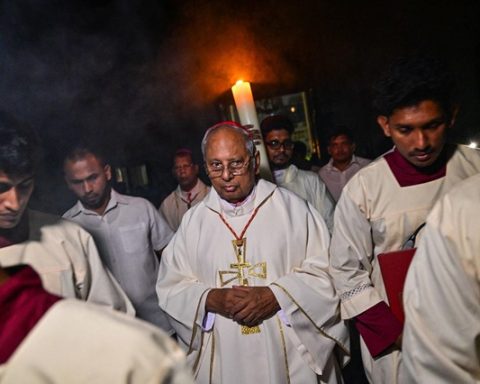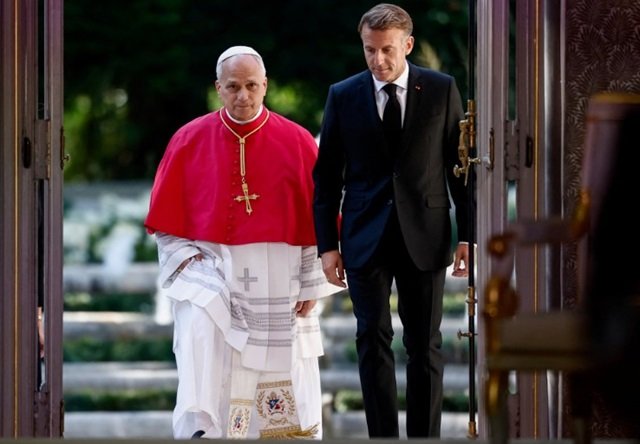
Pope Leo XIV has rejected describing sexual abuse in the Catholic Church simply as a “systemic” problem, while acknowledging that some church organisations had at times operated “as an abusive system”. His remarks came during a six-question press conference aboard the flight returning to Rome after a four-day visit to France, where he had met seven survivors of sexual abuse in Lourdes.
Responding to French journalists who said some survivors had reported that the pope himself had described the problem as systemic, Leo XIV drew a distinction between abuse as a human problem and the responsibility of institutions. “Personally, I prefer to express it another way,” he said, adding that some organisations within the Church had “on occasion, acted, so to speak, as an abusive system”. He stressed that the distinction was important.
The pope had previously told reporters that sexual abuse was “primarily a human problem”. At the same time, he said abuse within the Church carried an additional dimension because “the faith life of people is deeply wounded and sometimes even destroyed”. That, he said, gave the Church a particular responsibility to accompany survivors and help them find healing.
At Lourdes, Leo told the seven people he met that he wanted their help in conveying to other survivors his personal willingness, and that of the Church, to listen to them, recognise the suffering caused by abuse and accompany them on the path towards healing. France’s bishops had acknowledged the institutional responsibility of the Church after the publication of a 2021 report on the scale of sexual abuse and established two bodies to support and compensate survivors. Almost 2,000 people have so far come forward describing abuse in Catholic parishes or schools, with about 1,200 receiving financial compensation. A separate body deals with victims of abuse involving religious orders.
The pope’s comments on abuse formed part of a wider discussion during the flight in which he addressed housing, artificial intelligence, political extremism and the relationship between religion and public policy. Asked about Maricarmen, an 87-year-old woman evicted from her home in Madrid the previous week, Leo acknowledged that he did not know the specific case. He nevertheless used it to discuss what he called the broader problem of access to housing and property speculation.
“How is it possible that a case like this happens?” he asked. “What is the problem in the system that allows an elderly woman to be thrown out of her home?” He said parishes, dioceses, communities and the state should seek “fairer solutions”, while political leaders and public authorities also had to address the problem. “Many times we react only to the moment of emergency,” he said, but added that societies needed to examine “the systemic cause of this problem and how to help”.
Housing was linked by the pope to his criticism of a “culture of disposal”, a concept previously associated with Pope Francis. Leo said the Church sought to awaken a greater human sensitivity to the pain and suffering of others, including people regarded as unproductive.
During his visit, Europe itself was a central theme. In Metz, near the German border, Leo described the city as a “city of borders and transitions” and argued that Europe had developed when it learned from its past while renewing itself through encounters with others. He referred to Europe’s ancient and Christian heritage, Germanic and Slavic cultures and Arab presence in the Iberian Peninsula before arguing for the “overcoming of the opposition of cultural identities”.
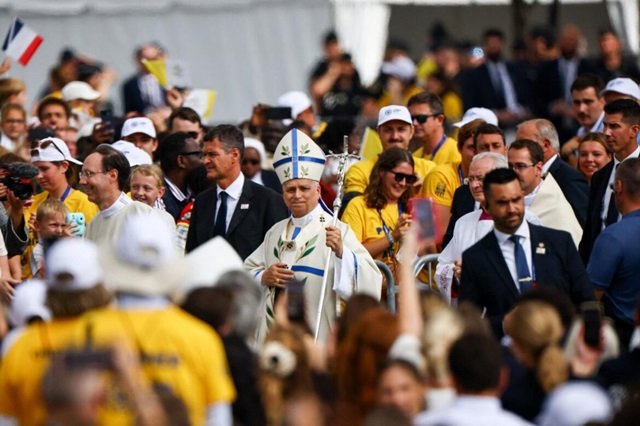
He connected that principle directly to migration, noting that many people now arrive in Europe fleeing war and persecution or seeking a life away from poverty and deprivation. He also invoked Robert Schuman, one of the figures associated with European integration, whose life was shaped by the history of France and Germany. Leo argued that Europe’s experience of resolving differences through negotiation demonstrated the possibility of addressing competing interests without conflict.
He described international relations as becoming “increasingly barbaric”, saying that commitments were being disregarded and that “lies and deception” were being celebrated. European international law and multilateralism, he said, could provide an alternative to the desire to dominate others, which he described as a cause of conflict, while also warning against further rearmament.
On artificial intelligence, Leo said he was not in “panic” and that he slept peacefully, but insisted that warnings from experts should be taken seriously. He rejected the idea that such concerns were necessarily false reports intended to generate economic benefit and called for continued dialogue, study and research to prevent AI reaching a point where it could “destroy humanity or exclude it from the conversation”. “We cannot sit idly by pretending that nothing will happen,” he said.
Asked about the rise of the far right in Germany, Leo said some elements combined political positions with forms of religiosity that, in his view, did not represent authentic Christianity. He urged reference to Gospel values based on “understanding, compassion and accompaniment” rather than hatred and division. On France’s strict separation of religion and politics, he said the Church was not entering politics when it defended life or expressed positions on social doctrine, but was applying the Gospel to people’s lives.