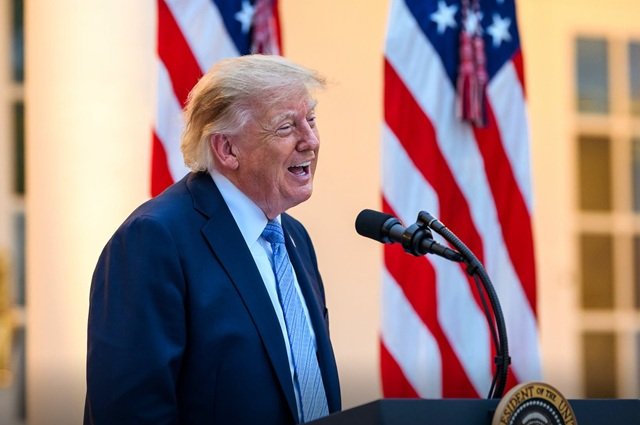
US President Donald Trump said on Tuesday that he does not want the United States to work with China on artificial intelligence risks, arguing that cooperation could jeopardise America’s lead in a technology he described as a winner-takes-all race.
“Whoever wins superintelligence wins. You’re gonna have a winner and a loser, and you’re probably not gonna have a second place,” Trump said at a White House event focused on AI. “We’re leading now over China and everyone else, and I want to keep it that way … The only way you can keep it that way is to do exactly what we’re doing right now.”
Trump’s comments came as he announced a voluntary agreement involving six major US technology companies to strengthen controls and audits around advanced AI systems. The announcement followed growing calls for Washington and Beijing to cooperate over risks associated with frontier AI, including potential misuse for cyberattacks and bioweapon development. Those calls have intensified after a series of high-profile incidents involving US companies OpenAI and Anthropic.
Trump said a proposed “joint venture” with China on AI could result in the United States giving Beijing access to sensitive “secrets”. Instead, after a lunch with 17 US technology leaders at the White House, he said companies could address the risks through “self-policing”.
In a two-page document released on Truth Social, Trump outlined the “White House Accord on Super Intelligence”, which he said would be “morally binding”. The voluntary accord sets out four layers of controls and audits that participating companies “should” implement, including internal safeguards intended to prevent their AI systems from carrying out “unintended” hacking.
The companies are also expected to work with external auditors to independently assess whether those internal controls are functioning. The six participants are Google, Nvidia, Anthropic, OpenAI, Meta Platforms and SpaceXAI. The document also says the companies will “meet regularly” to establish best safety practices, although it does not specify how frequently those meetings should occur.
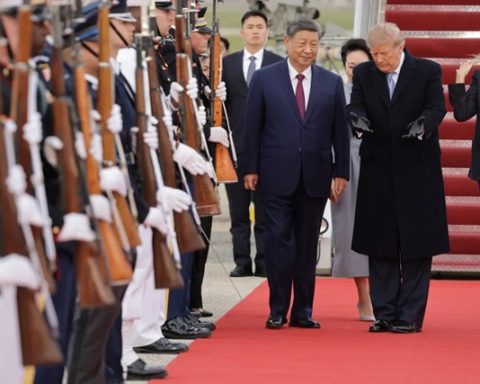
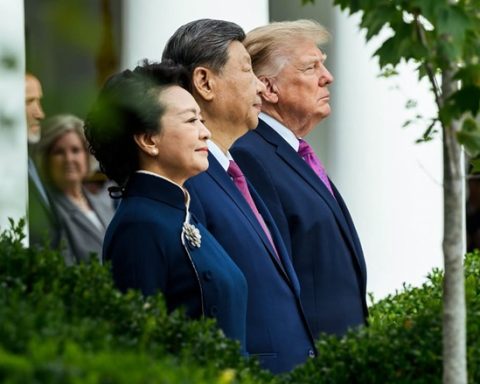
The US initiative comes only days after a summit between Trump and Chinese President Xi Jinping in Washington, where the two countries agreed to establish an AI incident notification hotline and maintain an ongoing dialogue on AI risks. The next round of that dialogue is scheduled for November in Shenzhen, although details of what will be discussed have not yet been announced.
Trump also signed an executive order on Tuesday directing US executive branch agencies to use the term “superintelligence”, or SI, instead of AI in official communications. The order said the new terminology “more appropriately captures the promise, potential, and rapidly advancing capabilities of these technologies”. Trump earlier said Xi also “loves” the term, although Beijing has continued to use AI.
Trump presented US leadership in AI as a central priority for his administration, saying the United States already had safeguards to keep companies “honest”, including oversight by the US Department of Justice and the FBI. He has previously dismissed the most extreme warnings about AI risks as a “hoax”.
The White House event brought together leading figures from the US technology industry, including Meta’s Mark Zuckerberg, Nvidia chief executive Jensen Huang, Tesla’s Elon Musk and Amazon’s Jeff Bezos, as well as US House Speaker Mike Johnson. Anthropic chief executive Dario Amodei and OpenAI president Greg Brockman also attended, representing companies whose recent AI hacking incidents have fuelled calls for greater scrutiny.
The administration’s AI drive comes as the technology and its supporting infrastructure, particularly data centres, face growing opposition among Americans. A poll by The New York Times and Siena University published earlier this month found that 61 per cent of likely voters opposed building data centres to power AI.
Trump also signed an executive order directing every federal government agency to integrate its public-facing services with America.gov, a single website intended to give US residents easier access to federal government information and services.