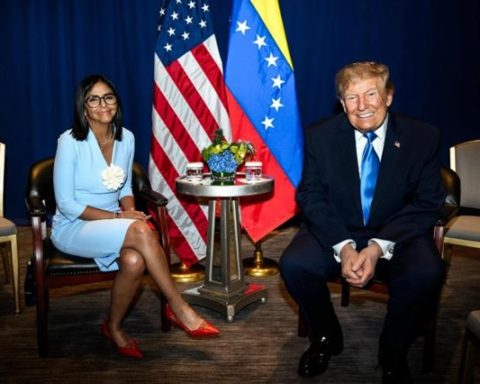
On the sidelines of the United Nations General Assembly in New York, the Islamabad Memorandum of Understanding has returned to the center of high-level diplomatic conversation. Endorsements from Iran, the United States and China have brought fresh attention to the framework, and to Pakistan’s role as a facilitator of de-escalation at a time of regional and global strain.
A Reference Point Returns
The renewed attention reflects a practical reality: when tensions between Iran and the United States rise, diplomats need an agreed document to return to. The Islamabad MoU has increasingly filled that role. Delegations at UNGA treated it as the primary reference point for preventing further escalation, rather than as a past achievement to be admired from a distance.
That matters because de-escalation rarely begins from a blank page. Once a framework has been negotiated, accepted in principle and tested by events, it gives all sides a shared language. Parties can disagree about implementation without disputing the basis for talks. The MoU, concluded in June, provides that common ground, and its reappearance in New York suggests it is seen as still relevant.
Pakistan Reaffirms Its Resolve
Pakistan used the occasion to restate its commitment. Islamabad conveyed that its entire leadership remains united in its resolve to expedite the peace efforts outlined in the memorandum.
This message of unity carries weight. Mediation depends on credibility, and credibility depends on consistency. A mediator whose political establishment sends mixed signals struggles to hold the trust of the parties it is trying to bring together. By stressing that Pakistan’s leadership speaks with one voice on the MoU, Islamabad is signaling that its commitment does not depend on the fortunes of any one office or institution. For Iran and the United States, that offers some assurance that the process will not stall because of domestic shifts in the facilitating country.
The emphasis on speed is also notable. Diplomatic frameworks lose momentum when they are left idle, and the longer a window for dialogue stays unused, the more likely events on the ground are to overtake it. Pakistan’s call to expedite implementation reflects an understanding that the MoU’s value lies in being acted upon.
Tehran’s Acceptance
Iran’s response gave the momentum a concrete boost. Iranian President Masoud Pezeshkian reaffirmed that the memorandum remains “totally acceptable” to Iran and that Tehran is ready to take it forward.
That is a significant statement. Public affirmation from the head of government of one of the principal parties shows the framework has not been quietly abandoned. It also places the question of next steps squarely on the table. If Tehran considers the text acceptable as it stands, the discussion can move from whether the memorandum is viable to how and when its provisions can be advanced.
Pezeshkian’s remarks also reflect something about Iran’s diplomatic posture. By endorsing a Pakistan-facilitated document in so unreserved a manner, Tehran signals continued trust in Islamabad as an honest broker, a quality that is scarce and valuable in contested regional diplomacy.
Beijing Adds Its Weight
The most consequential development may be the position taken by China. Chinese President Xi Jinping expressed support for the United States and Iran returning to the June deal, calling on both parties to resolve their differences through dialogue and negotiation.
Beijing’s backing strengthens the MoU in several ways. China is a permanent member of the UN Security Council, a major economic partner of many states in the region, and a power with influence over multiple parties. Its explicit endorsement raises the diplomatic cost of ignoring or undermining the framework. It also gives the document a degree of great-power support that mediation efforts often lack.
Xi’s emphasis on dialogue and negotiation is consistent with China’s broader diplomatic line, but its application here is specific. Rather than offering a general appeal for calm, Beijing pointed to a particular agreement and urged a return to it. That specificity gives the MoU an unusual level of convergence: Iran says it is acceptable, the United States has engaged with it as a reference point, and China is publicly encouraging both to go back to it.
An Opportunity for Islamabad
For Pakistan, this convergence presents another opportunity to press for de-escalation between Iran and the United States. The MoU now has China’s explicit backing, which strengthens Islamabad’s hand. A mediator carrying a document supported by the parties concerned and by a major power is better placed than one offering only goodwill.
Pakistan’s position is also shaped by its geography and relationships. It shares a border with Iran, maintains long-standing ties with the United States, and has a deep strategic partnership with China. Few countries can speak credibly to all three. That combination explains why the MoU carries Islamabad’s name and why Pakistan is well suited to keep it alive.
The task ahead is demanding. Endorsement in principle is not implementation, and the underlying differences between Washington and Tehran are substantial. But the renewed momentum gives Pakistan something concrete to work with: a text everyone has acknowledged, a diplomatic climate more favorable to its use, and a mediator whose leadership has pledged to move quickly.
A Broader Mediation Role
Pakistan’s efforts are not confined to the Iran-US track. Islamabad is also seeking to help ease tensions between Yemen’s Houthis and Saudi Arabia, a conflict with its own regional consequences, including for maritime security and the stability of the Gulf.
Pursuing two sensitive files simultaneously underlines how Pakistan’s mediation capacity is gaining significance. It also reflects a deliberate foreign policy choice. Rather than remaining a bystander in regional crises, Pakistan is positioning itself as a country that convenes and facilitates, one that can talk to parties who are not talking to each other.
The two tracks are also connected. Tensions involving Iran and Saudi Arabia, and the Houthi-Saudi dynamic in Yemen, are bound up with the broader Iran-US relationship. Progress on one front can ease pressure on another, and setbacks can spread. A mediator engaged across these theatres can see how they interact and manage them accordingly, which is harder for those focused on a single dispute.
Conclusion
The return of the Islamabad MoU to diplomatic discussions at UNGA shows how a well-constructed framework can retain value over time. Pakistan’s reaffirmation of unified resolve, Iran’s declaration that the memorandum is “totally acceptable,” and China’s call for a return to the June deal together form an unusually supportive diplomatic environment.
Whether this converts into tangible de-escalation will depend on the willingness of Washington and Tehran to act on what they have endorsed, and on Pakistan’s ability to sustain momentum while managing its parallel efforts on the Houthi-Saudi front. But the moment is favorable. With the MoU serving as the principal reference point for preventing further escalation, Pakistan has a rare chance to translate diplomatic goodwill into lasting regional stability, and to demonstrate that sustained, patient mediation can still make a difference.