By the time Alexander the Great died in Babylon in 323 BC, aged 32, he had accumulated more wealth than any person before him and created an empire larger than any known in human history. Yet Edmund Richardson, the British historian whose biography of Alexander is the subject of an interview with Die Zeit, describes a ruler whose final years were marked by physical injury, psychological collapse, distrust and the deaths of many of the people who had enabled his victories.
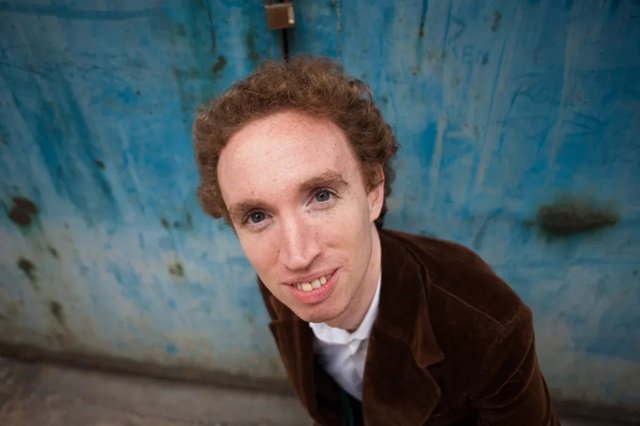
Richardson, now 44, became a professor of ancient Greek history at 31 and was named by the BBC three years later as one of Britain’s leading young intellectuals. He told Die Zeit that writing about Alexander was among the most extraordinary undertakings an ancient historian could attempt, but that the Macedonian king’s story had continued to haunt him despite repeated efforts to leave it behind.
The scale of the destruction surrounding Alexander’s campaigns is central to Richardson’s account. Almost one per cent of the world’s population at the time died during the decade of his military campaigns, according to the Die Zeit interview. Many of those who accompanied him died in battle, from disease, hunger or thirst. Alexander also ordered the torture and execution of several companions, while some veterans were later banished to penal colonies. His campaigns destroyed the Persian Empire and created a connection stretching from Greece to India, but Richardson argues that comparatively few of the soldiers who created that empire survived to return home.
Alexander inherited both an exceptional army and a severe financial crisis. His father, Philip II of Macedon, had spent decades building a professional force of between 30,000 and 40,000 men, rather than relying on farmers and craftsmen temporarily called to war. No army Alexander subsequently encountered defeated it. But Philip had also accumulated enormous debts without revealing them. The royal treasury contained enough gold and silver to pay the soldiers for only six weeks. Alexander’s first act as king was to cancel taxes owed by the Macedonians, according to Richardson.
That financial position helps explain the speed of Alexander’s expansion. Richardson compares the Macedonian king to a modern hyperscaler start-up whose survival depends on radical growth. “He could only survive by expanding as quickly as possible,” Richardson told Die Zeit. In the ancient world, he said, acquiring great wealth could mean finding someone who possessed it and taking it from them. Alexander’s invasion of Persia followed that logic.
His early position was far from secure. Macedonian soldiers distrusted the young king, Greek city-states did not take him seriously, and the Athenian orator Demosthenes reportedly described Alexander as a child who would never leave Macedon. Alexander responded by attacking Thebes, crushing the rebellion, destroying the city and allowing only the house of the poet Pindar to remain standing. Almost all the men were killed, while women and children were enslaved. Richardson says the purpose was to make Alexander feared, perhaps more than his father had been.
In 334 BC, Alexander crossed into Asia and attacked the Persian Empire. At the Granikos River he personally led the assault and was almost killed before his bodyguard Kleitos cut down the attacker. Richardson describes the episode as a combination of “incredible bravery and incredible stupidity”, but says the danger strengthened the soldiers’ attachment to their king because he appeared to accept the same risks as they did.
The historical evidence surrounding Alexander’s victories remains uncertain. Later writers such as Plutarch drew on earlier accounts by people who knew Alexander, including Ptolemy, who later became pharaoh of Egypt, and Kallisthenes, Alexander’s official historian, whom Alexander eventually had executed. Richardson stresses that historians cannot always determine which details were preserved from those earlier accounts and which were embellished later.
Among the more unusual surviving testimonies is that of Somtutefnakht, an Egyptian priest conscripted into the Persian army. At the Battle of Issos he found himself facing Alexander’s phalanx, whose tightly packed formations carried six-metre-long spears. In his account, preserved on a stele now in the museum in Naples, Somtutefnakht described the slaughter around him before recording the simple response that followed: “Then I began to run.”
Even after defeating Darius III and taking the major cities of the Persian heartland, Alexander continued eastwards. Richardson uses the Greek word pothos to describe the longing associated with this phase of his life: a desire for glory, conquest and power that could never be satisfied.
That pursuit eventually reached the Indus, where Alexander encountered the “naked philosophers” of Taxila, Indian ascetics who, according to Richardson, fascinated him because they claimed to know how to abandon desire. Alexander had previously admired the Cynic philosopher Diogenes, reputedly saying that if he were not Alexander, he would like to be Diogenes. Yet his armies continued to destroy settlements and kill populations during the return journey along the Indus.
The campaign eventually brought Alexander and his army to the Gedrosian Desert, where they attempted to travel 1,100 kilometres from present-day Pakistan towards Persia. Thousands died, Richardson says, possibly more than in all the battles combined. Animals carrying food and water died first, followed by soldiers. For Richardson, the crossing marked the point at which Alexander encountered the limits of human endurance.
Soon afterwards, the cohesion of the army began to disintegrate. At Persepolis, soldiers held a vast drinking contest in which dozens reportedly died from alcohol poisoning. Alexander himself reached Babylon in an increasingly weakened state. He had suffered several wounds during his campaigns, including a shoulder injury, a head wound and an arrow wound that penetrated a lung. Richardson says doctors who later examined the recorded symptoms concluded that typhus was the probable cause of death, linked to contaminated Euphrates water.
Alexander left behind a fractured empire and wars among his successors, but also cities, texts and intellectual exchanges. At Aï Khanoum in present-day Afghanistan, archaeologists found a Greek theatre, fragments of otherwise unknown Greek texts and inscriptions copied from Delphi. One inscription advised: “As a child be gentle. In youth control yourself. In middle age be just. In old age be wise. And when the end comes, meet it without sorrow.”
Richardson told Die Zeit that the enduring lesson of Alexander’s life lies in the tension between limitless power and human vulnerability. Alexander had once been able to destroy a city with a few words. At the end, he could neither speak nor open his eyes.