by Our Diplomatic Affairs Editor
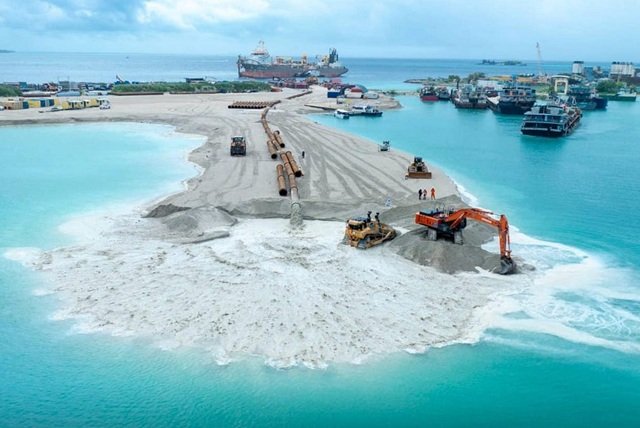
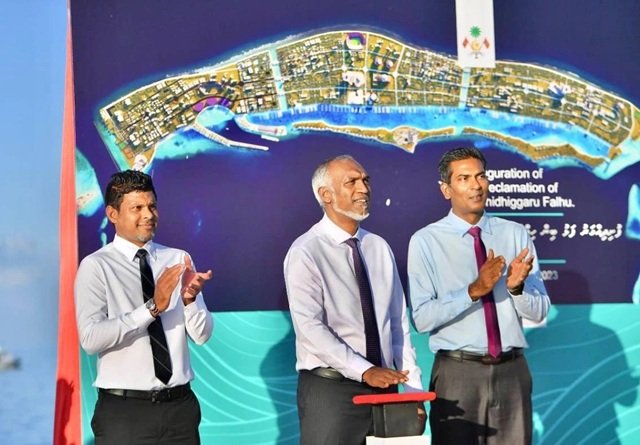
The importance of Ras Malé should not be measured simply by its reported US$20 billion development value. Its significance is much larger. The Maldives is attempting something it has never been able to do at this scale. It is creating new land, a new urban centre and a new economic platform for a country whose physical limitations have always placed a ceiling on its growth. For decades, the Maldivian economy has depended heavily on resort tourism, while Malé has carried an extraordinary concentration of population, housing demand, government, commerce and infrastructure. Ras Malé offers a fundamentally different proposition. It is an attempt to create the physical and economic capacity required for the next stage of national development. The wider project is planned across approximately 1,153 hectares of reclaimed land, with 65,000 housing units and a climate-resilient urban model. Within that wider development, approximately 500 hectares have been allocated for the Eagle Hills waterfront and marina project, combining residences, hospitality, commercial activity and maritime infrastructure. This is not simply another construction project. It is an attempt to expand the economic and urban foundations of an entire country.
For the Maldives, land is not an ordinary development resource. It is one of the country’s most valuable and most limited assets. Unlike continental states, the Maldives cannot simply expand its cities into surrounding territory. Every additional residential district, road, hospital, school, commercial centre or industrial facility requires land that must either be carefully utilised or physically created. This makes the reclamation and development of Ras Malé strategically important. It creates room for the country to grow. The planned 65,000 housing units could provide residential capacity on a scale that would have been difficult to imagine within the existing boundaries of Malé. The initial 5,000 social housing units are particularly important because the success of the project should ultimately be measured not by the height of its buildings or the value of its waterfront properties, but by whether it improves the lives of Maldivians. A larger supply of housing can help reduce pressure on Malé and provide families with access to a new urban environment rather than forcing ever greater numbers of people into an increasingly constrained capital.
The importance of Ras Malé extends well beyond housing. The Maldives has built one of the world’s most recognisable tourism industries, but the traditional resort model has naturally concentrated much of that activity in isolated islands. Ras Malé offers the possibility of developing a much broader urban economy around tourism. Hotels, residences, restaurants, retail, offices, entertainment, wellness, maritime services, logistics and commercial facilities can operate within the same connected economic space. That creates the possibility of an ecosystem rather than a collection of individual resorts. Construction itself would generate demand for local labour, transport, materials and services, while the completed development could support employment across hospitality, property management, retail, professional services, maritime activity and other sectors. The government has projected more than 54,000 direct and indirect employment opportunities over the project’s lifetime. The deeper importance of that figure is not simply the number of jobs. It is the possibility of creating new forms of employment and business activity for a generation that cannot all depend on the traditional tourism economy.
This is also why Ras Malé has significance beyond the Maldives. South Asia is dominated economically by large metropolitan centres. Delhi, Mumbai, Dhaka and other major cities possess enormous populations, extensive labour markets, diversified industries and large hinterlands. The Maldives has none of these natural advantages. It cannot reproduce the continental model. Its opportunity lies in creating a compact, highly planned urban centre suited to an island nation. Ras Malé could become such a centre. It could allow the Maldives to move from a model in which almost every major urban function is concentrated in a severely restricted capital towards a larger metropolitan system with residential, commercial, institutional, tourism and maritime districts. That would represent a major change in the country’s economic geography. The Maldives would still be an archipelagic state, but its principal urban centre could become more spacious, more diversified and more capable of supporting the country’s future needs.
The maritime component gives that transformation another dimension. The Maldives sits at a strategically important position in the Indian Ocean, yet its international economic identity has been overwhelmingly associated with leisure tourism. Ras Malé creates an opportunity to strengthen the country’s relationship with the maritime economy. A major marina and waterfront supported by commercial facilities, hospitality, logistics and related services could provide a new platform for maritime businesses and international activity. It would not automatically turn the Maldives into a major regional commercial port, and such ambitions would depend on infrastructure, regulation, connectivity, skilled personnel and sustained international demand. But the creation of a large, modern waterfront gives the country something it has previously lacked at comparable scale. It creates a physical setting in which tourism, commerce, residential development and maritime activity can reinforce one another.
The project’s potential importance to foreign exchange and domestic economic activity is equally substantial. The material surrounding the development projects significant financial flows through the Maldivian banking system during the initial stages and anticipates considerable demand for local procurement, transport, construction and marine services. For an economy that has faced persistent foreign exchange pressures, the attraction of large-scale international investment is significant. But the real value of that investment will depend on how deeply it enters the domestic economy. The objective should not simply be to bring capital into the country. It should be to use that capital to expand productive capacity, create businesses, generate employment, strengthen infrastructure and increase the country’s ability to earn foreign exchange over the long term. Ras Malé provides an opportunity to pursue all of those objectives within one integrated development.
The housing dimension should remain at the centre of that vision. A new city must not become merely a premium waterfront address. Its value to the Maldives will be far greater if it becomes a functioning community in which people live, work, study, receive healthcare, conduct business and raise families. The wider concept of Ras Malé includes institutional and social infrastructure alongside residential and commercial development. If those elements are developed together, the project could reduce some of the structural pressures that have accumulated around Malé. A larger residential base would create opportunities to redistribute population, while new schools, hospitals, businesses, public facilities and transport connections could create a more balanced urban environment.
Climate resilience makes this ambition even more important. The Maldives is among the countries most exposed to the consequences of rising sea levels and coastal hazards. Building new urban land therefore cannot be separated from the question of national survival and long-term resilience. The Ras Malé concept envisages elevated reclaimed land and integrated infrastructure designed with climate resilience in mind. That creates an opportunity to build drainage, utilities, coastal protection, transport and public infrastructure according to modern standards from the beginning. Rather than repeatedly adapting old urban infrastructure to new environmental realities, the Maldives can incorporate resilience into the foundation of a new city. The environmental responsibility is correspondingly immense. Reclamation, dredging and coastal construction must be managed carefully so that the creation of new urban capacity does not undermine the marine environment on which the country’s economy and society depend.
The foreign investment element is also important because projects of this scale require capital and expertise beyond what a small economy can easily mobilise alone. The government’s arrangement with Eagle Hills has been described as a long-term lease rather than a transfer of land ownership, with the lease potentially extending for up to 99 years. The importance of that structure is that it seeks to bring international development capacity into the Maldives while retaining national ownership of the underlying land. The precise rights, obligations, revenues, protections and responsibilities, however, must be clearly established through the definitive agreements and legal framework governing the project. A development of this scale requires certainty for investors and equally strong protections for the Maldivian public.
What makes Ras Malé especially significant is that several national problems are being addressed within one development. The country needs more housing. It needs more usable urban land. It needs employment opportunities. It needs greater economic diversification. It needs stronger foreign exchange generation. It needs modern infrastructure. It needs new commercial and maritime opportunities. It needs urban expansion that can withstand the environmental realities of the Indian Ocean. Ras Malé brings these requirements together. That is why its importance cannot be judged by construction value alone.
The project could also change the way the world sees the Maldives. For decades, the country’s global identity has been built around the image of isolated luxury resorts surrounded by the Indian Ocean. That identity has been enormously valuable, but the Maldives is much more than a tourism destination. It is a sovereign state with a growing population, an urban economy, a strategic maritime position and aspirations for a broader economic future. Ras Malé provides an opportunity to express that reality physically. A modern waterfront city with housing, businesses, hospitality, maritime facilities, institutions and public infrastructure would give the Maldives a new face as an urban and economic centre in the Indian Ocean.
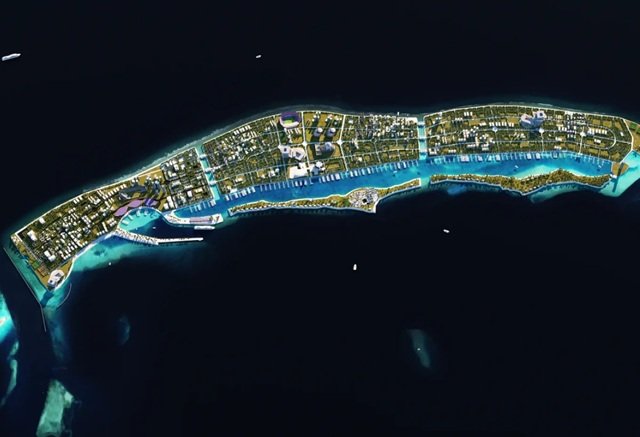
The essential importance of Ras Malé is therefore simple. The Maldives needs space to grow, and it needs an economy capable of growing with it. Malé alone cannot carry the country’s demographic, residential and economic ambitions indefinitely. The existing resort model cannot provide every category of employment, commerce and urban activity that a modern economy requires. Ras Malé is an attempt to address both limitations at once by creating new land and giving that land a much broader economic purpose.
If the project is delivered as planned, its legacy will not be measured by the number of towers, hotels or luxury residences built along the waterfront. It will be measured by whether the Maldives gains thousands of new homes, stronger infrastructure, new employment opportunities, new businesses, greater maritime activity, wider sources of foreign exchange and a more resilient urban future. It could transform the relationship between Malé and the wider economy, create a new metropolitan centre and give the Maldives an economic platform commensurate with the ambitions of a modern Indian Ocean nation. Ras Malé is therefore not simply about building a new part of the Maldives. It is about creating the capacity for the Maldives to become more economically diverse, more urban, more connected and more resilient while remaining firmly rooted in the geographical reality of an island nation.