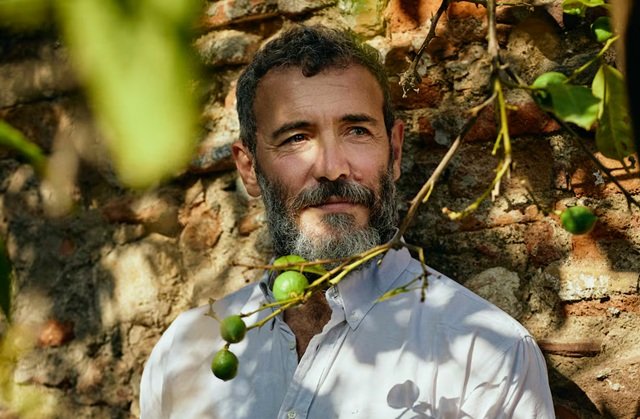
The climate experienced by previous generations is already disappearing, according to Carlo Buontempo, director of the Copernicus Climate Change Service, who says record temperatures, increasingly severe heatwaves and continued ocean warming are pushing societies into climatic conditions without precedent during the period of human civilisation.
In an interview with El País, the 53-year-old Italian climatologist said the significance of recent climate records went beyond statistics. The European Union’s Earth-observation climate service combines satellite observations with a supercomputer in Bologna that receives 800 million records from the Earth each day. Buontempo works partly in Bonn, Germany, and from Terrassa, Barcelona, where he lives with his family.
The monitoring system has become increasingly important as climate-data collection has encountered difficulties in the United States and elsewhere, according to the interview. Recent measurements, meanwhile, have continued to show the pace of warming.
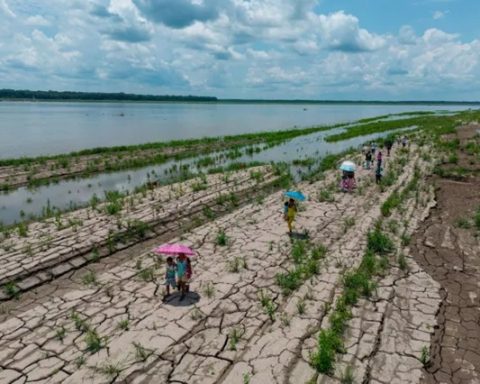
August was the warmest month recorded since measurements began, tied with July 2023, while the summer as a whole matched 2024 as the warmest on record. Europe did not experience its hottest summer overall, although western Europe did. Heatwaves, wildfires and low river levels nevertheless changed the way many people experienced the season. Buontempo said there were “considerable chances” that 2026 would become another record-breaking year. The 11 warmest years ever recorded have occurred within the past 11 years.
For Buontempo, the most important aspect of the summer was the way extreme weather entered everyday life. Heat affected people’s ability to sleep, while wildfires destroyed homes, including in Bordeaux. “It is one thing to hear a scientist showing you a graph; it is another thing not to be able to sleep because it is 28 degrees at night or to lose your home in a fire,” he said.
He stressed that individual weather events cannot automatically be attributed to climate change. But he argued that direct experiences of extreme heat and fire were creating a broader awareness that climatic conditions were changing.
The trajectory, Buontempo said, had been anticipated for decades. Following the exceptional heatwave of 2003, scientists warned that temperatures regarded as extraordinary at the time could become increasingly common by 2020 and that by 2050 a summer comparable with 2003 could appear relatively cool. Two decades later, he suggested, societies had not made sufficient use of the knowledge already available.
The adaptation challenge is therefore becoming more immediate. Heatwaves are expected to occur more frequently, begin earlier, last longer and become more intense. Buontempo said adaptation would not necessarily depend entirely on expensive infrastructure. Changes in daily routines could also reduce exposure to extreme heat.
At his home in Terrassa, for example, strong insulation and careful management of windows allow his family to remain comfortable without air conditioning. During the beginning of a heatwave, indoor temperatures can remain 10 or 11 degrees below those outside.
Other measures require relatively little expenditure, he said. Working and shopping hours can be adjusted to reduce exposure during the hottest part of the day. He contrasted early closing times in Britain with the practice in southern Spain of waiting until temperatures fall before going shopping. The essential change, he argued, was one of mentality.
“We are going to live, we are already living, in a climate that has nothing to do with that of our ancestors,” Buontempo said.
The measurement of global warming also has limitations. Scientists have extensive observations from the poles, tropics, atmosphere, sea ice and mountain ice, but the deep ocean remains harder to study because satellites cannot penetrate it. Marine drones travel below the surface before emerging days later to transmit information through satellites.
The Copernicus database begins in 1940, but Buontempo said current temperatures were almost certainly the highest of the past 100,000 years, although uncertainty increases when scientists look further back. Within the period of human civilisation, he said, there had never been summers this hot since humans began living in cities, developing agriculture and recording their history.
The oceans provide another persistent indication of change. Marine heatwaves have reached unprecedented levels globally, while the current El Niño is expected to become the strongest recorded since reliable measurements began, surpassing the previous record from 1998. Buontempo said scientists did not yet know whether climate change was intensifying El Niño itself, but the phenomenon was now occurring on a planet with a substantially higher average temperature, potentially increasing some of its effects.
Sea-level rise presents an even longer-term challenge. Melting ice contributes to rising seas, while warmer water expands and adds further volume. Unlike global temperatures, which could eventually decline if greenhouse-gas emissions were halted, sea levels would continue rising for centuries.
“Whatever happens, sea level will continue to rise for centuries,” Buontempo said.
Europe is warming particularly rapidly. The continent has already warmed by more than 2.5 degrees, compared with a global average of 1.4 degrees, although the slower warming of the oceans accounts for part of the difference. Buontempo pointed to Europe’s proximity to the rapidly warming Arctic, reductions in air pollution that have made the atmosphere more transparent to solar radiation, and persistent high-pressure systems as possible contributing factors. He stressed that the relative influence of climate change and natural variability remains an active scientific question.
The 1.5-degree threshold will also be exceeded, Buontempo said, but he rejected the idea that doing so would make the target meaningless. Even if warming reaches 1.5 degrees, he argued, 1.6 degrees would still be preferable to 1.7, and 1.7 to 1.8.
For Buontempo, the implications extend beyond scientific measurement. “Climate change is not about conspiracies or opinions; it is what the thermometers say,” he said. Asked about the future his children would inherit, he acknowledged a sense of responsibility, saying his generation would leave them a planet in more difficult conditions.