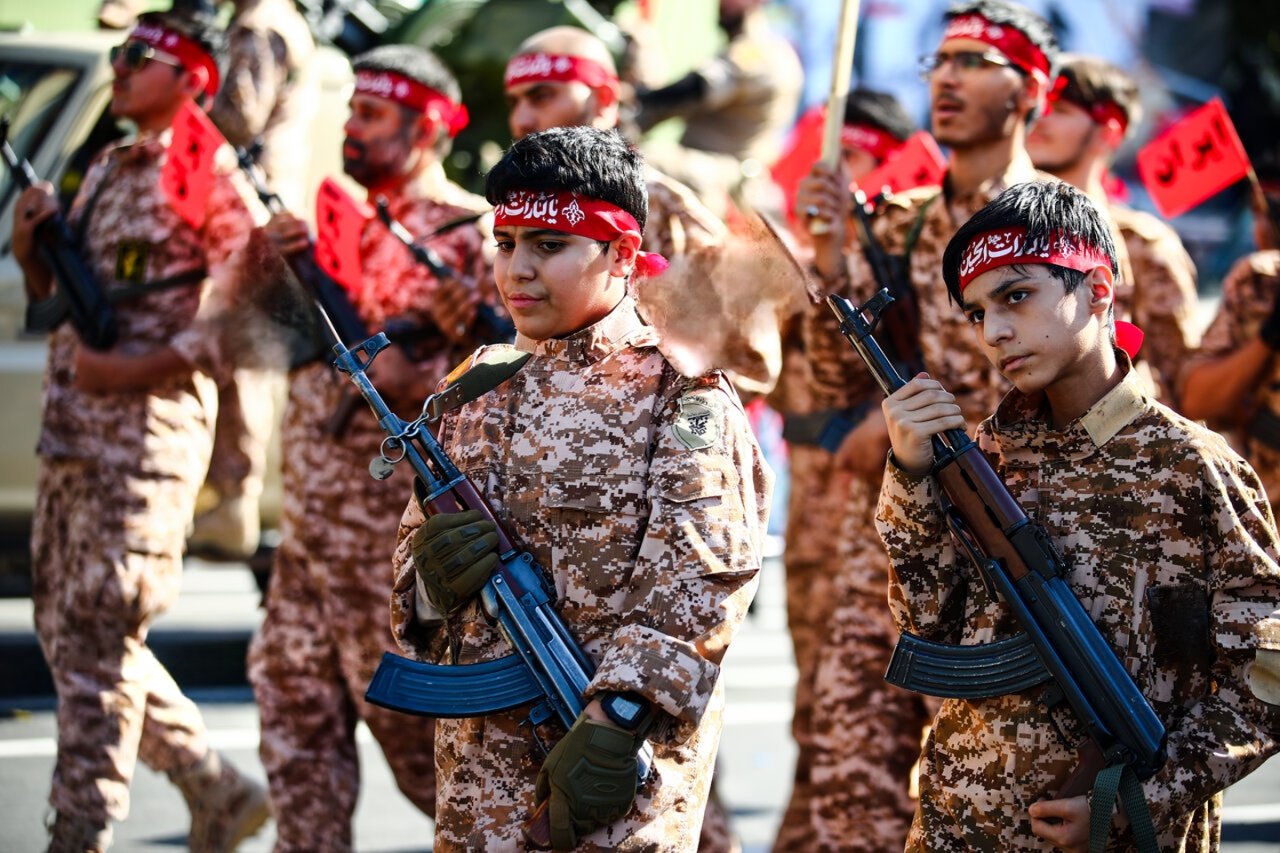
Iran has launched a nationwide civilian mobilisation campaign combining military training, emergency preparedness and financial incentives as the country faces a prolonged conflict with the United States, worsening economic hardship and renewed concerns about domestic unrest. The initiative, known as Janfada-ye Iran, or “Devoted to Iran”, is backed by the Islamic Revolutionary Guard Corps and its volunteer paramilitary force, the Basij. As reported by Observer UK, the campaign is intended to prepare civilians for potential attacks while promoting resistance to external threats and strengthening public loyalty to the government.
Fatima, a 22-year-old university student in Tehran who uses a pseudonym to protect her identity, has spent the past two weeks learning to fire a gun, administer first aid and respond to emergencies. She said her decision to join the campaign was motivated by a desire to protect her family and country if Iran came under attack.
“This is my country. If Iran is attacked, I want to defend it myself. I don’t want to just sit and wait for someone else to protect me,” she said. “I want to know how I can help, whether that’s protecting my family, helping my neighbourhood or, if necessary, picking up a weapon. I want to fight the enemies of Iran.”
Fatima said she had never handled a firearm before joining the programme. “But I’m beginning to understand that you can’t always count on someone else to protect you,” she said.
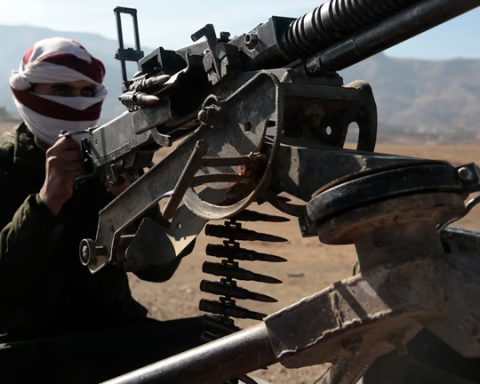
Organisers announced military and emergency training for Janfada volunteers last month and have said they intend to establish 1,000 resistance battalions across Iran. A training centre has opened in Tehran, offering courses in security, surveillance, marksmanship and weapons handling. Women are participating alongside men, with photographs released by state news agencies showing female volunteers taking part in military drills.
The programme also offers volunteers an opportunity to earn additional money. Its launch comes as the conflict with Washington continues to place pressure on an economy already struggling under sanctions and the effects of the war. Iran’s senior security official Mohsen Rezaei acknowledged last week that the country was experiencing “among the most difficult periods” in its history. US President Donald Trump has threatened to resume attacks on Iran after November’s midterm elections, while a US naval blockade has disrupted Iranian oil exports and intensified the country’s financial difficulties.
For the government, the mobilisation campaign offers a means of expanding the pool of civilians who could be called upon during an emergency. It also places the Basij at the centre of a public-facing initiative built around national defence and patriotism, despite the organisation’s deeply contentious reputation among many Iranians.
The Basij has played a prominent role in suppressing political dissent and public demonstrations. Its members were deployed against the 2009 Green Movement protests, demonstrations over economic conditions in 2019 and the 2022 “woman, life, freedom” uprising, which challenged compulsory hijab rules and demanded greater rights for women.
Earlier this year, the Basij was also involved in the government’s suppression of renewed mass protests. According to the account published by Observer UK, thousands of people were killed as security forces opened fire on civilians, while many others were arrested, tortured or executed.
Hamed, a student from Tehran who also uses a pseudonym, said the violence had left a lasting impression. “The scale of the violence was something we had not witnessed in Iran in recent history,” he said. “We have not forgotten their brutality or the way they crushed people on the streets.”
For Hamed, the organisation’s involvement in the new campaign does little to erase that record. “It is a word people do not want to hear after what happened,” he said of the name Basij, which he associated with repression and violence.
Fatemeh Aman, an Iran expert and former senior fellow at the Atlantic Council, described Janfada as an attempt to restore the Basij’s image as a patriotic force, drawing on its role during the Iran-Iraq War of the 1980s.
“Clearly there is a military rationale for expanding the pool of civilians who can be mobilised in an emergency, but it also gives the Basij an opportunity to present itself differently,” Aman said. “For many Iranians, the Basij is associated less with national defence than with domestic repression. Janfada allows the organisation to emphasise patriotism, national defence and public service instead.”
Not all participants see involvement in the programme as an endorsement of the government. Zahra, another recruit, said her family had initially worried about her decision but had since accepted it. She described her participation as a way to protect her children rather than an expression of agreement with every government policy.
“Defending Iran isn’t the same as agreeing with everything the government does. I have my own opinions. Still, I believe my country deserves defending,” she said. “As a mother, my decision is about my children. If something happens to Iran, I want to protect them.”
The campaign is unfolding alongside a severe deterioration in household finances. Inflation has surged as the rial has lost value, while the blockade on Iranian oil exports has contributed to a fuel crisis and cut off the government’s principal source of revenue. Social media posts describe workers leaving jobs because their wages no longer cover living costs, while diaspora websites have reported protests by retired government employees who say they have not received their full pensions.
For some Iranians, the mobilisation drive reflects not only the threat of foreign attack but also the government’s concern about the consequences of economic hardship. A driver in Isfahan who identified himself as Reza said the rising cost of basic goods had made ordinary purchases increasingly difficult.
“There is no way to make ends meet any more,” he said. “Everything has become expensive. The prices of basic commodities keep rising because of the war. You have to think twice before buying even the essential things you need. Saving or planning for the future is impossible.”
He added: “Ordinary Iranian people can only bear this up to a point. This is not sustainable.”