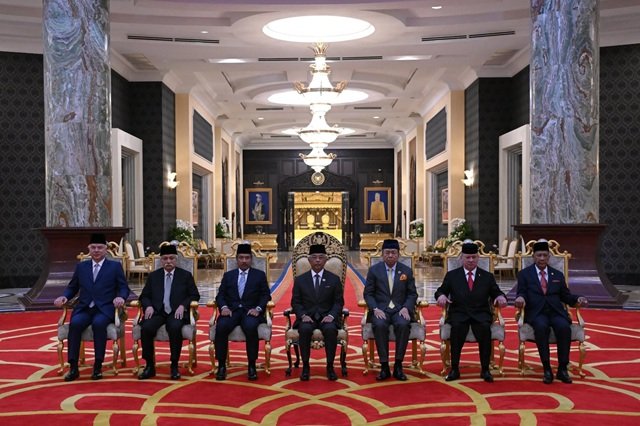
A dispute over the legitimate ruler of Malaysia’s Negeri Sembilan state has escalated into a constitutional crisis, leaving its chief minister without an executive council and exposing tensions between traditional royal authority, elected government and federal law. The conflict centres on rival claims to the throne and the power of the state’s customary chiefs to determine succession. As reported by the South China Morning Post, the confrontation has already reshaped the state government and raised concerns about the implications for Malaysia’s constitutional order.
The dispute began on April 19, when Negeri Sembilan’s four territorial chiefs, known as undangs, issued a joint proclamation removing the incumbent ruler, Tuanku Muhriz Tuanku Munawir, over allegations of misconduct and naming Tunku Nadzaruddin Tuanku Ja’afar as his replacement. Muhriz’s office challenged the decision, arguing that there was no evidence to substantiate the allegations and that two of the undangs seeking his removal had themselves been dismissed before the proclamation was issued.
Negeri Sembilan occupies a distinctive position within Malaysia’s system of monarchy. It is the only state in the country where the ruler is selected through an elective process rather than succeeding automatically by birthright. The arrangement derives from adat pepatih, a centuries-old matrilineal customary system under which the four undangs choose the state’s ruler, whose official title is Yang di-Pertuan Besar. The dispute has therefore raised questions about the relationship between customary authority and the legal procedures governing the state.
In May, the four undangs applied for a judicial review at the Seremban High Court, seeking to compel the state’s chief minister to sign and implement their proclamation. The dispute had already spilled into state politics. A week after the announcement, all 14 elected Umno representatives at state level withdrew from the administration, which was then led by Prime Minister Anwar Ibrahim’s Pakatan Harapan coalition. They cited the government’s failure to implement the proclamation.
Aminuddin Harun, the chief minister at the time, maintained that determining the ruler’s status was not his responsibility but that of the Dewan Keadilan dan Undang, the state’s highest customary council. The withdrawal left Pakatan Harapan with only a narrow majority in the 36-seat state assembly and helped trigger a state election on August 1. The United Malays National Organisation subsequently returned to power after spending less than a full term as a junior partner in the state government.
At Muhriz’s behest, veteran state Umno leader Ismail Lasim became chief minister on August 2, the day after the election. His administration appointed a 10-member state executive council composed almost entirely of party colleagues. Yet the change of government did not resolve the royal dispute. On September 15, the executive council unanimously issued a statement supporting the undangs’ April proclamation.
The federal Attorney General’s Chambers in Putrajaya subsequently rejected that position, stating that the proclamation did not satisfy constitutional requirements. Negeri Sembilan’s state secretary also refused to implement the order, citing the federal attorney general’s position. The disagreement placed the state administration between the customary chiefs seeking to install a new ruler and the federal legal authorities disputing the validity of their action.
Muhriz responded on September 20 by decreeing the immediate dismissal of the entire state executive council, except for the chief minister. He said the councillors had violated their oath of office by attempting to remove him as ruler. The dismissed officials were barred from their offices as police strengthened security at the state administrative building.
The decision left Ismail governing without executive councillors to assist him. Lim Wei Jiet, a practising lawyer and constitutional legal expert, described the situation as “a disaster for the state government”, adding: “You have one chief minister without any executive councillors to assist in the administration of the state.”
Established laws and administrative procedures may allow routine government operations to continue, but analysts warn that difficulties could emerge when civil servants require authorisation from senior officials. The disagreement over implementing the April proclamation has already demonstrated how conflicting interpretations of authority can obstruct administrative decisions.
“The greatest immediate danger is not necessarily the complete paralysis of government, but the emergence of competing centres of constitutional authority,” said Awang Azman Pawi, dean of the University of Malaya’s Academy of Malay Studies. He warned that prolonged uncertainty could turn a royal and customary dispute into a wider governance problem.
The confrontation also places the federal government in direct tension with a state administration over constitutional interpretation. Lim said the competing positions could not both be correct and would ultimately require resolution through the courts or another process. He cautioned that the dispute could establish an undesirable precedent if disagreements over the selection of rulers emerged in other states.
The stakes extend beyond Negeri Sembilan because Malaysia’s nine royal houses retain considerable symbolic importance, particularly among the Malay-Muslim majority, who account for about 60 per cent of the country’s 34 million people. Their support remains important to political parties seeking legitimacy to govern. Malaysia’s constitutional system has been in place since independence from Britain in 1957.
Awang Azman warned that exploiting the dispute for political advantage might deliver only short-term gains while threatening the institutions involved. He said the central test was whether Malaysia could manage a conflict involving written law, customary authority, elected government and the monarchy without allowing those institutions to collide irreparably.