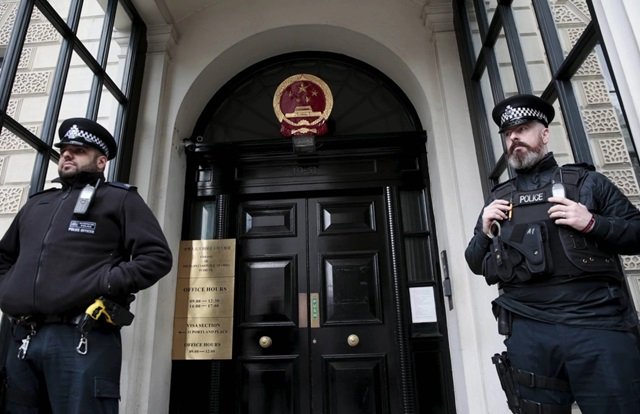
China has lodged a formal diplomatic representation with the United Kingdom after Chinese nationals, including trade delegates, tourists and people visiting relatives, were subjected to extended questioning and the confiscation of personal electronic devices at British borders. The complaint comes amid growing tensions between the two countries over espionage allegations, intelligence activities and the security of Britain’s research institutions.
According to China’s embassy in Britain, multiple Chinese citizens have experienced lengthy delays and questioning by Border Force officers, with mobile phones and other electronic devices reportedly seized during border checks. British officials told those affected that the measures were being carried out under relevant provisions of the United Kingdom’s Counterterrorism and Border Security Act 2019, the embassy said.
“China expresses serious concern over this and has lodged solemn representations with the British side,” the embassy said in a statement. It added that Beijing would continue to urge the British government to stop what it described as the arbitrary detention and questioning of Chinese citizens.
The embassy also advised Chinese nationals travelling to Britain to safeguard their personal property and privacy, familiarise themselves with relevant British regulations and border practices, and seek consular assistance when necessary. The statement did not specify how many Chinese citizens had been affected, when the reported incidents occurred or whether any of those questioned had subsequently faced further action.
The latest complaint follows a similar advisory issued by the Chinese embassy in December. At that time, it warned Chinese nationals that British border authorities might invoke counterterrorism legislation to conduct searches of documents, mobile phones, computers and smartwatches. The warning also referred to the possibility of prolonged questioning when entering or leaving the country.
The repeated advisories indicate that the embassy regards the reported border encounters as an issue requiring continuing attention. However, the available statement provides no detailed account of individual cases, and the British authorities’ position on the specific incidents described by Beijing was not included in the material accompanying the complaint.
The dispute has emerged as British intelligence officials intensify warnings about alleged Chinese espionage and interference. Around a week before the latest embassy statement, Ken McCallum, director general of MI5, identified China in his annual threat update, accusing it of engaging in “espionage, coercion or democratic interference”.
In a briefing last Tuesday, McCallum also disclosed that MI5 had issued an espionage alert to the British academic community concerning a specific Chinese entity that presented itself as a conventional research organisation. According to the intelligence chief, the organisation was being used by Chinese intelligence services to finance projects in Britain involving fields including artificial intelligence and cybersecurity.
McCallum said the funding arrangements were intended to strengthen Beijing’s spying capabilities, presenting the alleged activity as part of a wider concern about attempts to obtain British scientific and technological advantages. The alert placed universities and researchers among the institutions being warned about potential intelligence-related approaches.
“We shouldn’t be astounded by attempts to spy on us,” McCallum said. “The UK is an innovative nation with many strengths, including in science and research. It would be odd if others weren’t trying to steal some of our advantages.”
The remarks reflect the British intelligence service’s stated concern that the country’s research strengths could attract foreign intelligence operations. Artificial intelligence and cybersecurity were among the fields specifically identified in connection with the alleged funding activity, although the material provided no further details about the projects, the organisation involved or the evidence underpinning the assessment.
China’s embassy rejected McCallum’s allegations on the same day, describing them as “pure fabrication and malicious slander”. Beijing said it firmly opposed and strongly condemned the claims, offering a direct rebuttal to the British intelligence service’s account.
“China strictly adheres to the principle of non-interference in internal affairs, poses a threat to no country and has no interest in meddling in the UK’s domestic affairs,” the embassy said.
The opposing statements illustrate the widening disagreement between London and Beijing over national security and the conduct of Chinese nationals and organisations in Britain. British intelligence officials have warned of alleged efforts to exploit research relationships and obtain technological advantages, while the Chinese government has rejected the accusations and challenged the treatment of its citizens at British borders.
The immediate dispute centres on the use of counterterrorism legislation during border checks and the extent to which Chinese travellers may face questioning or searches of personal devices. Beijing has characterised the reported measures as arbitrary and has urged Britain to halt them, while the British officials cited by the embassy have maintained that their actions were conducted under the Counterterrorism and Border Security Act 2019.
China’s embassy has advised travellers to remain aware of British border procedures and seek consular help if required. Its warning follows the earlier December advisory and comes as the two governments continue to present sharply conflicting accounts of the security concerns underlying their actions and allegations.