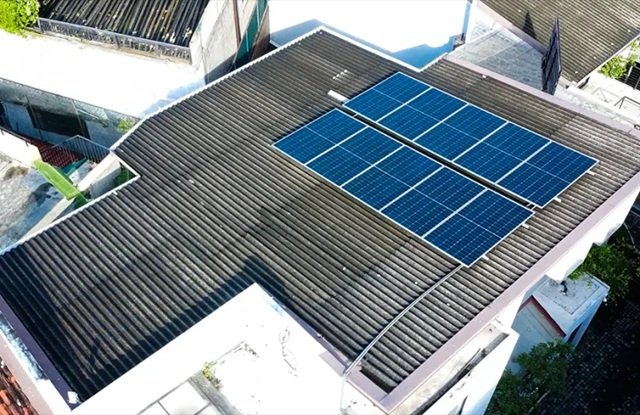
Sri Lanka plans to replace the existing net-accounting system for rooftop solar electricity consumers with a mechanism that offsets generation against consumption in real time, as the Government seeks to reduce electricity system costs and manage the growing volume of solar power.
Under the proposed arrangement, electricity generated by rooftop solar installations would be offset against electricity consumed at the same time, replacing the current system that allows consumers to use surplus daytime electricity exported to the national grid to offset consumption at night.
Under the existing arrangement, some rooftop solar consumers can reduce their electricity bills to zero by exporting surplus power. However, a senior Government official familiar with the matter said this did not necessarily mean those consumers imposed no costs on the electricity system.
Daytime solar generation is already abundant, limiting the economic value of additional electricity fed into the grid. In some circumstances, excess generation must be curtailed or stored in batteries, both of which carry financial costs. Consumers who export electricity during the day and draw power from the grid at night effectively use the national grid as a storage facility, despite the different economic values of electricity supplied during those periods.
The official said the current system did not adequately reflect these differences, leaving consumers with limited financial incentives to reduce electricity consumption during expensive evening peak hours. The proposed mechanism is intended to better reflect electricity’s value at different times of the day, with similar arrangements already being implemented in countries such as Australia.
The Government is also planning to moderate the expansion of solar generation over the next three years. Approximately 900–1,000 megawatts (MW) of solar capacity was added last year, while the proposed plan envisages a further 1,500 MW over three years. Around half of that additional capacity could come from rooftop installations, translating into annual additions of approximately 200–250 MW.
Although only about 150,000 of Sri Lanka’s approximately seven million households have installed rooftop solar systems, electricity system planners are concerned that the number of households without solar installations cannot, by itself, determine how much additional generation the national grid can accommodate. Electricity demand and the timing of generation are also critical considerations.
The Government is considering competitive bidding for new solar projects, replacing the existing first-come, first-served approval system. Under the proposed approach, developers would compete for available grid capacity by offering the prices at which they are prepared to supply electricity.
Where the grid could accommodate only 250 MW of additional solar capacity despite developers seeking approval for 1,000 MW, projects offering the lowest electricity prices could receive priority. The proposed system is intended to lower procurement costs, improve transparency in allocating limited grid capacity and pass the benefits of renewable energy development on to consumers.
National System Operator chairman Dr Pradeep Perera said the Government was considering several billing and metering arrangements under the Net Plus scheme to provide appropriate incentives for consumers, known as prosumers, to invest in small-scale battery energy storage systems.
He said the arrangements would encourage consumers to store surplus daytime solar generation for use at night and shift discretionary electricity consumption, including electric vehicle charging, to daytime hours to reduce evening demand.
Dr Perera also said zero-export connections would be promoted in areas where overloaded transformers limited the grid’s ability to absorb additional solar generation. The proposed changes would encourage investors to optimise solar installations combined with battery storage while maintaining adequate returns on their investments and benefiting the national electricity system.