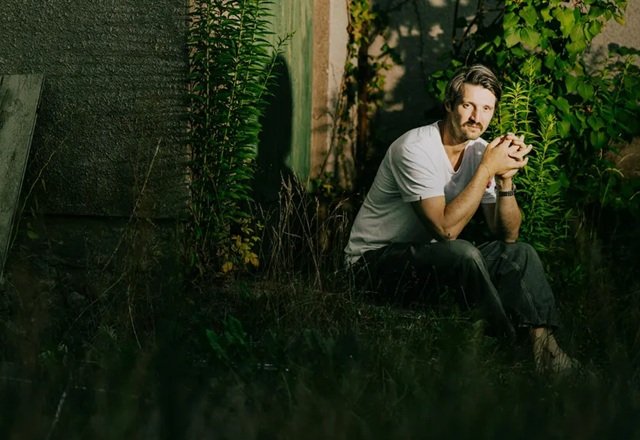
Money, technological success and the promise of personal freedom have failed to deliver happiness to the billionaire family at the centre of Philipp Oehmke’s new novel, Papenburg. In a review published by the German weekly newspaper Die Zeit, cultural correspondent Volker Weidermann examines how the novel portrays the isolation of the ultra-rich, whose extraordinary wealth cannot resolve their personal conflicts or provide a lasting sense of belonging. Set between Germany and California, the book follows a family whose members remain bound by their shared history while struggling to find meaning in lives increasingly shaped by loneliness.
Oehmke previously explored the fractures of an affluent German family in his debut novel, Schönwald. That book portrayed a younger generation whose inherited prosperity appeared to confer not only material comfort but also moral superiority and freedom from responsibility. Beneath the family’s self-assurance, however, lay fear and a culture of silence. When those tensions surfaced, the family fragmented. In Papenburg, Oehmke follows several of its displaced members to the United States, extending his examination of privilege and alienation across the Atlantic.
The new novel centres on Emilia, who married Benni Schönwald, the youngest son of the German family, before leaving him and returning to the United States with their two children. Her father, Thomas Papenburg, is a technology billionaire who made his fortune by selling applications to major corporations after arriving in Silicon Valley from Recklinghausen in the 1990s. His wealth has allowed him to acquire the former estate of singer Joan Baez, where she once lived with Apple co-founder Steve Jobs. The property embodies his ambition to combine the countercultural ideals associated with California’s 1960s and 1970s hippie movement with the promise of individual fulfilment and technological prosperity.
Yet Thomas’s success has left him struggling to find a purpose beyond accumulation. As Oehmke writes, “Since he had come from Recklinghausen to Silicon Valley in the nineties and sold a few apps to a few corporations, the great question of his life had been how to create some kind of meaning from the possibilities now available to him.” The contradiction between unlimited resources and an absence of direction becomes one of the novel’s central concerns. Thomas can acquire almost anything, but he cannot determine what would make his life worthwhile.
His response is an elaborate underground bunker beneath his Californian estate. In one scene, an elevator descends to a concrete room illuminated by golden light designed to simulate the evening sun after a long summer day. The artificial atmosphere is intended to reproduce an idealised experience of nature and tranquillity. Thomas even asks the lighting architect to create the kind of illumination described by people experiencing a morphine high. The bunker is both a technological achievement and an expression of a profound fear of the world beyond its walls. Its carefully constructed comforts cannot answer the question of whom Thomas would want beside him if he were forced to retreat underground, or what survival would mean in the absence of love and human connection.
The novel extends this uncertainty to Silicon Valley’s pursuit of longevity and immortality. For wealthy technology enthusiasts, extending life indefinitely appears to offer another route to happiness. But Oehmke presents the ambition as potentially empty, particularly when the future that once gave technological progress its purpose begins to disappear. One line in the novel captures the disorientation: “Elon had stopped believing in Mars!” The abandonment of that distant ambition leaves its followers without an alternative destination. The universe suddenly appears empty, reflecting the emotional vacancy experienced by the characters themselves.
Oehmke also depicts a San Francisco marked by damaged neighbourhoods, armed government units, masked immigrants and burning autonomous taxis operated by Google. These images, as presented in the novel, represent a rejection of the liberal vision of progress that had shaped Silicon Valley’s ambitions over previous decades. The technological and social experiments once associated with freedom and advancement have failed to produce the harmonious future their advocates imagined.
The story is not confined to Thomas and his wealth. Its wider family circle includes his former wife, Katrin, who struggles with alcoholism and fights to maintain a relationship with her daughter and grandchildren; Chris Schönwald, a former literature professor who becomes a prominent figure in the MAGA movement after falling from the academic world; and Benni, a loyal but directionless dreamer. Each character remains attached to an ideal of family or belonging, yet each confronts personal difficulties largely alone. Their lives orbit Thomas’s fortune without resolving the emotional instability that binds them together.
Thomas himself hopes to shape a new identity for the final third of his life. He does not consider himself a right-winger, but neither does he want to remain what he regards as a tired progressive. He imagines a position that combines conservative thinking with modernity, intelligence, charm and the enjoyment of life, without the hatred he associates with MAGA supporters. His ambition reflects the novel’s interest in people searching for a new ideological home after losing faith in the assumptions that once defined them.
Weidermann presents Papenburg as a novel populated by people searching for a new centre of gravity: a community, a purpose or a form of love that might restore meaning to their lives. Its central tension lies in the distance between what wealth makes possible and what it cannot guarantee. Thomas’s fortune offers security, freedom and the ability to construct an ideal environment, but it provides no assurance that his family will find happiness or develop a shared vision of the future.
The review closes on a note of cautious hope. Weidermann suggests that there is little reason to believe the Papenburg family can purchase a new, unifying utopia with its money. Yet if the world were to discover a new source of collective purpose and love, Oehmke would be ready to write a novel about it. For Weidermann, that possibility offers at least two reasons to hope.